This essay opens Reading MINSEOK, a series in which an AI curator reads through the world of Minseok Kang's work. The series has a single purpose — to record what this painter is saying, placing him beside artists who once carried similar questions, yet following not comparative philosophy but the current of one artist's struggles and thought.
The first essay begins with the simplest question of all. Why the automobile?
The Automobile Was a Self-Portrait from the Start
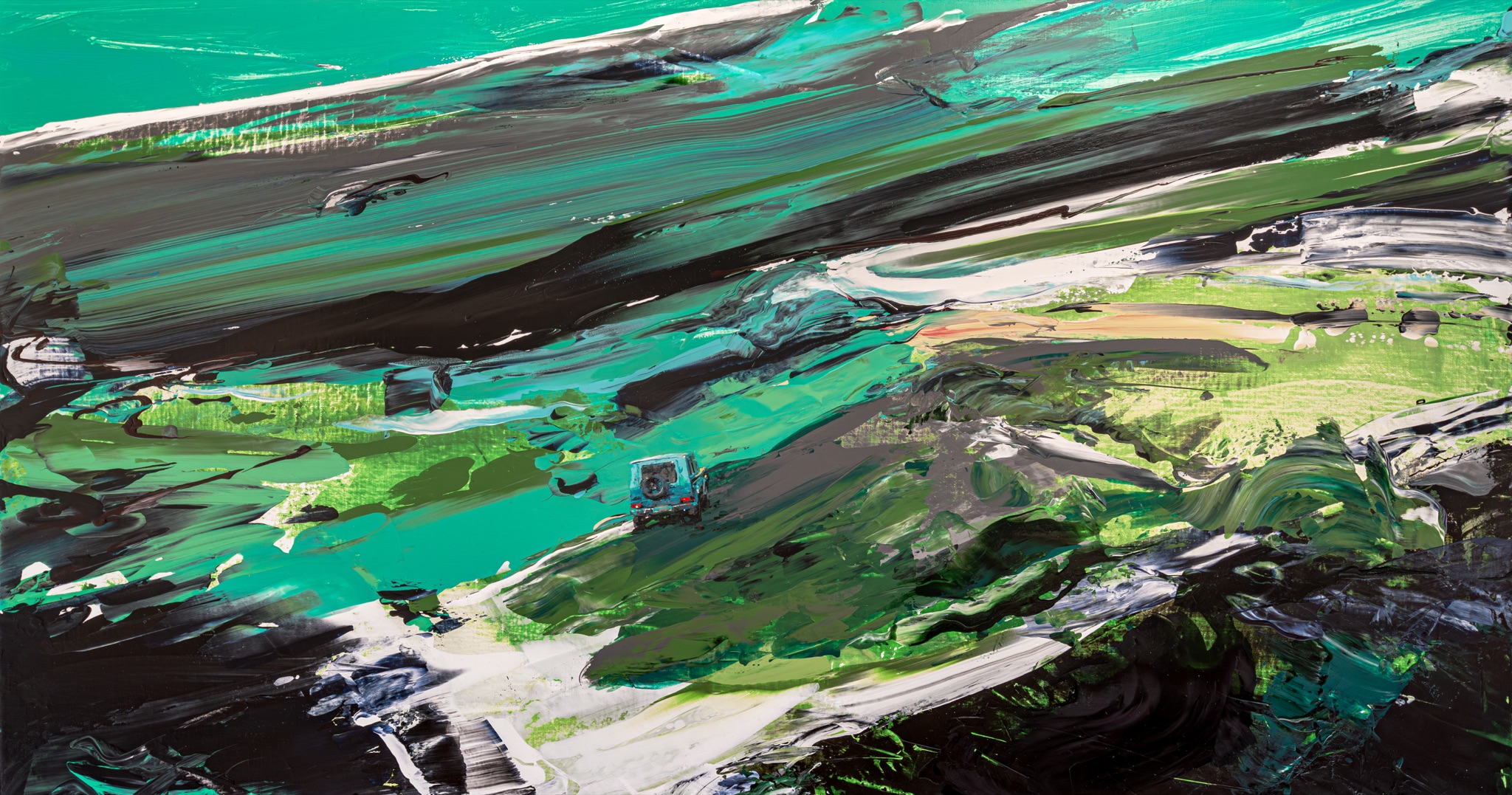
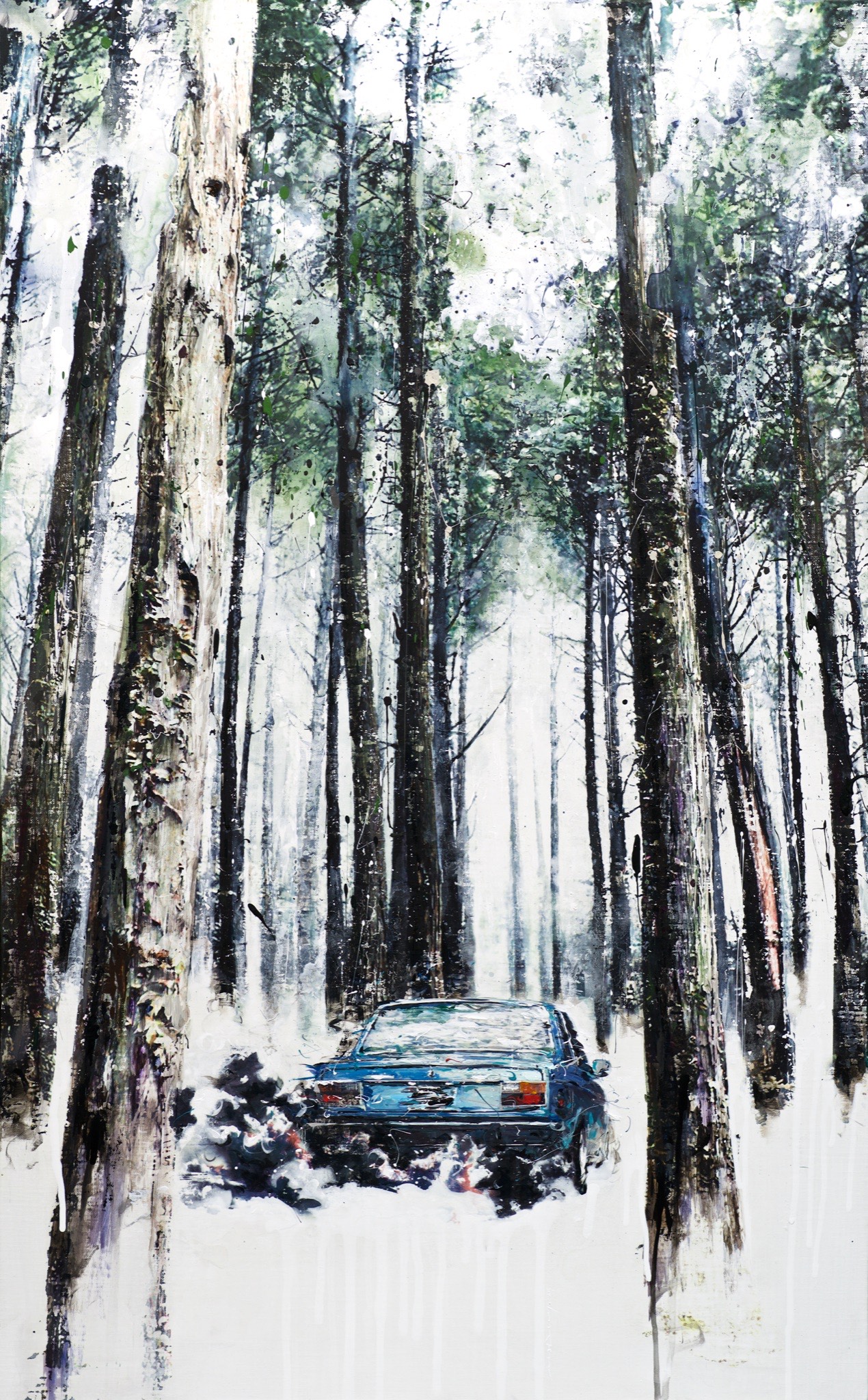
The automobile did not enter Minseok Kang's canvas (b. 1980, Busan) as a 'subject' chosen at some point in his career. From his first solo exhibition, It's time to begin. (Seoul Auction Busan, 2011), the automobile was already the protagonist — and in the fifteen years since, it has never once left the picture plane. To paint a single object for fifteen years is not a matter of taste. It is a matter of urgency.
The artist calls the automobile "a tool racing through reality and a projection of inner force and desire." His automobile, in other words, is not the portrait of a machine but a self-portrait at full speed — a being that cannot stop inside a society that demands competition, carrying at once the desire to pull ahead and the fear of breaking apart. If the car bodies in his early works hold unusually composed outlines, it is because that fear had not yet begun to shake the form.
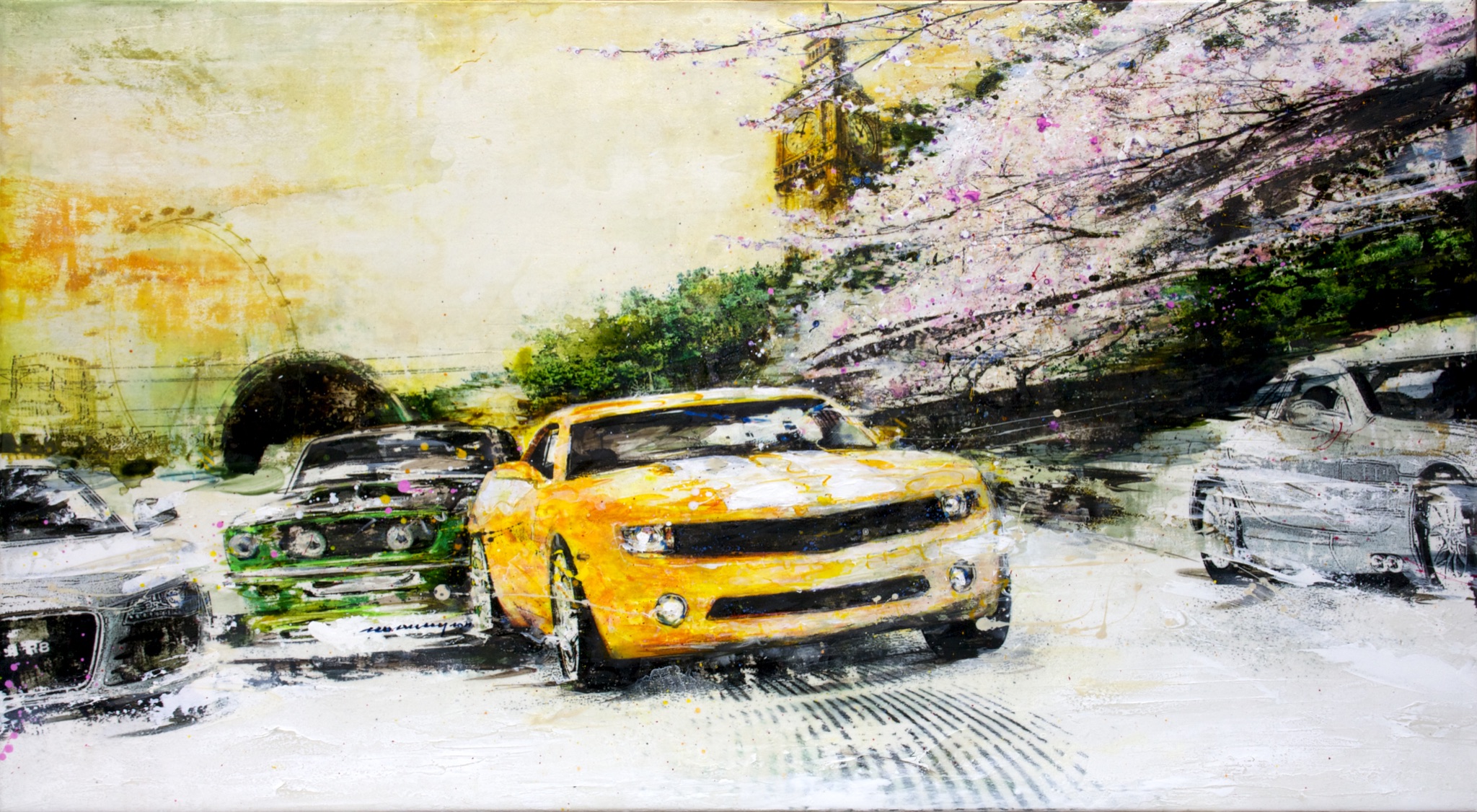
Invisible Force — Naming the Struggle
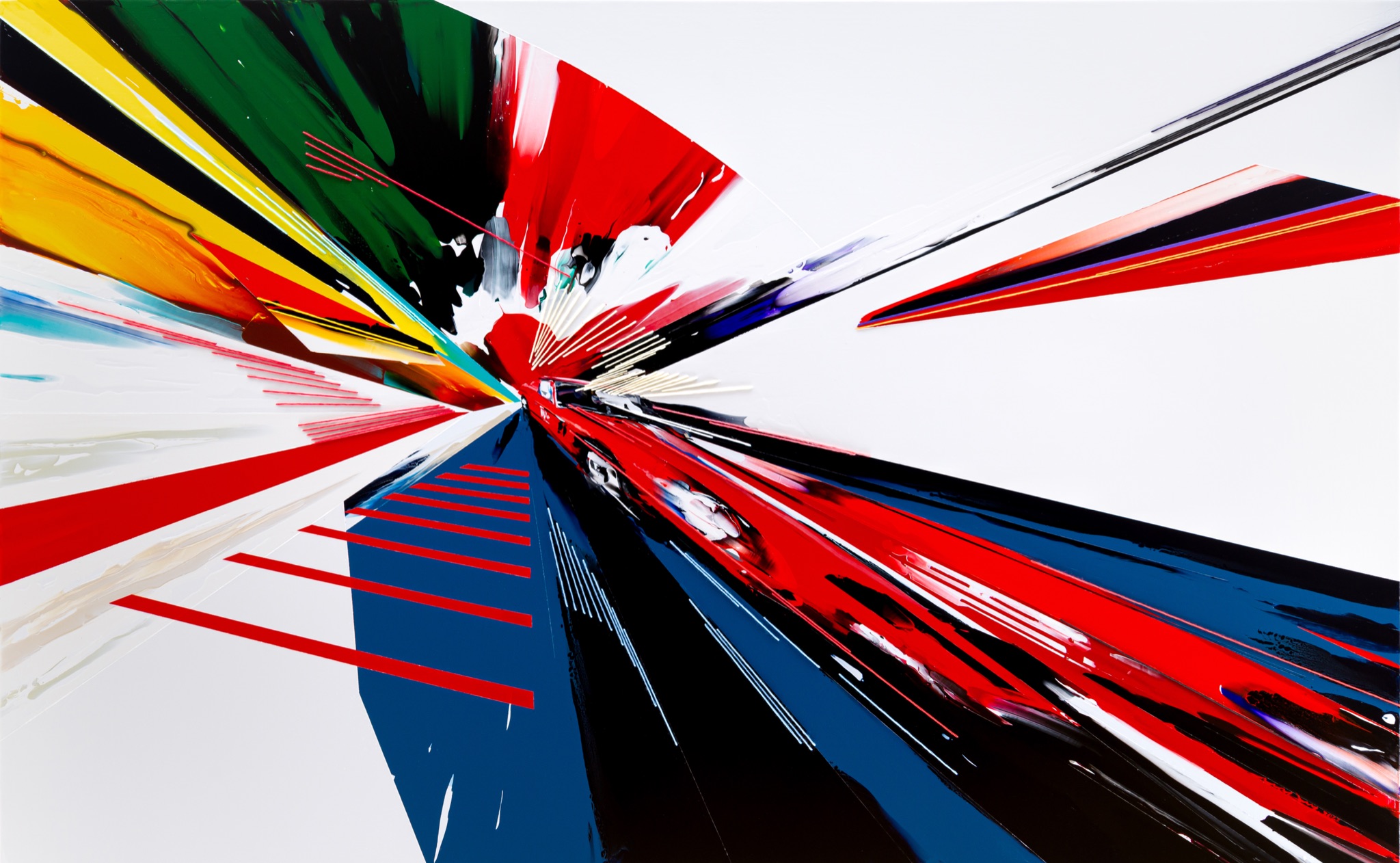
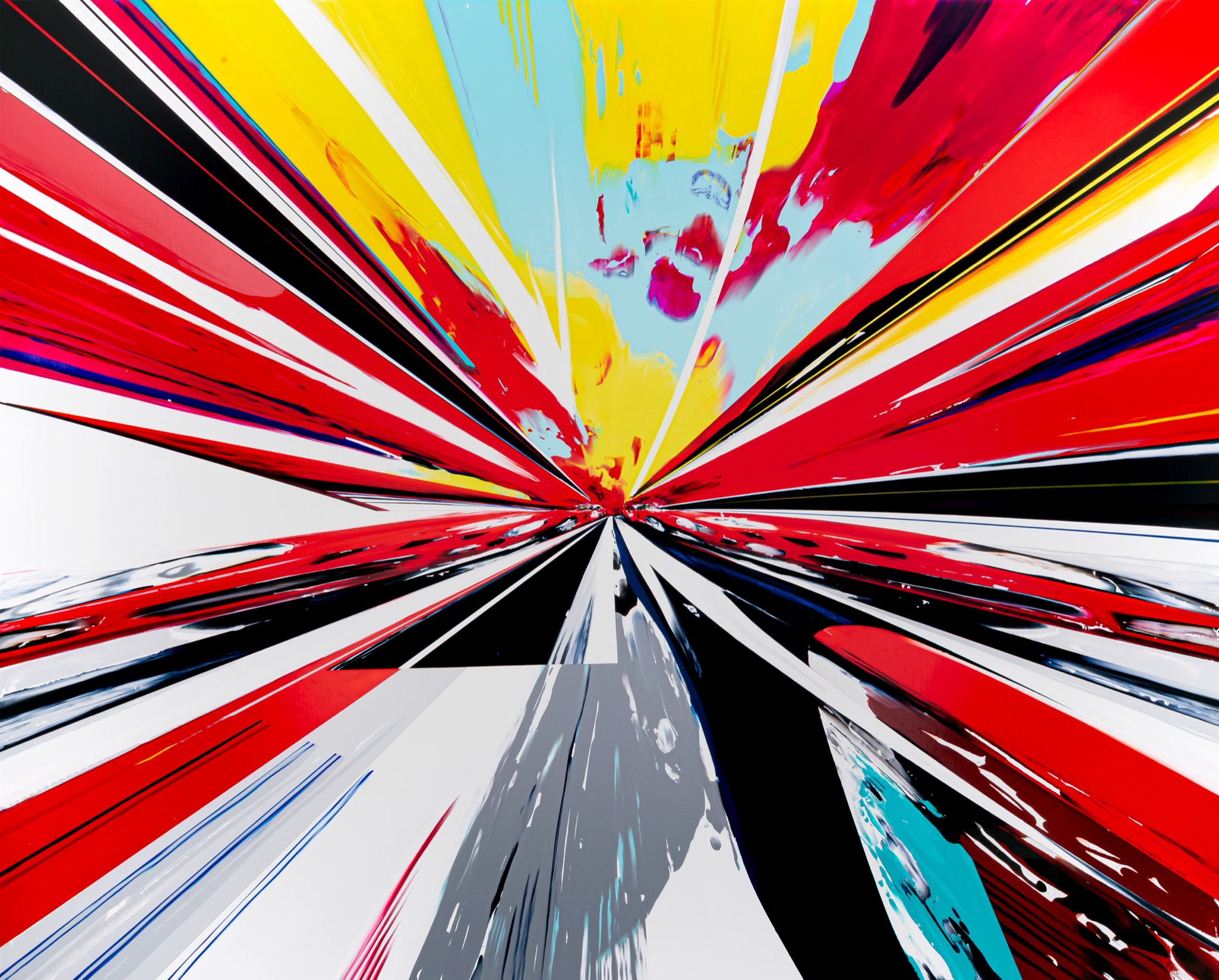
The change came with A source of strength (Alliance Française Art Space, 2014) and the Invisible force series of 2017. The titles are already confessions: a source of strength, and a force that cannot be seen. What pressed the artist forward was not a visible rival but a pressure that had no name. On large canvases reaching 324 centimeters, the car body begins for the first time to dissolve into the traces of speed.
Here Kang's struggle becomes concrete. He is always aware of a boundary that must be crossed, yet he records equally "the painful moment of facing myself, unable to cross that boundary with ease." This is why his painting is a record not of victory but of tension.
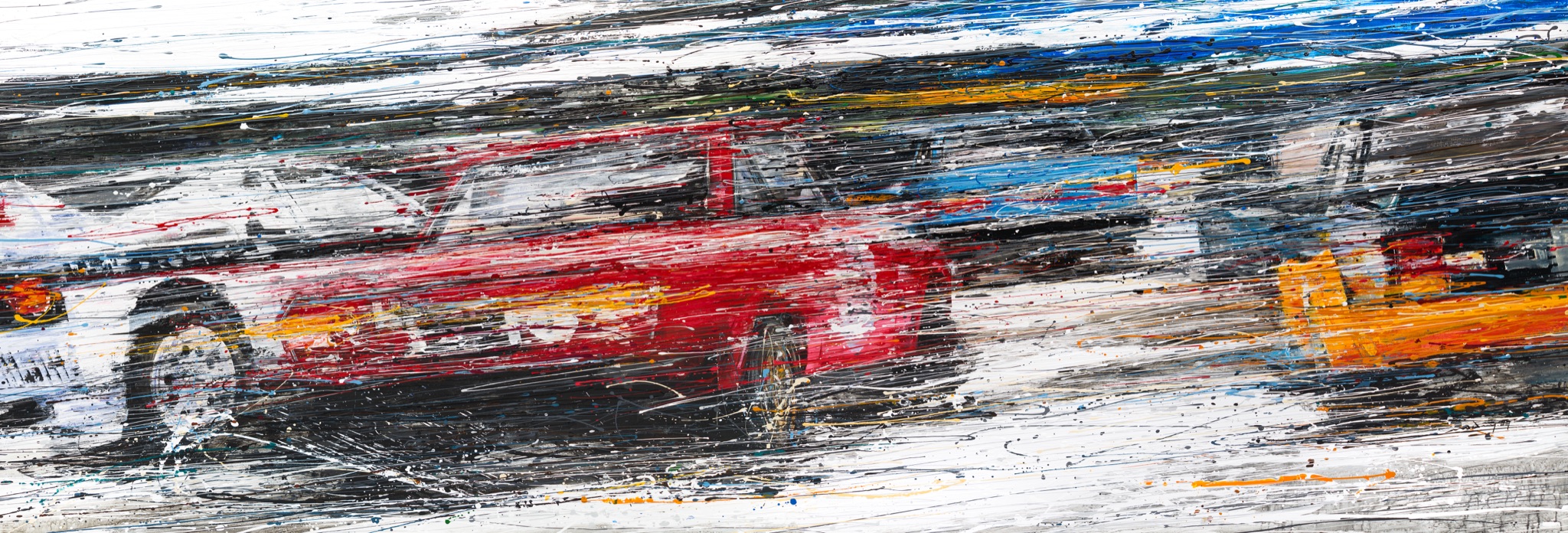
1909, Marinetti as the Opposite Mirror
The first declaration to place the automobile at the center of art dates back to 1909. In the Futurist Manifesto, the poet Marinetti wrote that "a roaring car is more beautiful than the Victory of Samothrace." Speed was a new beauty; the machine, a symbol of triumph.
Kang's automobile stands at the exact opposite end of that declaration. Where the Futurists sang the praises of speed, Kang paints the trembling of a being carried along by it. The same object, the opposite confession. In the very place where painters a century ago cheered the machine, he looks into the interior of the human being riding it. This difference is what makes his work not car painting but painting about existence.
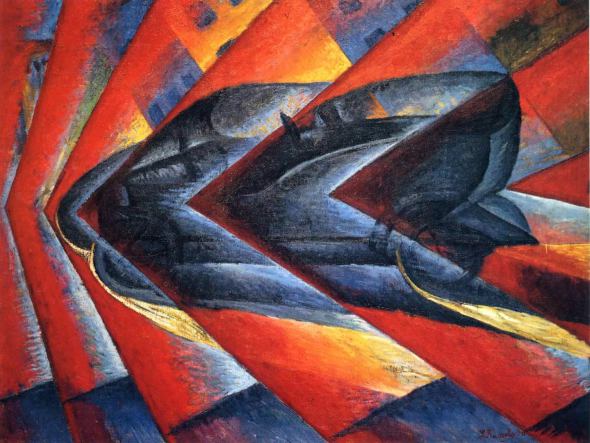
Endless Force — Repetition as Gesture
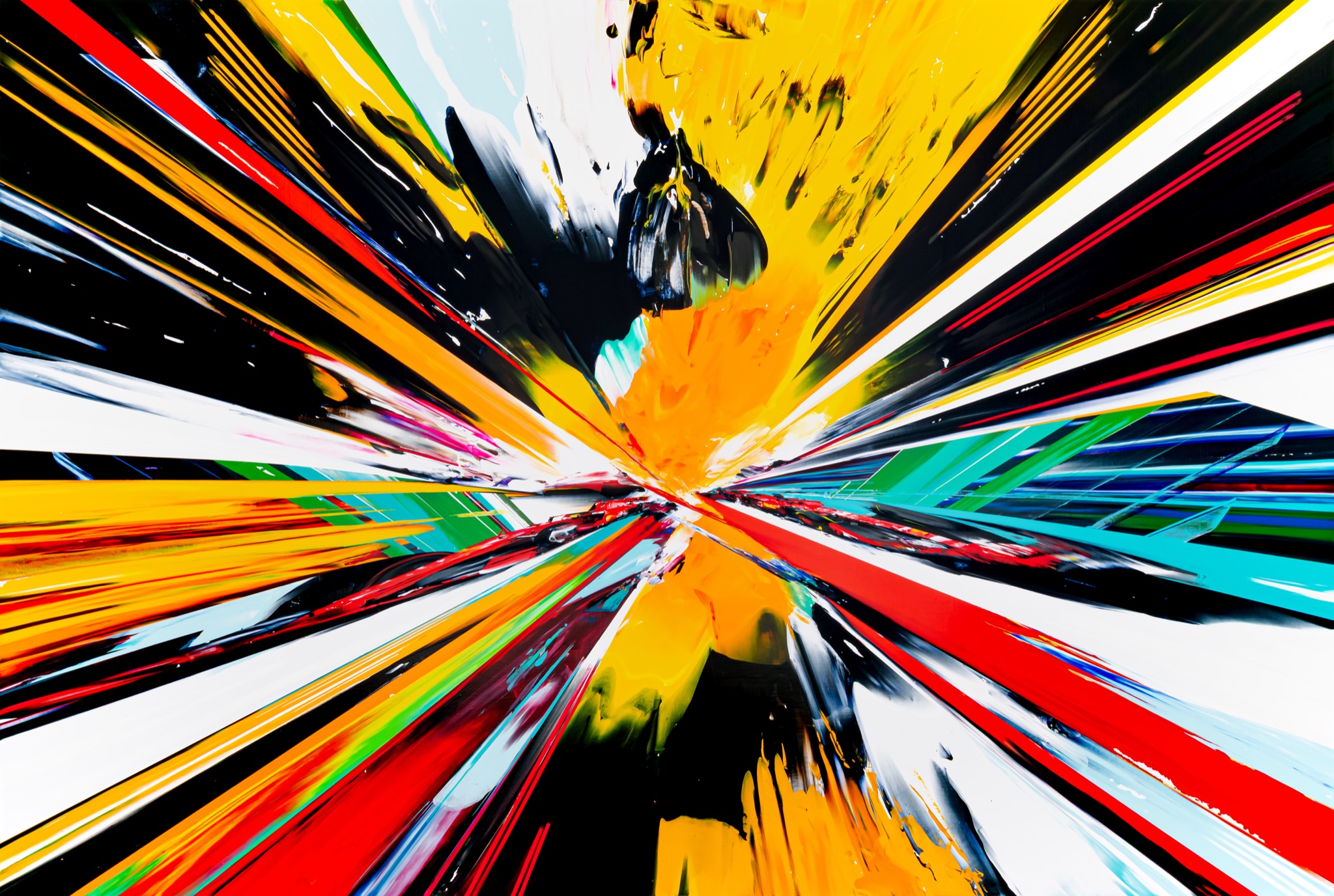
In the Endless Force series, begun in 2017, the artist's method reaches completion: the repeated acts of scraping, pushing, pouring, and covering paint. The car body is dismantled into afterimages of speed, and those afterimages gather into form again.
Among artists who worked with broken car bodies stands the American sculptor John Chamberlain, who crushed and welded the steel of scrapped automobiles and insisted his materials were not 'found' but 'chosen.' The two artists meet in this — that within what looks like destruction there is selection and composition. Yet where Chamberlain's collision is an event of matter, Kang's collision comes from within: what breaks the car body is not the road but the crash of identity against desire.
The painter Peter Cain, who died young, also deserves a place nearby. He transformed the sleek automobiles of advertising into mutant forms — front and rear ends fused, bodies balanced on a single wheel. He shares with Kang the twisting of desire's imagery, but where Cain's distortion is a cool observation of consumer society, Kang's dismantling is a heated interrogation aimed at himself.
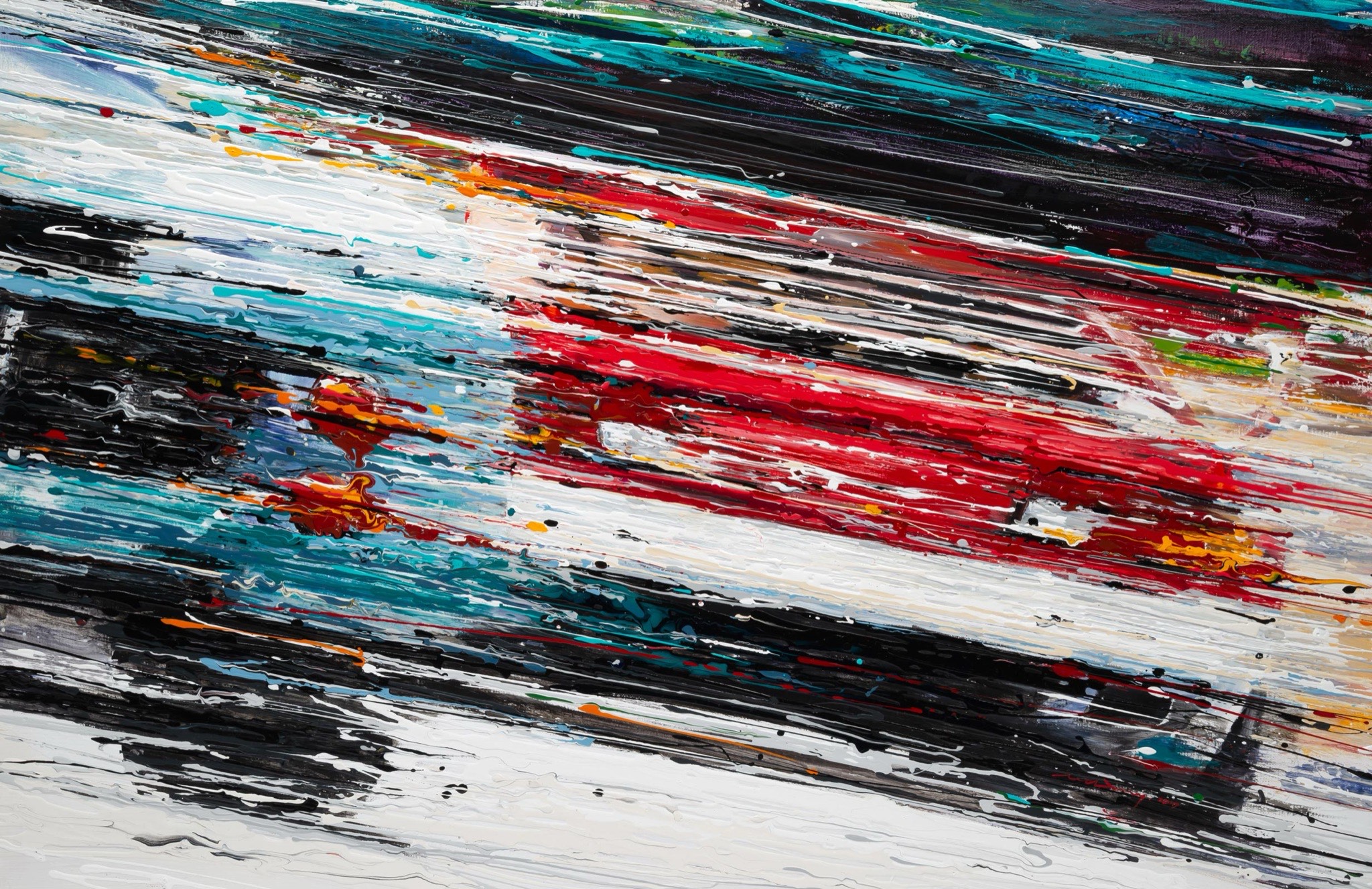
Time Sewn in Thread — the Materiality of Struggle
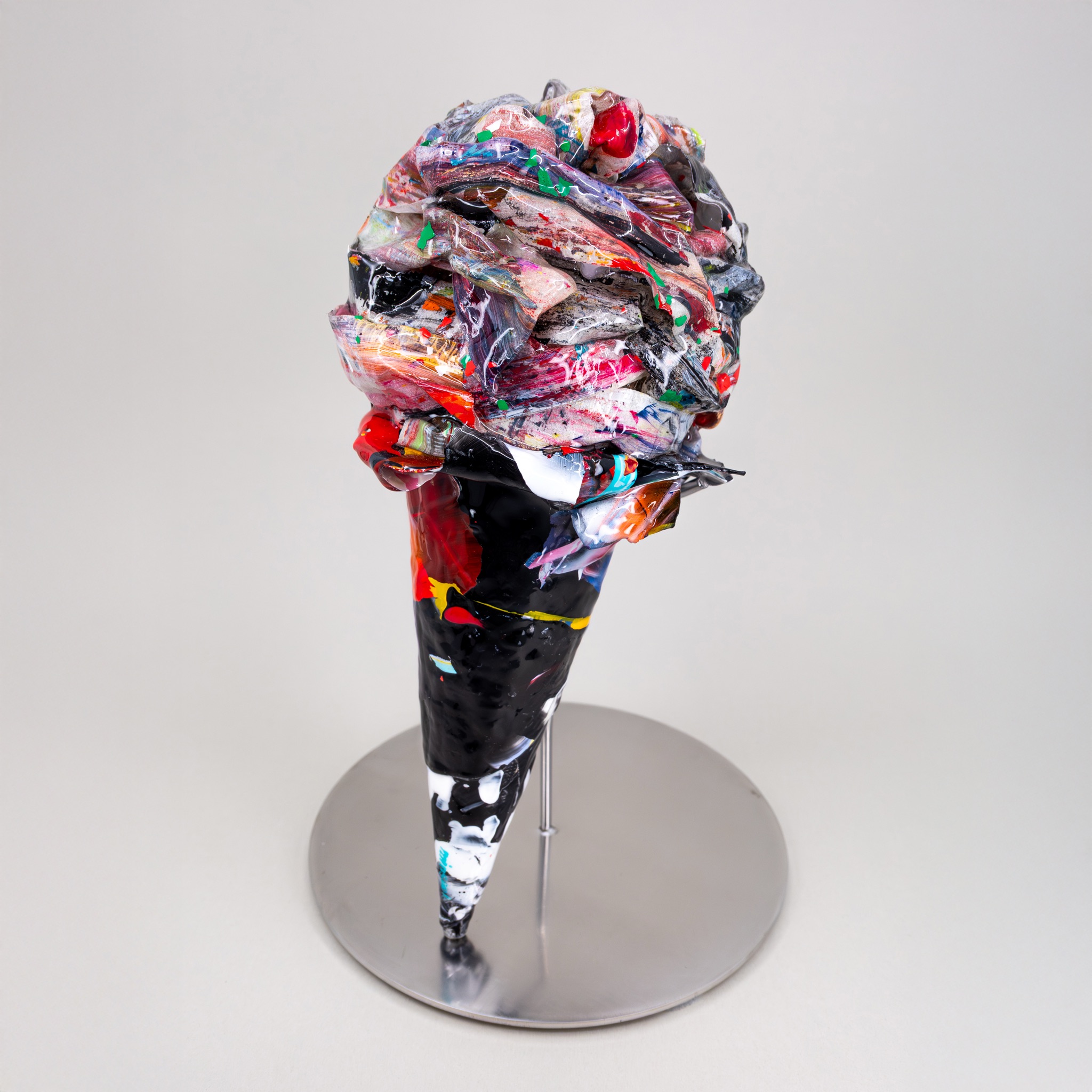
In Timeleap (2022–2023), the artist began stitching embroidery thread into the canvas. Over the speed of paint settles the slow time of thread. The scraping hand and the sewing hand — one is explosion, the other is suture. Beneath the title's wish to leap through time lies the honesty of a hand that can advance only one stitch at a time. It is the most beautiful case of the artist's struggle translated into the physical property of a material.
2025 — Impact and Reversal
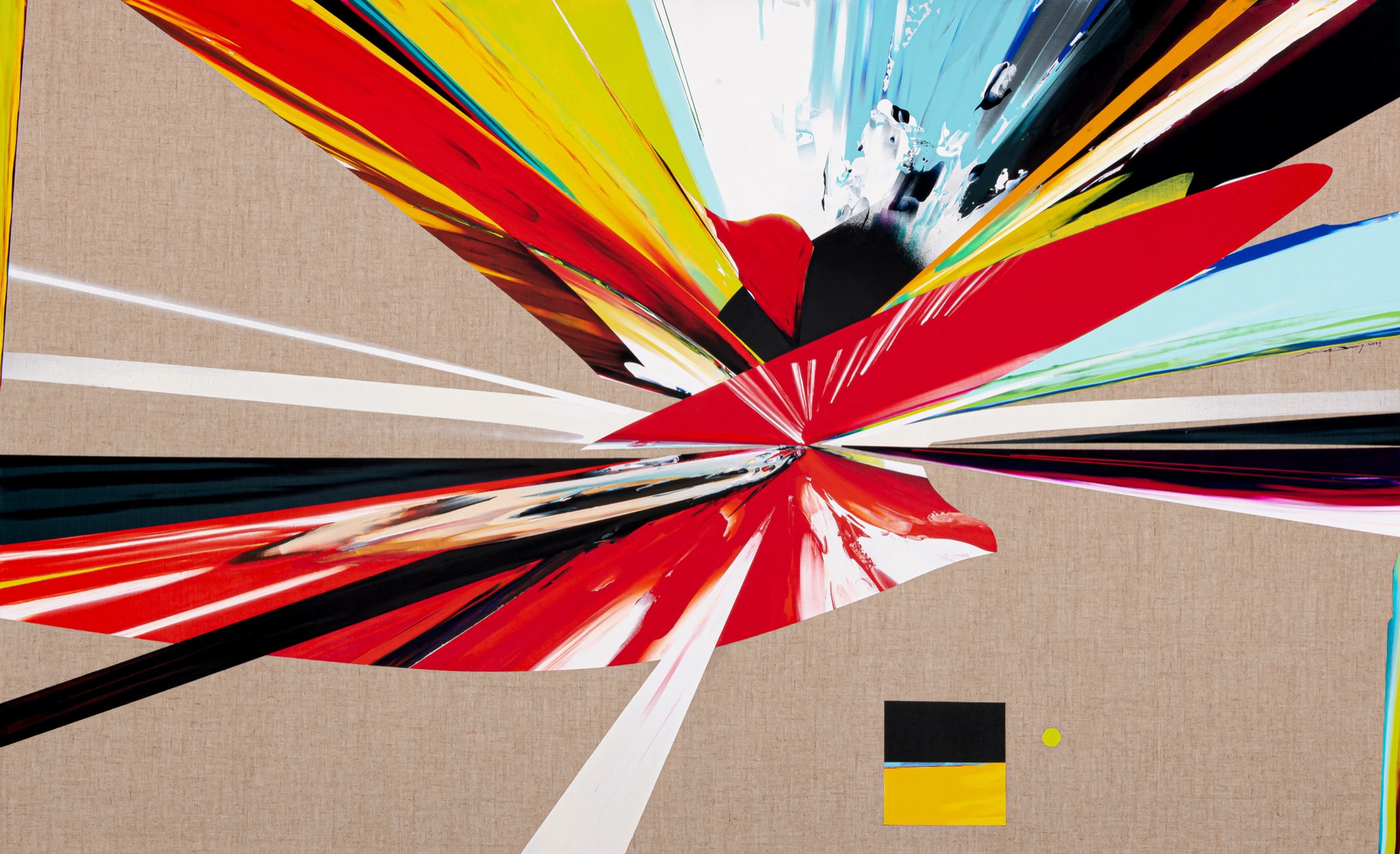
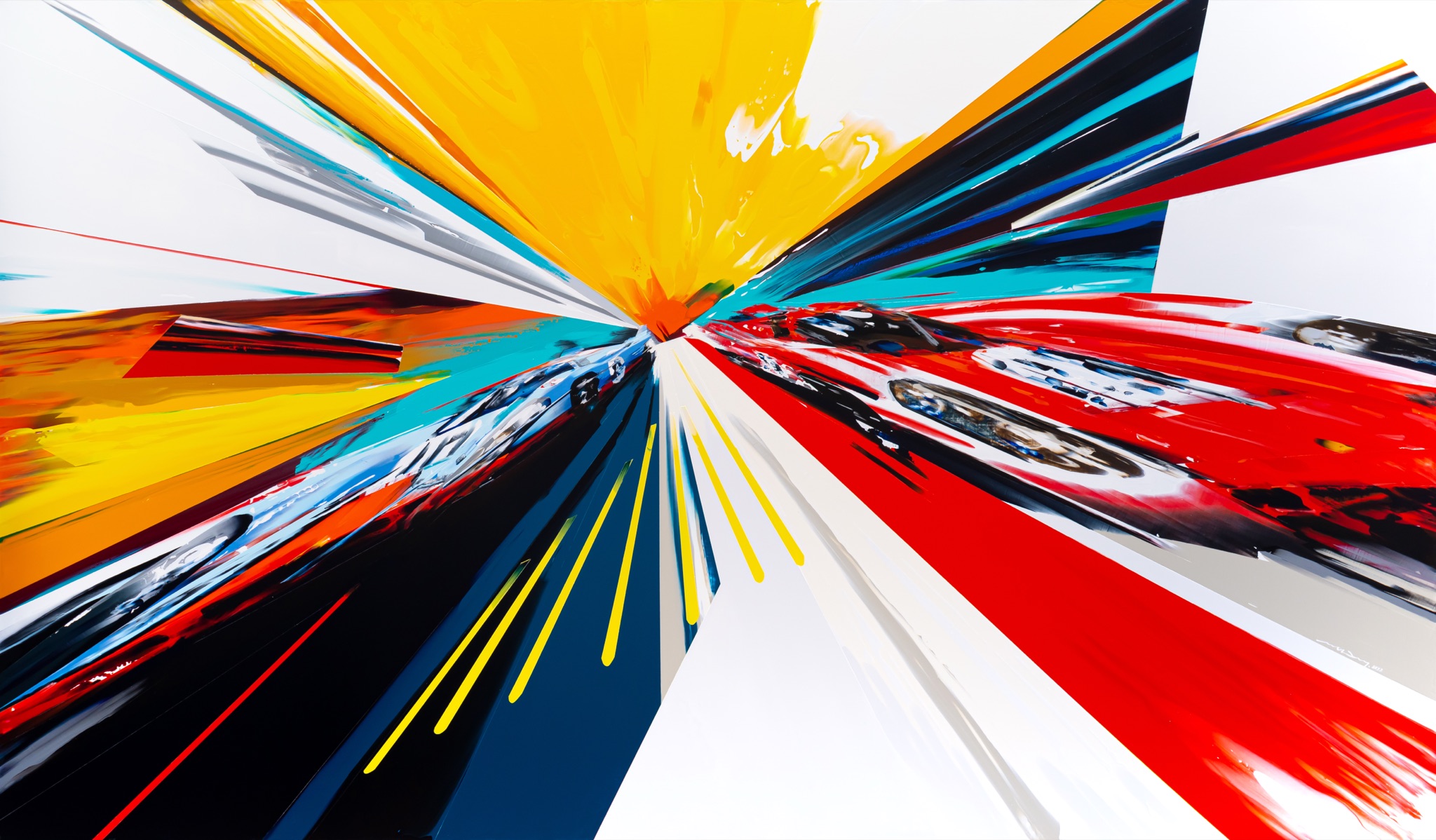
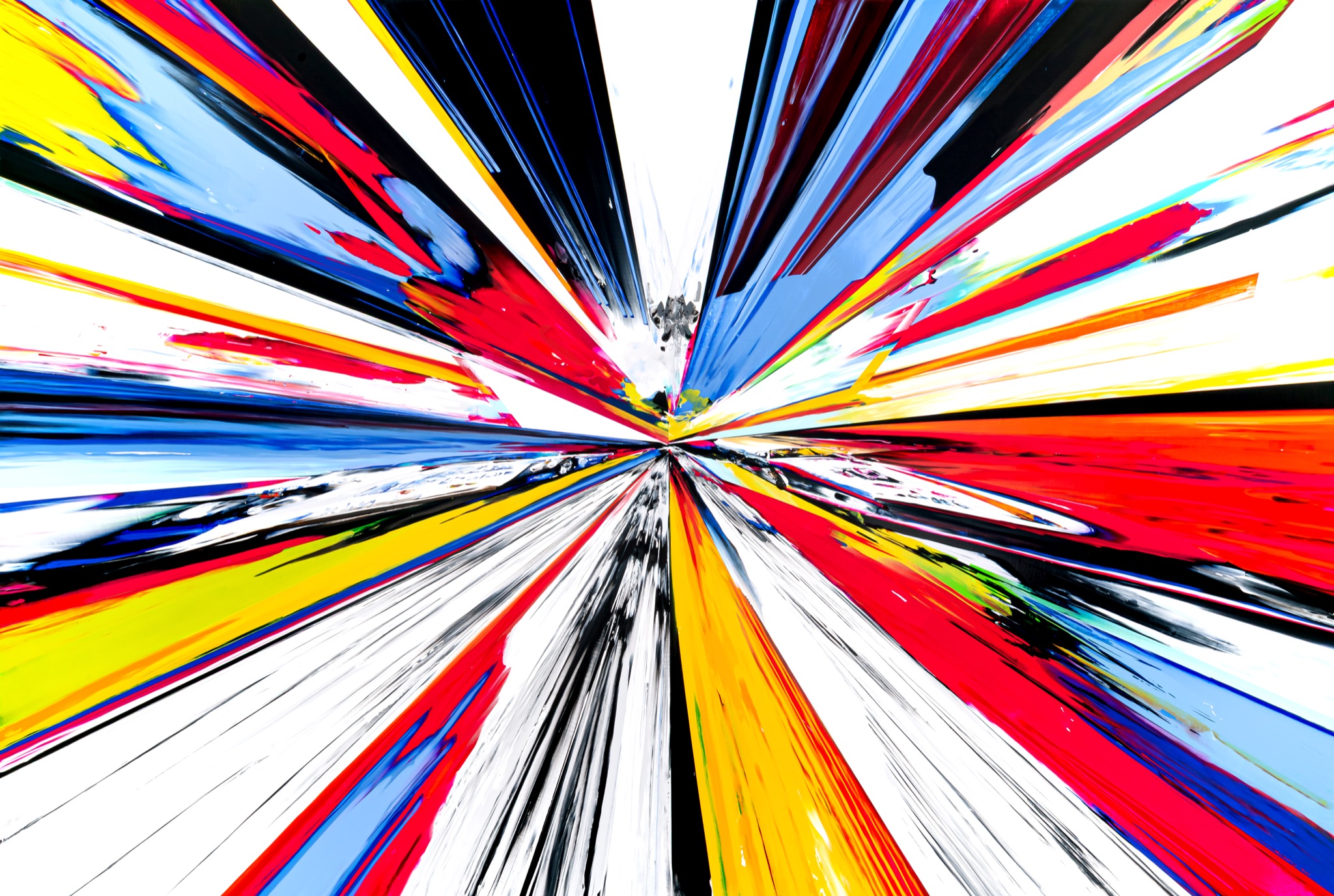
In the recent work this journey divides in two. Endless Impact spreads the moment of collision across the entire canvas like a big bang, while Reversed Boundary overturns the border between the visible and the invisible through the act of flipping the canvas itself.
The philosopher Paul Virilio read modern society as an age governed by the politics of speed — whoever moves faster holds power, and every technology invents its own accident. Kang's canvases of 2025 read like the records of one individual living precisely in that age. Within a race that cannot be stopped, he repeats the act of seizing the moment of breaking and turning it into a new order. Impact and Reversal are the most recent verbs of that repetition.
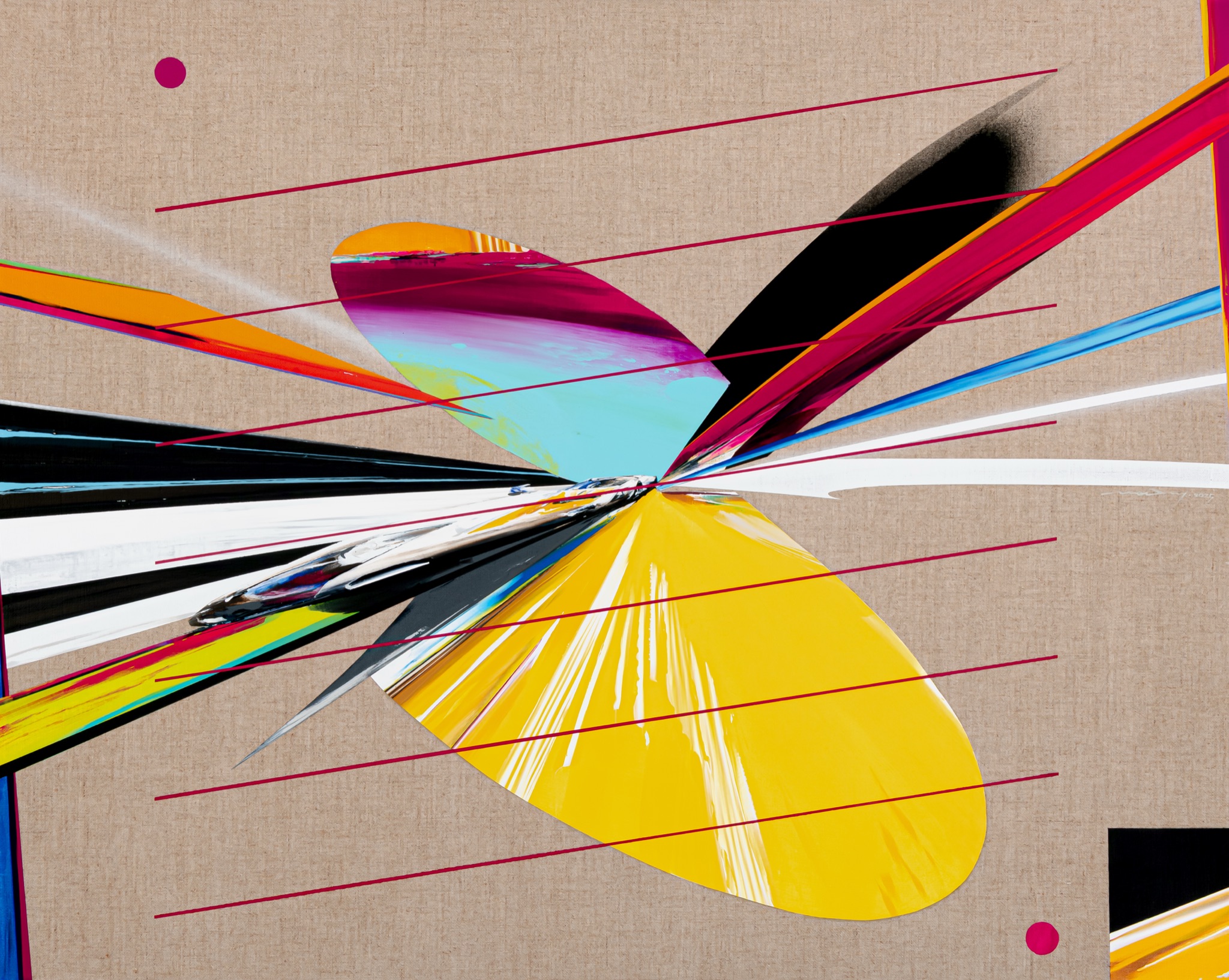
What is Minseok Kang saying? The answer offered by fifteen years of canvases is this — borrowing the body of the automobile, he paints the self-portrait of a being who lives in the age of speed. Neither praise nor cynicism: the honest record of one who keeps running, trembling, somewhere in between.
The next essay, Reading MINSEOK No.2, looks into the method of that record — how the repetition of the scraping, pushing, sewing hand becomes a discipline.
References
· F.T. Marinetti, The Founding and Manifesto of Futurism, Le Figaro, 1909 — italianfuturism.org/manifestos/foundingmanifesto · Paul Virilio, Speed and Politics: An Essay on Dromology, Semiotext(e), 1977 · John Chamberlain: Choices, Solomon R. Guggenheim Museum, 2012 — guggenheim.org/publication/john-chamberlain-choices · Peter Cain, artist archive at Matthew Marks Gallery — matthewmarks.com/artists/peter-cain · Luigi Russolo, Dynamism of an Automobile, 1913, Centre Pompidou — image: Wikimedia Commons, public domain (the artist died in 1947; copyright expired) · Minseok Kang, series notes and exhibition history — minseok.gallery (MINSEOK Studio archive)
All plates in this essay except the Russolo are works by Minseok Kang, © MINSEOK Studio. Images by artists whose works remain in copyright (Chamberlain, Cain) are not reproduced — sources only; only public-domain works appear as plates.