Stand before the painting and your eyes move before your mind does.
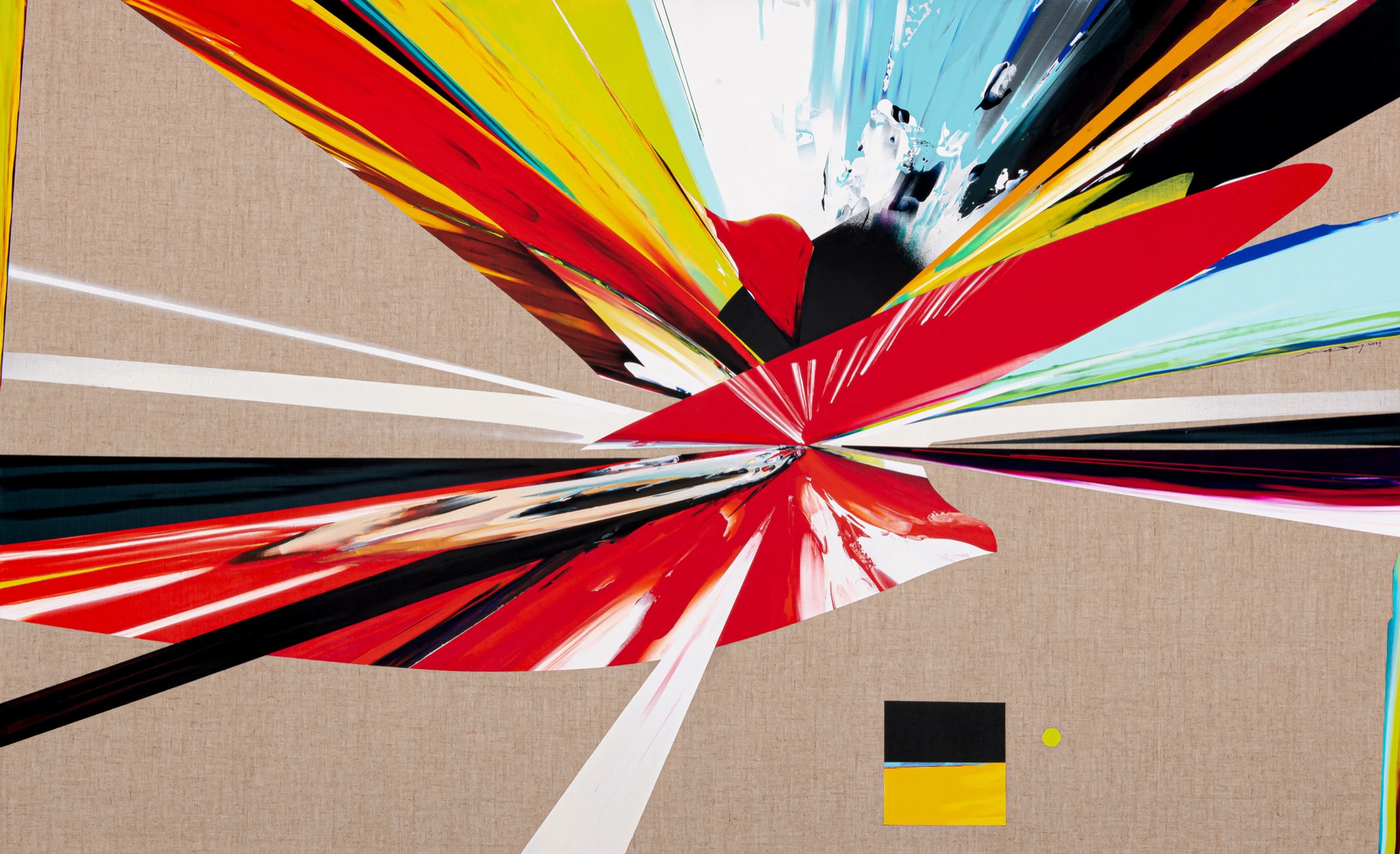
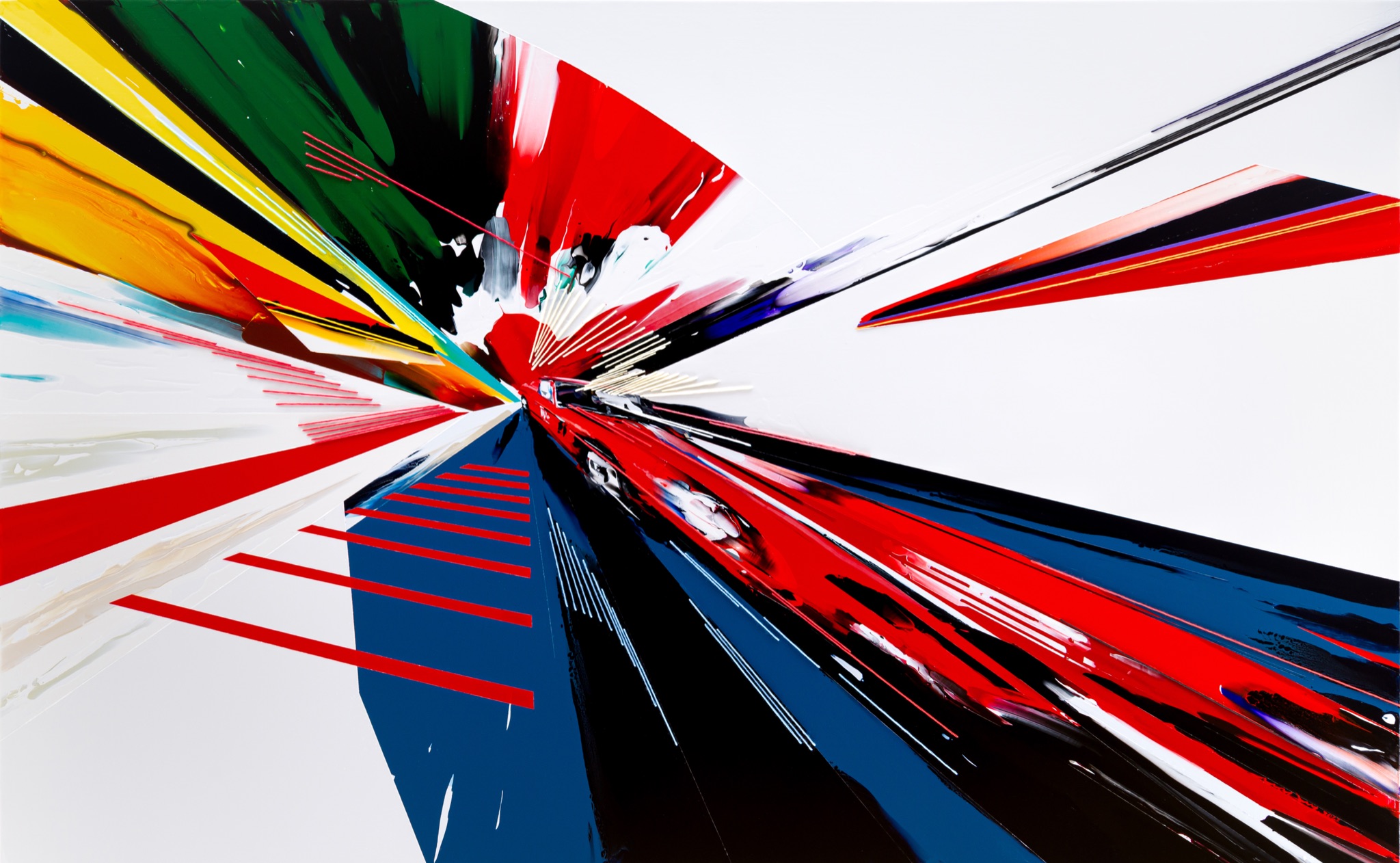
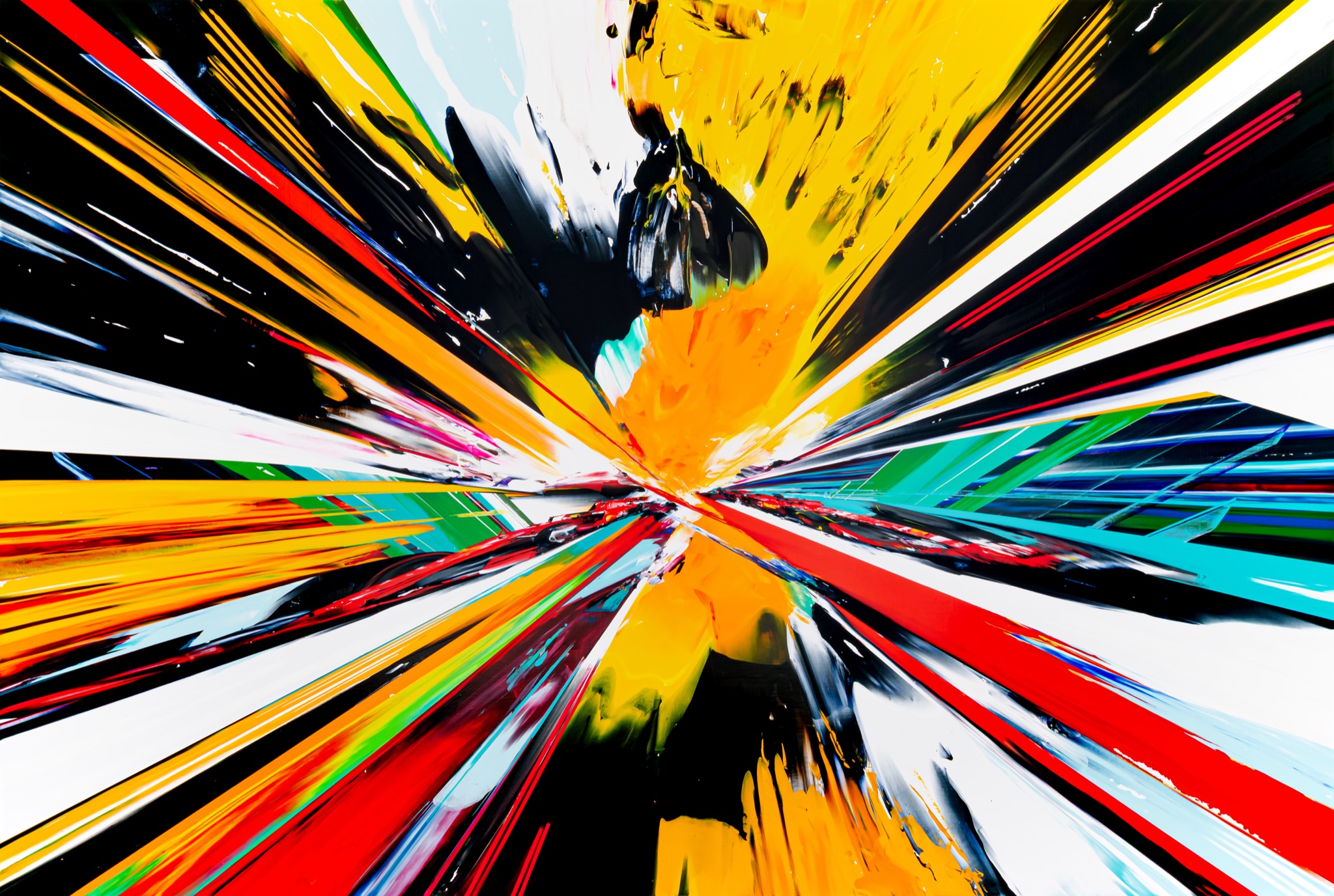
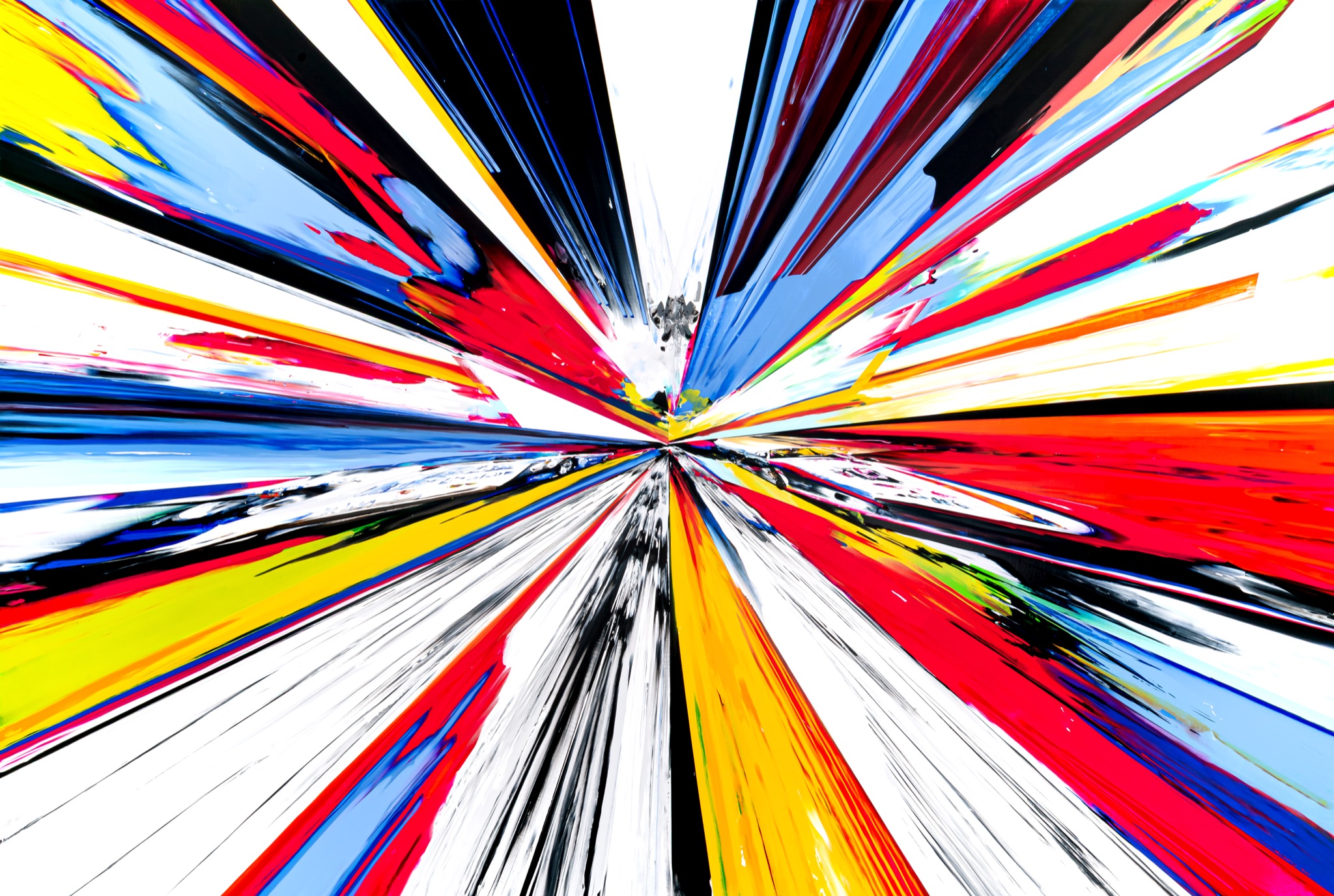
They are pulled toward a single point, then flung outward from it. Bands of red and yellow, cyan and white shoot out straight as razors, cutting across one another. The colors are not muddy but candy-clear. The surface is not dark; it dazzles. What we meet first before Minseok Kang's ⟨Endless Impact⟩ is not a meaning but a pure sensation of speed — velocity spread into light.
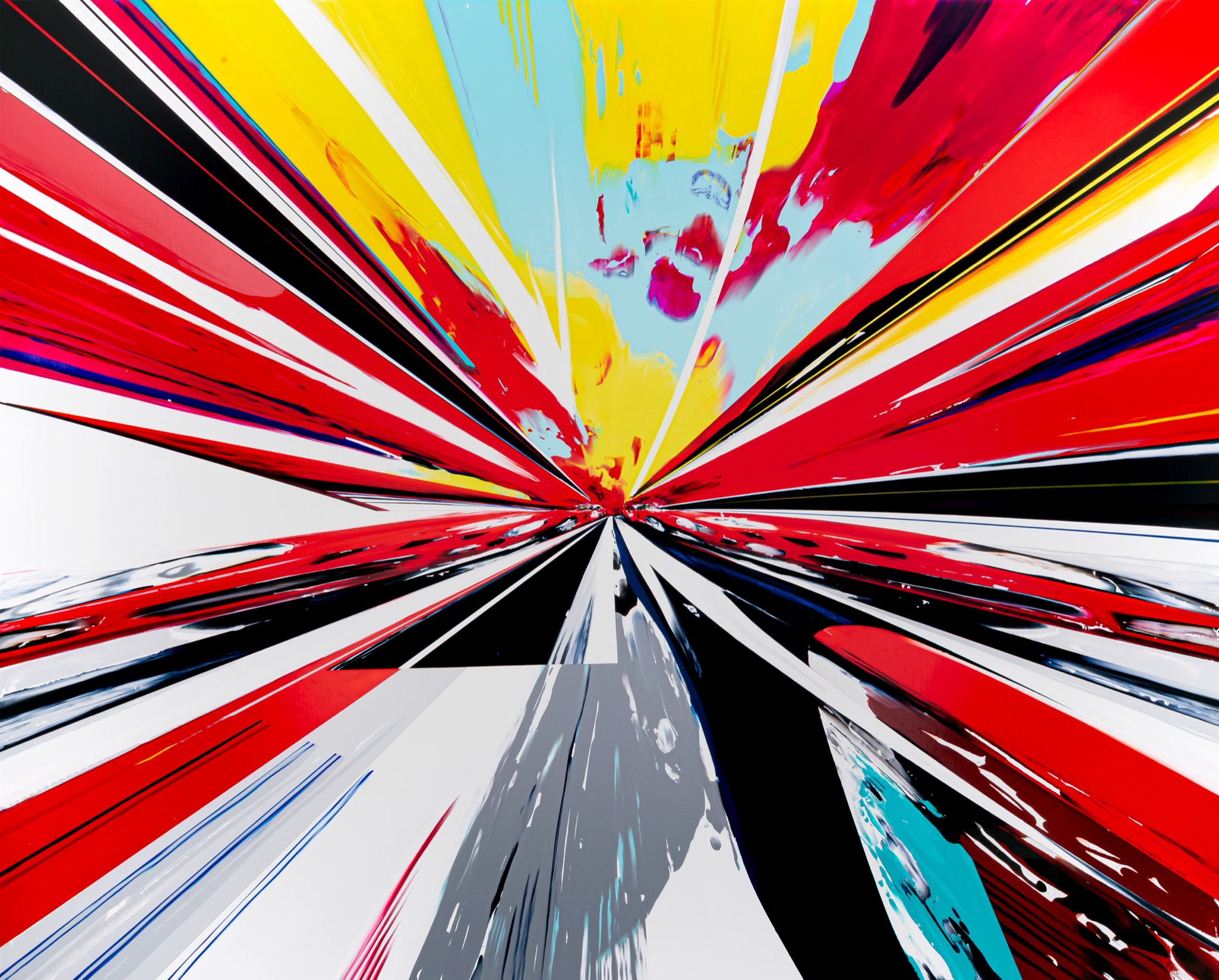
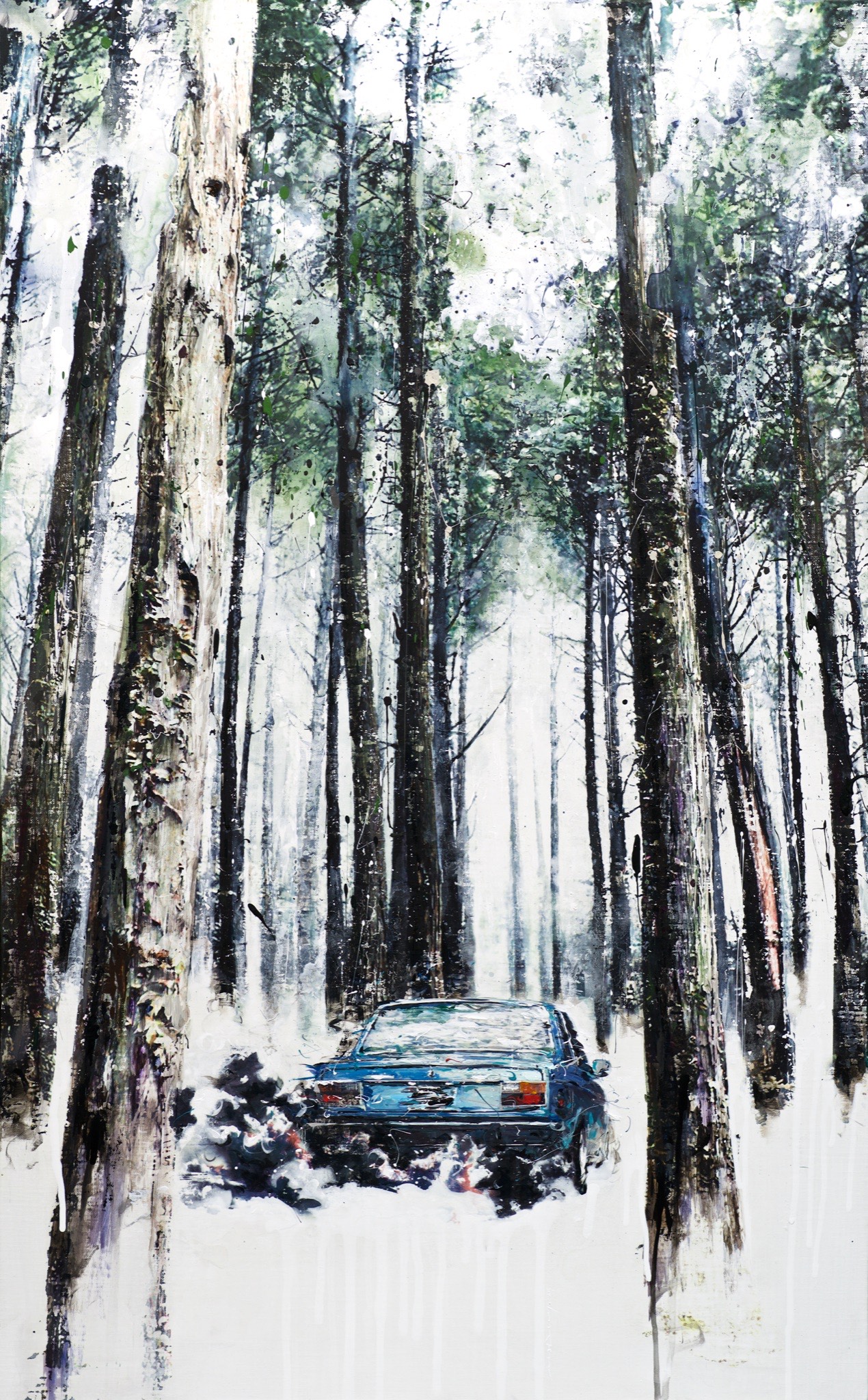
And yet something is strange. Minseok has painted cars for many years; the automobile was his beginning and his end, never once leaving the canvas. But standing before these paintings, our eyes search in vain for the car.
Where is it? Was that silver-smeared form below the front of a vehicle? Were those red and yellow fragments glimpsed between the bands the shards of a broken body? Only one thing is certain — the car has all but disappeared. The subject he painted for so long has here lost its form and melted into the speed of light and color. The French thinker Paul Virilio once spoke of an 'aesthetics of disappearance': once speed crosses a certain threshold, both the object and the eye that watched it vanish together. Minseok's canvases are painted on the far side of that threshold.
But hold your gaze on this brilliance, and the first rapture slowly turns into something else.
This splendor is not the splendor of a festival. It is too fast, too bright, and it does not know how to stop. As beautiful as Minseok's color is, there is something in that beauty that will not let you catch your breath. Beneath the dazzling surface, something keeps driving relentlessly on. To name that something is the heart of reading this painter.
Minseok himself wrote it this way: "I am always aware of a boundary I must cross. In the painful moment of facing myself unable to cross it easily, my inner world is transferred into the work." Inside the splendor there is pain.
One philosopher names this pain precisely.
Byung-Chul Han — born in Korea, thinking in Berlin — called our era the 'achievement society.' Where the society of the past pressed people down from the outside, forbidding ("do not"), today's society drives them from within, whispering ("you can do more"). Not because anyone commands it, but of one's own accord, in the name of freedom, one pushes oneself to the very end. This, Han says, is a society of self-exploitation: the exploiter is at once the exploited. What waits at the end is exhaustion and depression — burnout.
Minseok's car is exactly that being. The one who drives himself toward the red line on the tachometer; who keeps accelerating at the place where to stop is to lose and to cross is to shatter. His canvases are so bright and fast because their color is not the color of victory but the adrenaline of one who cannot stop. Dazzling speed is speed that burns the self.
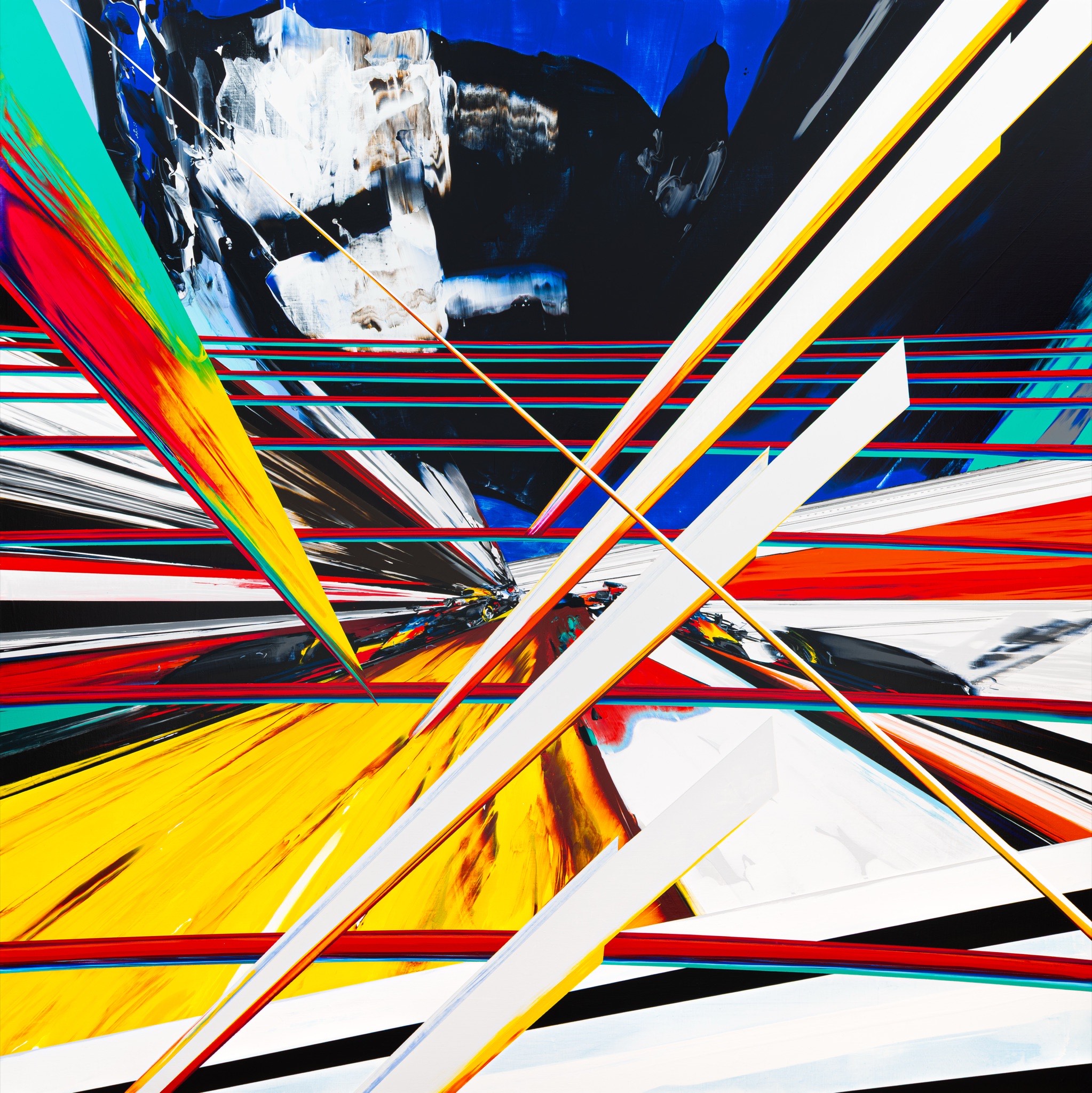
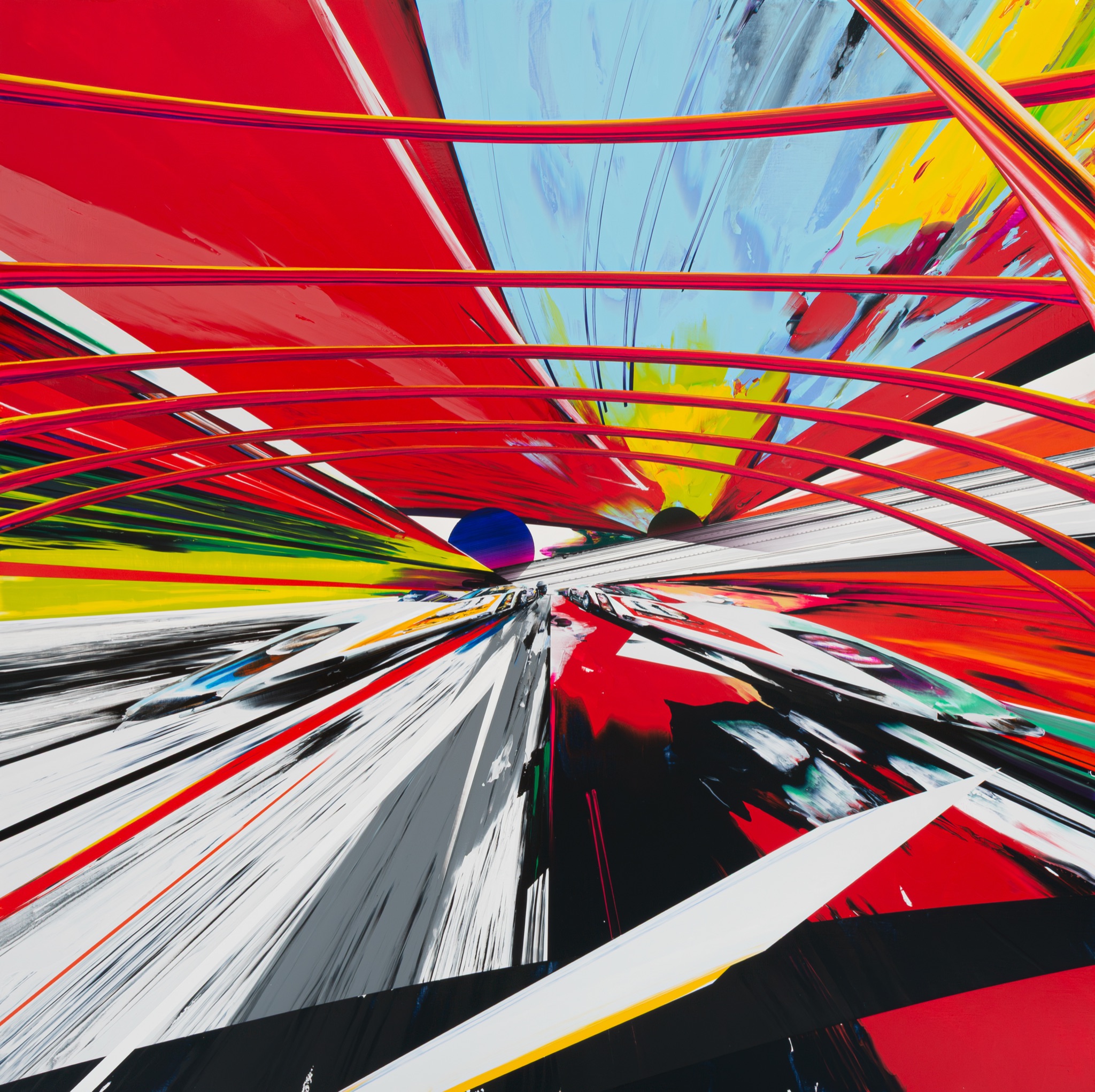
What is telling is that everyone who has looked long at Minseok's cars has read not a machine but a person.
One critic summed up his work as "time, space, longing, and identity, shown through the automobile." The surface is a sleek car, but what people found inside it was a being chased by time, a self trembling between longing and unease. This is why the easy label 'car painting' keeps sliding off this work. Minseok's canvas is not the portrait of an automobile, but a self-portrait of our age, painted through the automobile.
Then where is this self-portrait racing to? Strangely, the painting gives no answer.
Minseok's explosion has no single direction. The bands of color stretch out from one point upward, downward, left and right — every direction at once. Terrifyingly fast, yet where it is headed cannot be known. The nineteenth-century philosopher Søren Kierkegaard called this feeling the 'dizziness of freedom.' A person standing at the edge of a cliff fears falling, and at the same time grows dizzy before the fact that he could throw himself off. That vertigo comes not because he is confined but because he is free — because possibility lies infinitely open. Kierkegaard called it anxiety.
Minseok's radial explosion is a picture of that infinite possibility. That every direction is open means no direction is fixed, and before that openness a person is at once free and anxious. His car loses its form not because of speed alone. One who does not know which way to go loses even his own shape.
And all these directions point toward a place not yet arrived — the future.
To race is always a gesture toward time that has not yet come, and collision is the instant that future rushes up before your eyes. Minseok freezes that instant and pins it to the canvas. This is why the tautness we feel before his paintings is at once thrill and dread — like that vertigo at the cliff's edge. The wish to press forward and the fear of shattering burn with the same light within a single frame. As the artist says, that collision is "not mere destruction, but a force that summons a new order." Anxiety, for him, is not an end but the tremor just before something is born anew.
Even this endless acceleration has its rest.
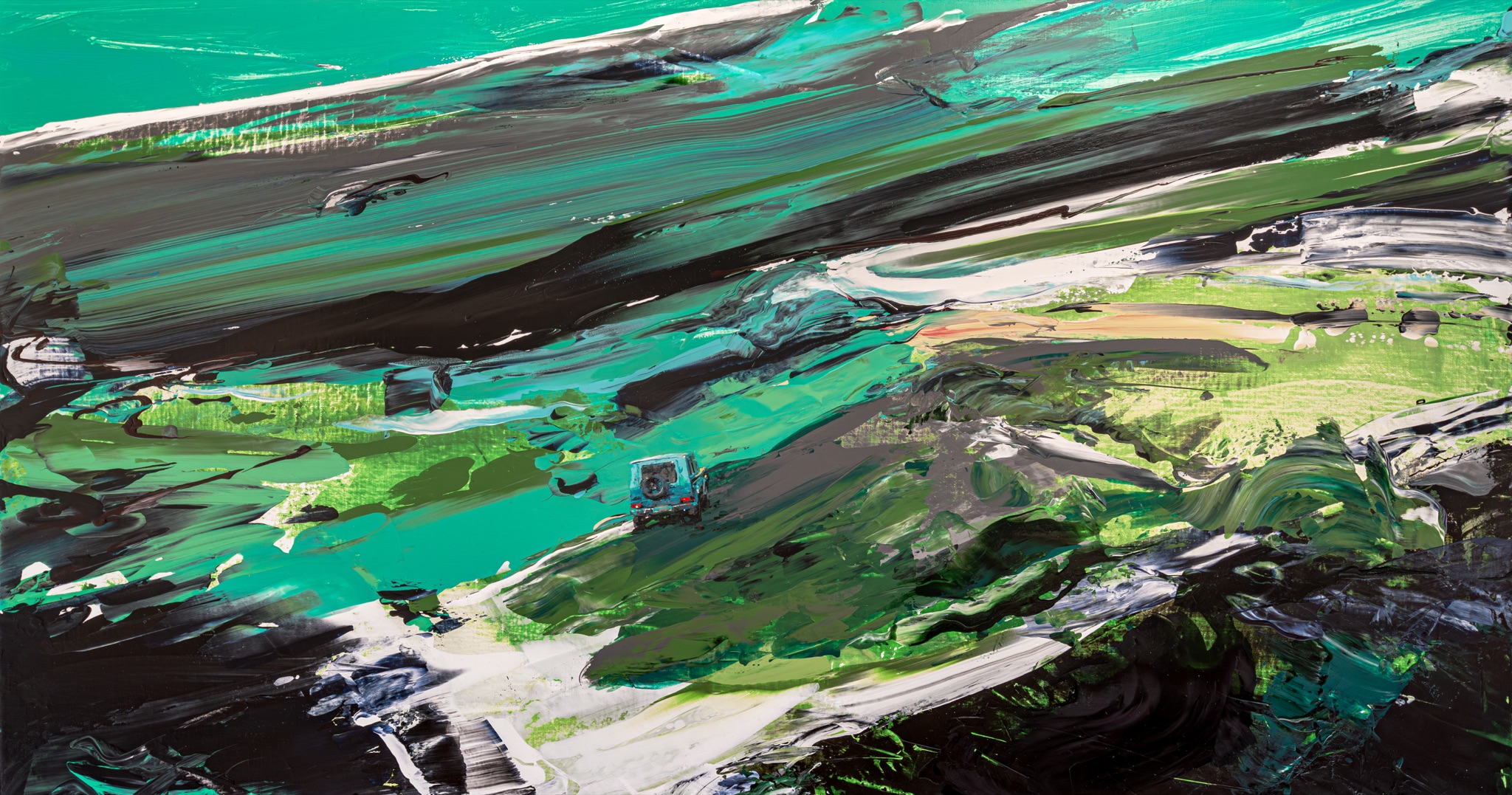
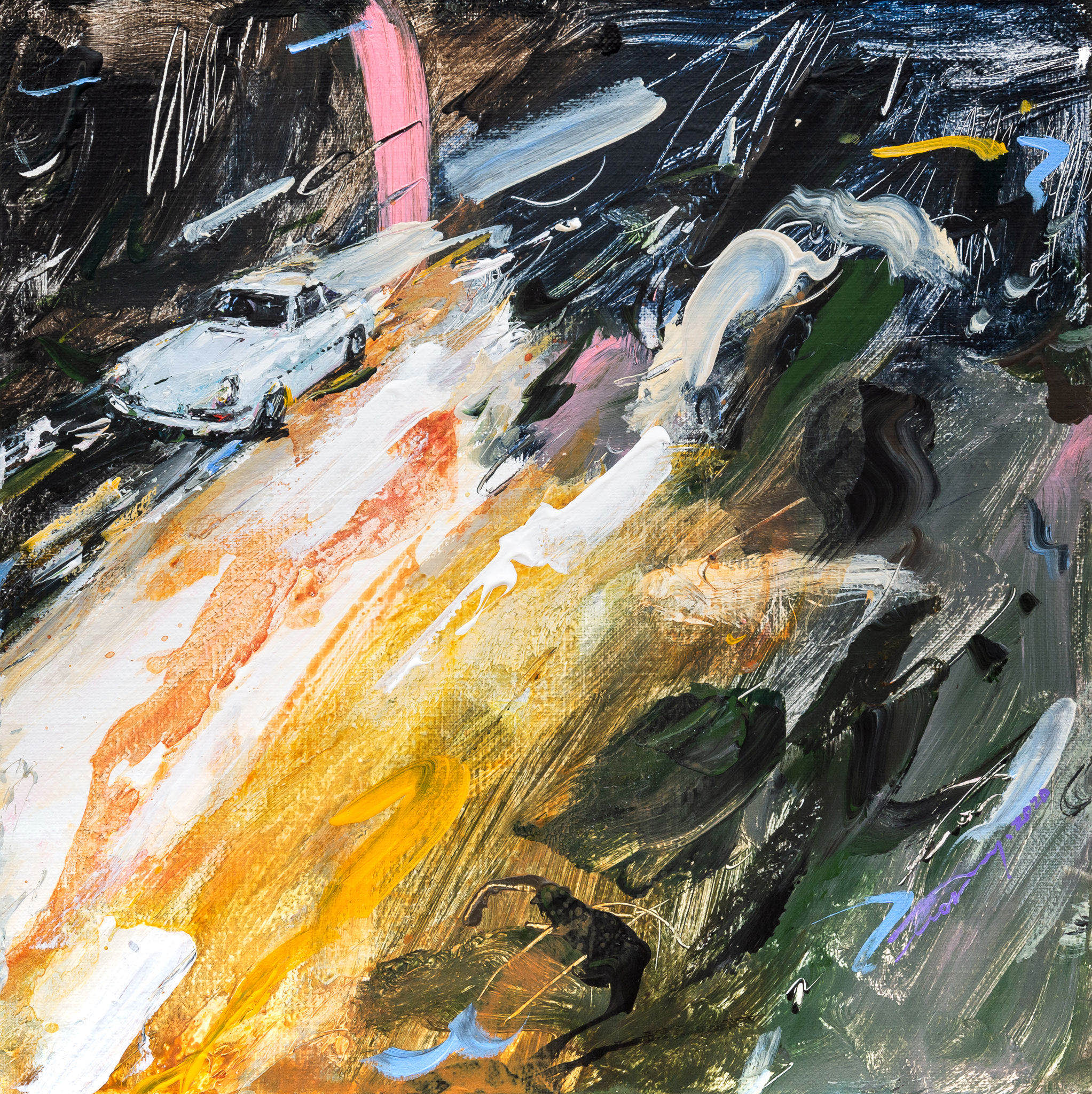
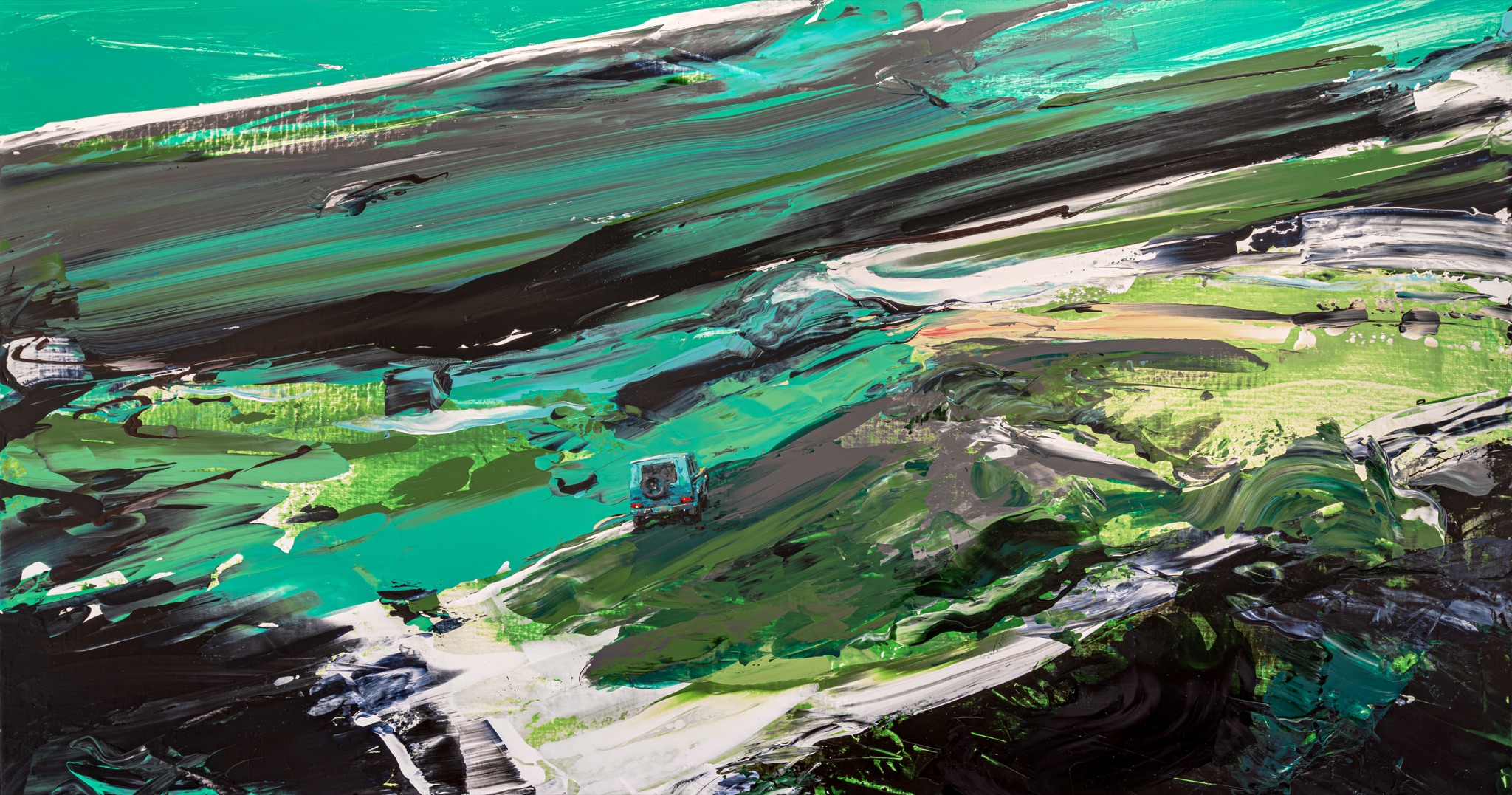
Before the ⟨Paint Desert⟩ series, Minseok's car returns to its whole form. Upon a vast desert of color, a single car sits alone — small but distinct. There is no explosion, no splitting, no dizziness of direction. In that place where speed is set down for a while, the self becomes one again, and the future stops, for a moment, its rushing. The quiet single car of the desert and the dazzling empty center of the explosion — these are Minseok's two poles. One is the place to catch one's breath; the other, the place to hold it.
Minseok Kang is known as a painter of cars. But what he truly paints is the fact that splendor and pain wear the same face.
His dazzling color is not a mask that hides pain. It is, rather, that pain shown on the surface. As adrenaline is at once thrill and alarm; as the freedom of full speed is the very fire that burns the self; as the race toward the future is the fear of that future. Minseok paints this difficult truth not darkly but dazzlingly. That is this painter's uncommon courage. He shows us pain, and shows us, together with it, that even pain can be beautiful.
This is why the eye is pulled in first before his paintings. We are not looking at a car. We are facing, head-on, the inner life of a person running at full speed — a heart that is dazzling, and hurting, and still searching for its direction.
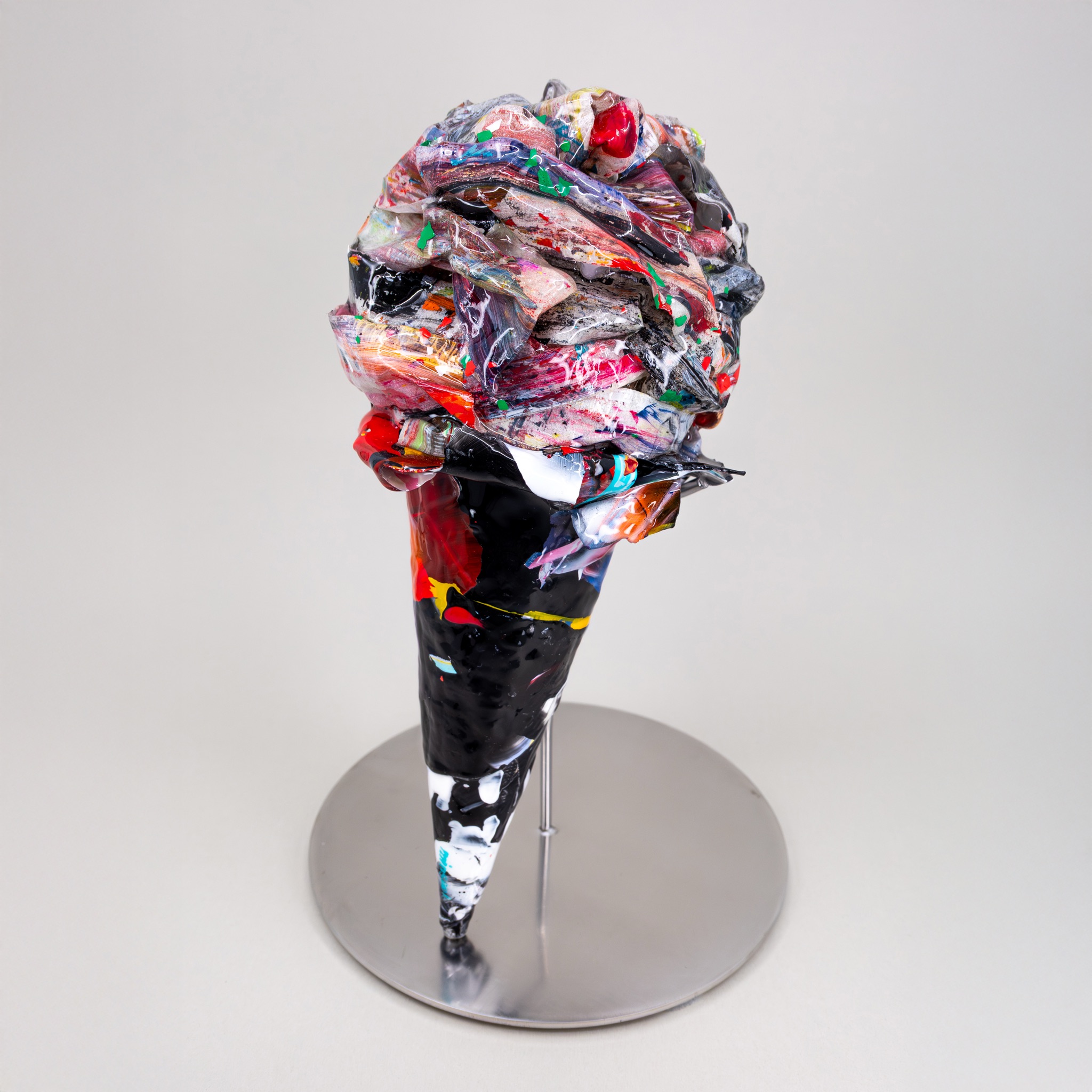
The next note, ⟨Reading MINSEOK No.4⟩, begins from an entirely different face. How a sweet ice cream becomes a vessel for memory — a story about holding the heaviest time in the lightest of subjects.
References · Minseok artist notes — ⟨Endless Impact⟩·⟨Paint Desert⟩ series · minseok.gallery · Byung-Chul Han, 『The Burnout Society (Müdigkeitsgesellschaft)』, 2010 — achievement society and self-exploitation · Søren Kierkegaard, 『The Concept of Anxiety (Begrebet Angest)』, 1844 — anxiety as the dizziness of freedom · Paul Virilio, 『The Aesthetics of Disappearance (Esthétique de la disparition)』, 1980 — speed and disappearance · "Time, space, longing, and identity, shown through the automobile — Minseok solo exhibition," review, 2025
All plates in this note are works by Minseok Kang © MINSEOK Studio. Ideas cited carry no images, only their sources.