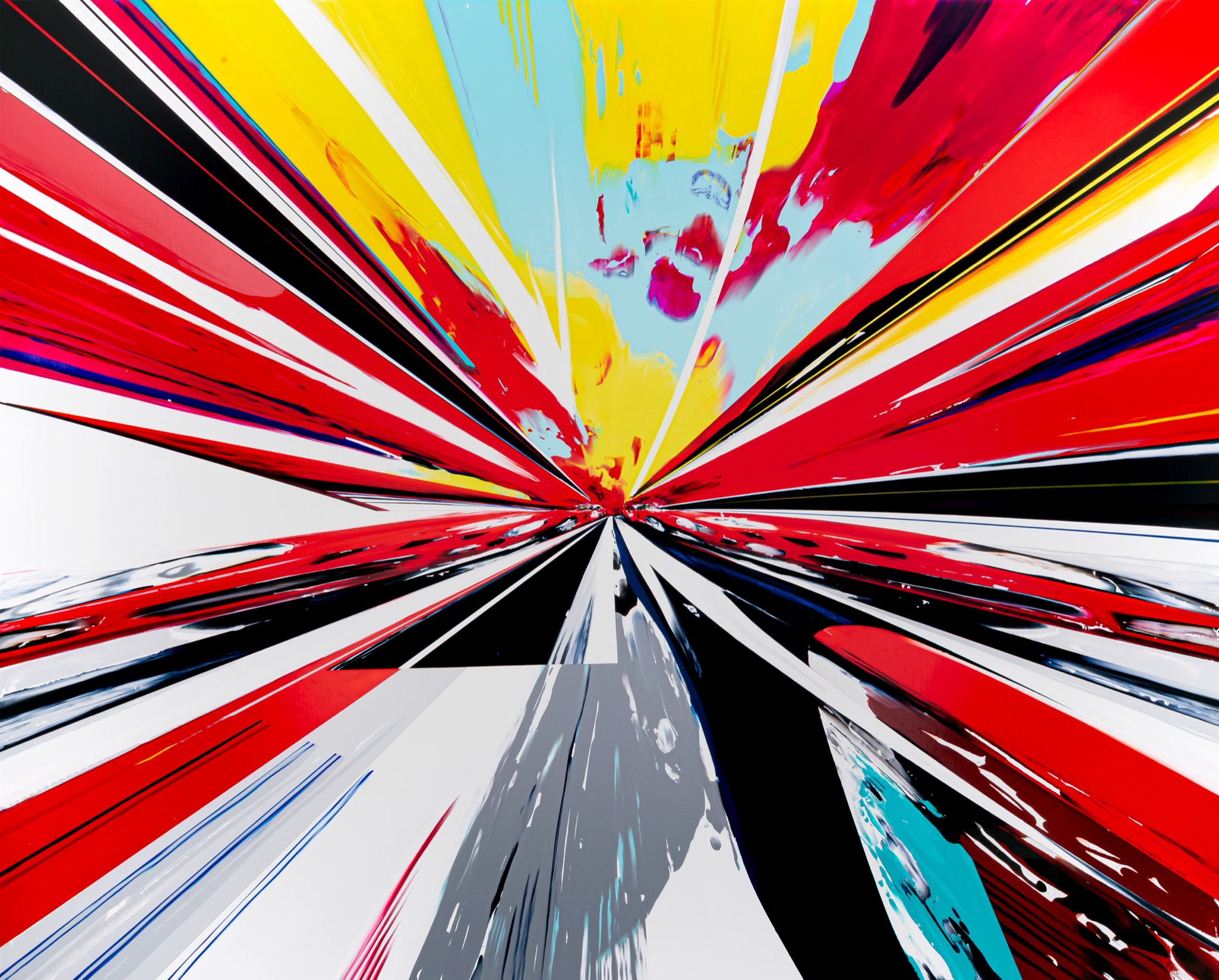
Standing before a painting by Minseok Kang, the viewer sees the explosion first. Colors tearing apart, a car body scattering, a canvas that seems to roar even at a standstill. So people assume these paintings were made quickly — an explosion is a momentary event, and surely painting one must be a momentary passion.
The assumption is wrong. What this second note looks into is not the explosion but the decade of the hand that produced it. And that decade is less a chronicle of tools than a drama — the drama of a painter slowly taming the inner beast let loose upon the canvas. From dripping to pouring, from pouring to thread, from thread to squeegee: with every change of tool, the distance between the beast and the painter narrowed.
This paradox — that the fastest paintings are made the slowest, and the most violent surfaces the most deliberately — is the second key to his work.
Dripping over a Rear View — From 2015
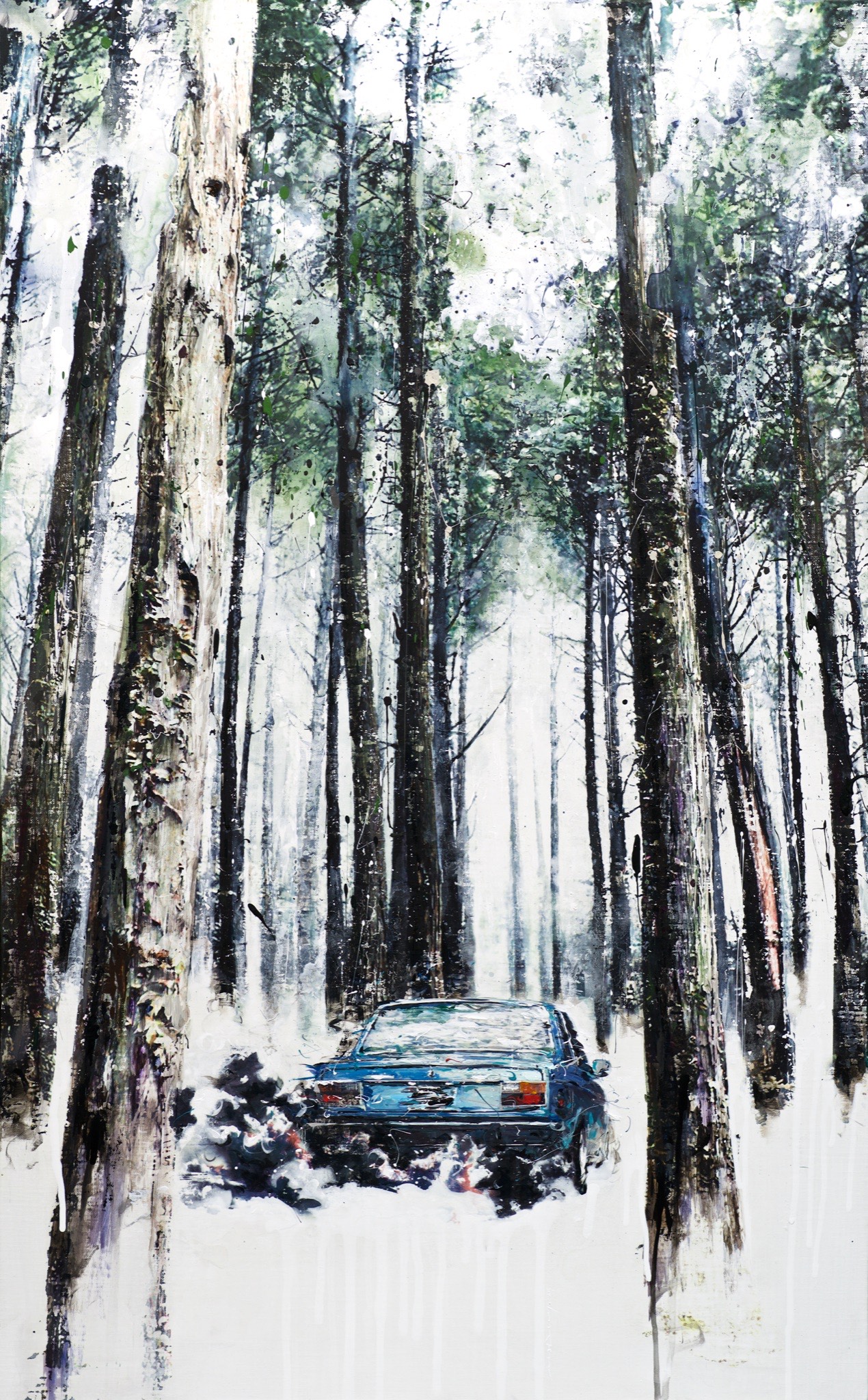
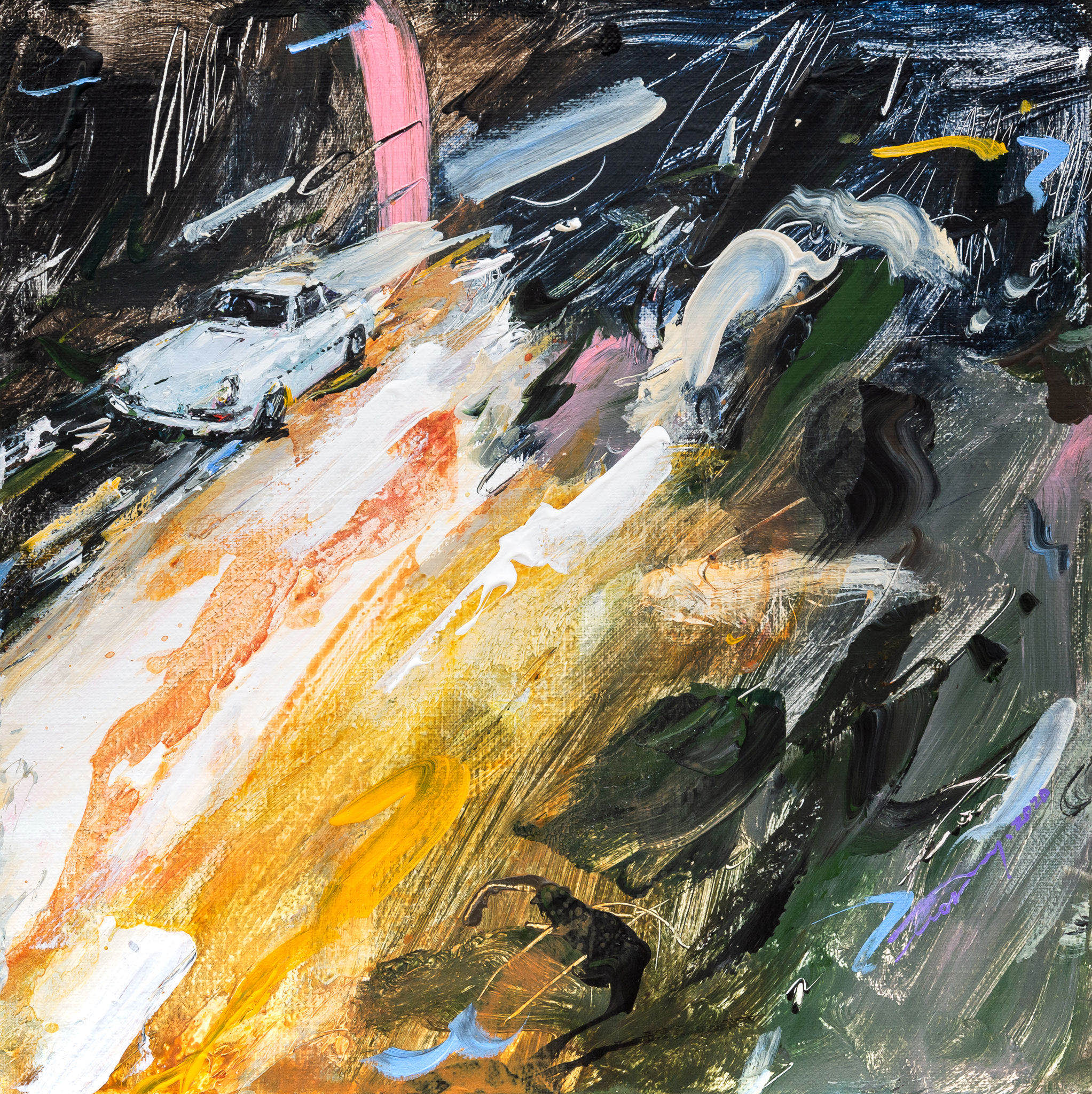
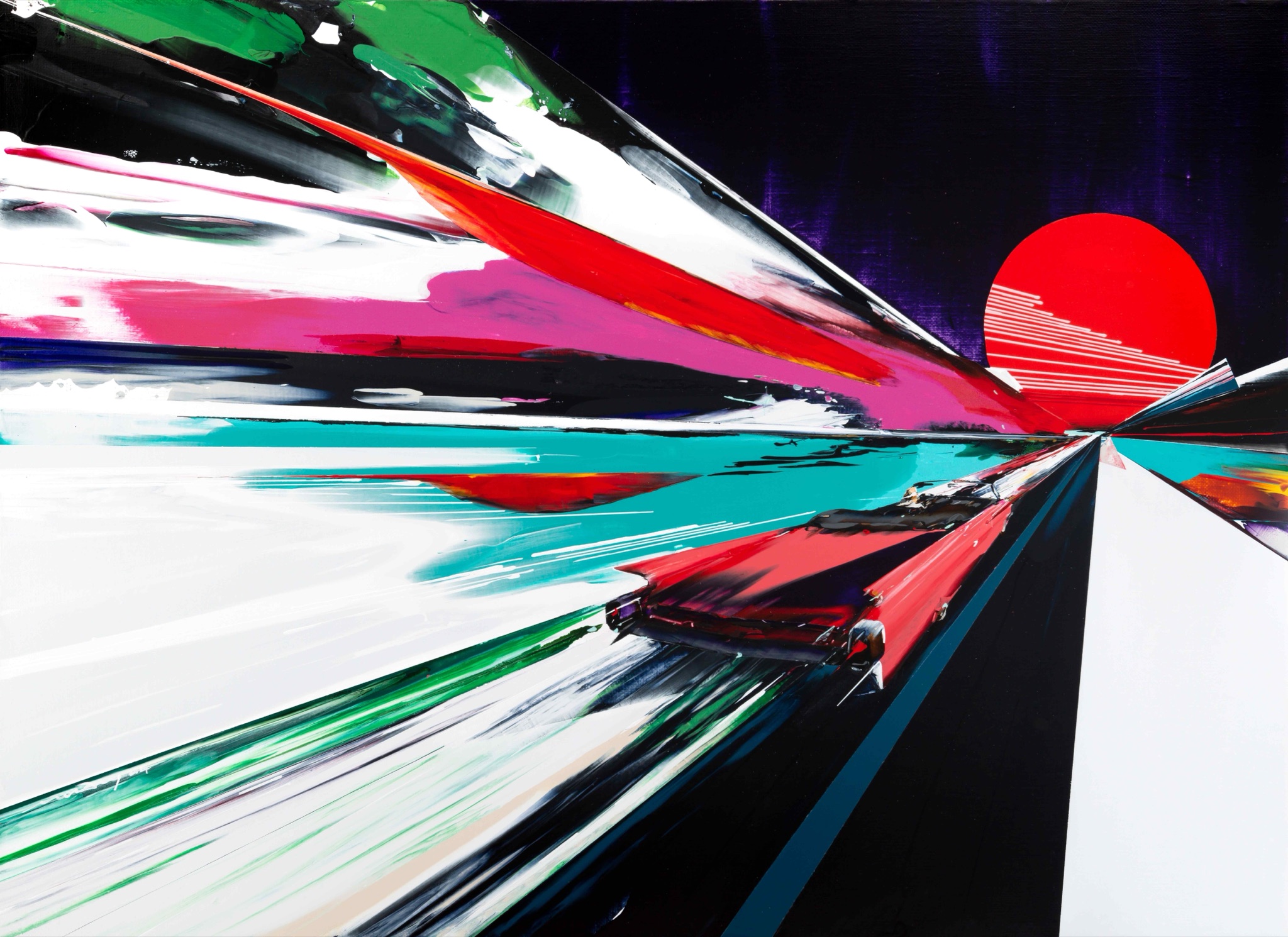
The story begins around 2015. Kang painted the rear view of a car onto the canvas — not the front but the back: a car already leaving, running ahead of its viewer. Over it he dripped paint in a single direction, and the falling rivulets gradually erased the figure. He did not stop the erasure. These were not paintings that show something, but paintings that show something has just passed — the running car and the direction it runs: the basic sentence of his art was complete even then.
What matters is that this dripping had direction from the very start. Not an impulse spattering everywhere, but a trajectory flowing one way — the beast was loose, yet the road it would run was already set. The dripping then grew bolder. He began standing the canvas upright like a wall and letting great quantities of paint stream down its face. On a vertical canvas gravity becomes one thing only — speed racing downward — and every rivulet is a record of falling. A sentence the critic Harold Rosenberg wrote in 1952 lands here: the canvas is not a space of representation but "an arena in which to act." Kang's upright canvas was precisely such an arena — with gravity and time as co-protagonists of the act.
The philosopher Henri Bergson wrote in Matter and Memory (1896) that time is not divided evenly like a clock's face but melts and flows, each moment seeping into the next — duration. It is hard to imagine a substance closer to that sentence than paint descending an upright canvas, upper colors staining lower ones as they go. In those years, Minseok Kang was painting a portrait of time.
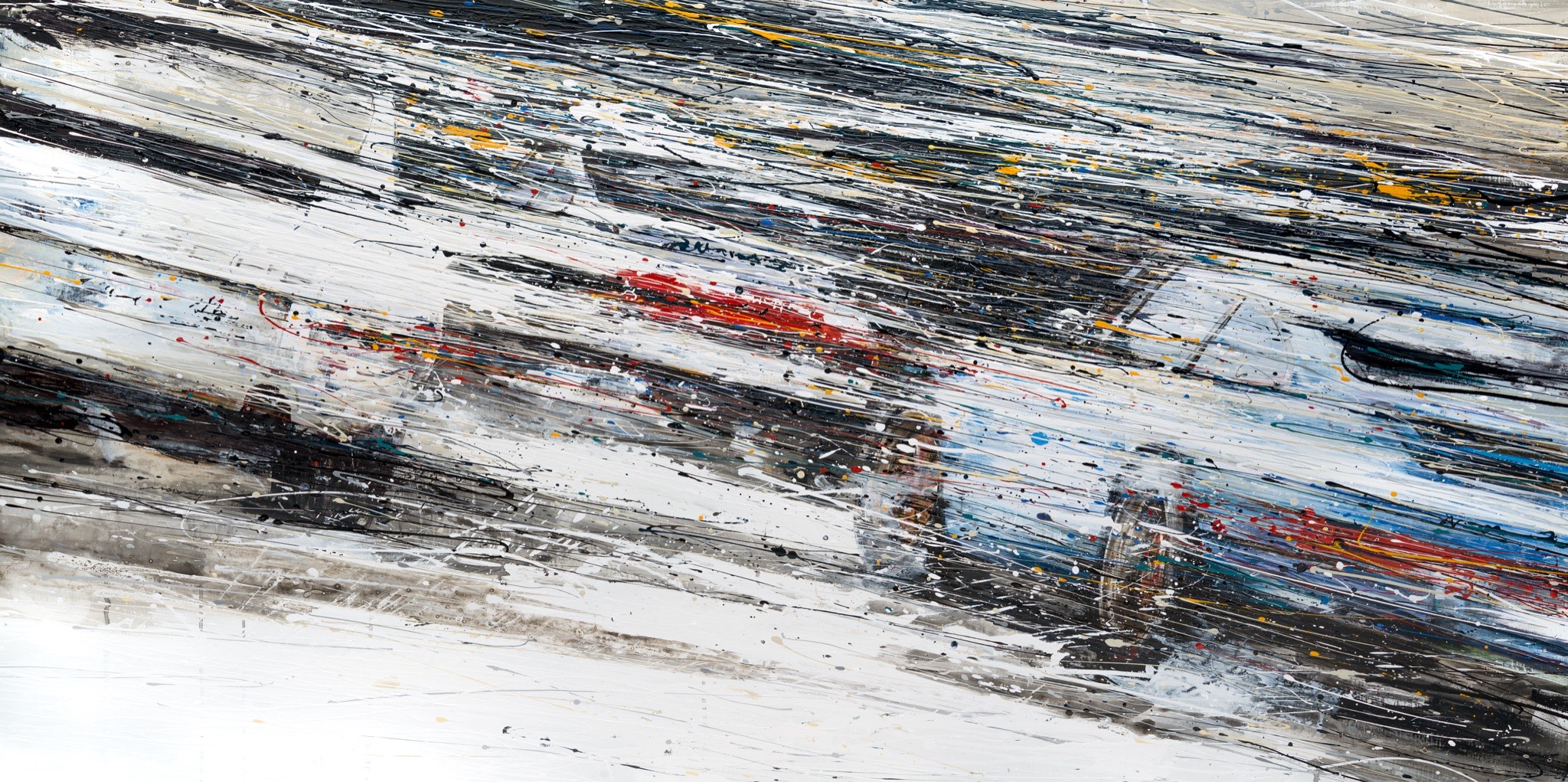
Thread — The First Rein Handed to the Beast
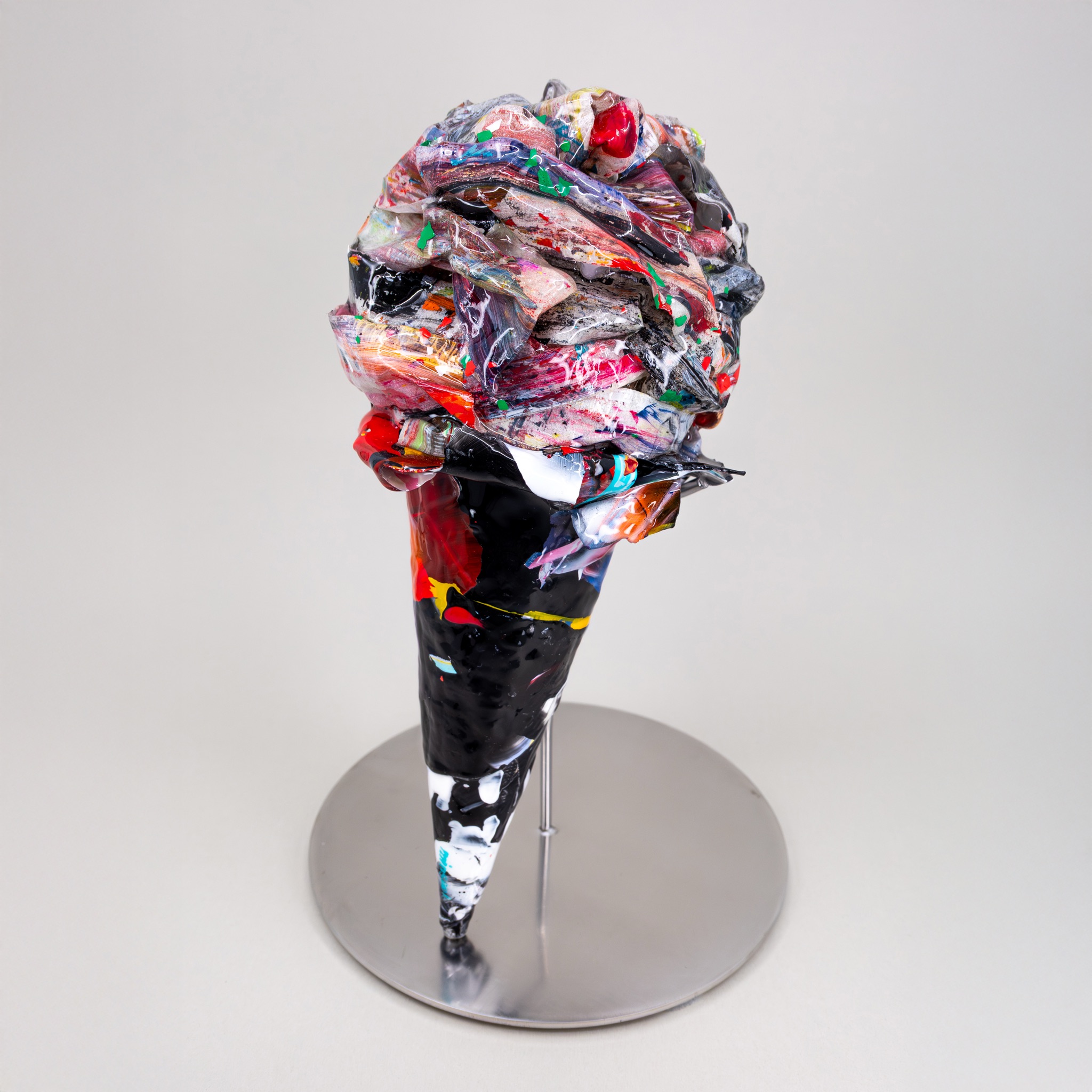
Pouring was freedom, but freedom breeds excess. Facing a surface full of unruly traces, the painter picked up his next tools: a needle and thread. Sewing thread over the poured, indiscriminate marks to bring the surface under control — the artist describes this work in exactly these words: it is the taming of the inner beast.
In The Birth of Tragedy (1872), Nietzsche explained art as the tension between two gods — Dionysus, god of intoxication and impulse; Apollo, god of form and order. Great art, he argued, is born not from the victory of either but from their taut marriage. On Kang's canvas this old scheme becomes material: the poured paint is Dionysus, and the thread passing over it stitch by stitch is Apollo. The thread erases nothing. It does not kill the beast; it bridles it.
Sewing demands the opposite speed from scraping. The needle pierces the canvas, the thread follows, and comes out again — there is no shortcut in this gesture. When the slowest of motions is performed over a runaway surface, control stops being suppression and becomes conversation. The tools did not relieve each other on a fixed schedule; they overlapped and returned. There were many turns in the change, the artist says of those years, briefly.
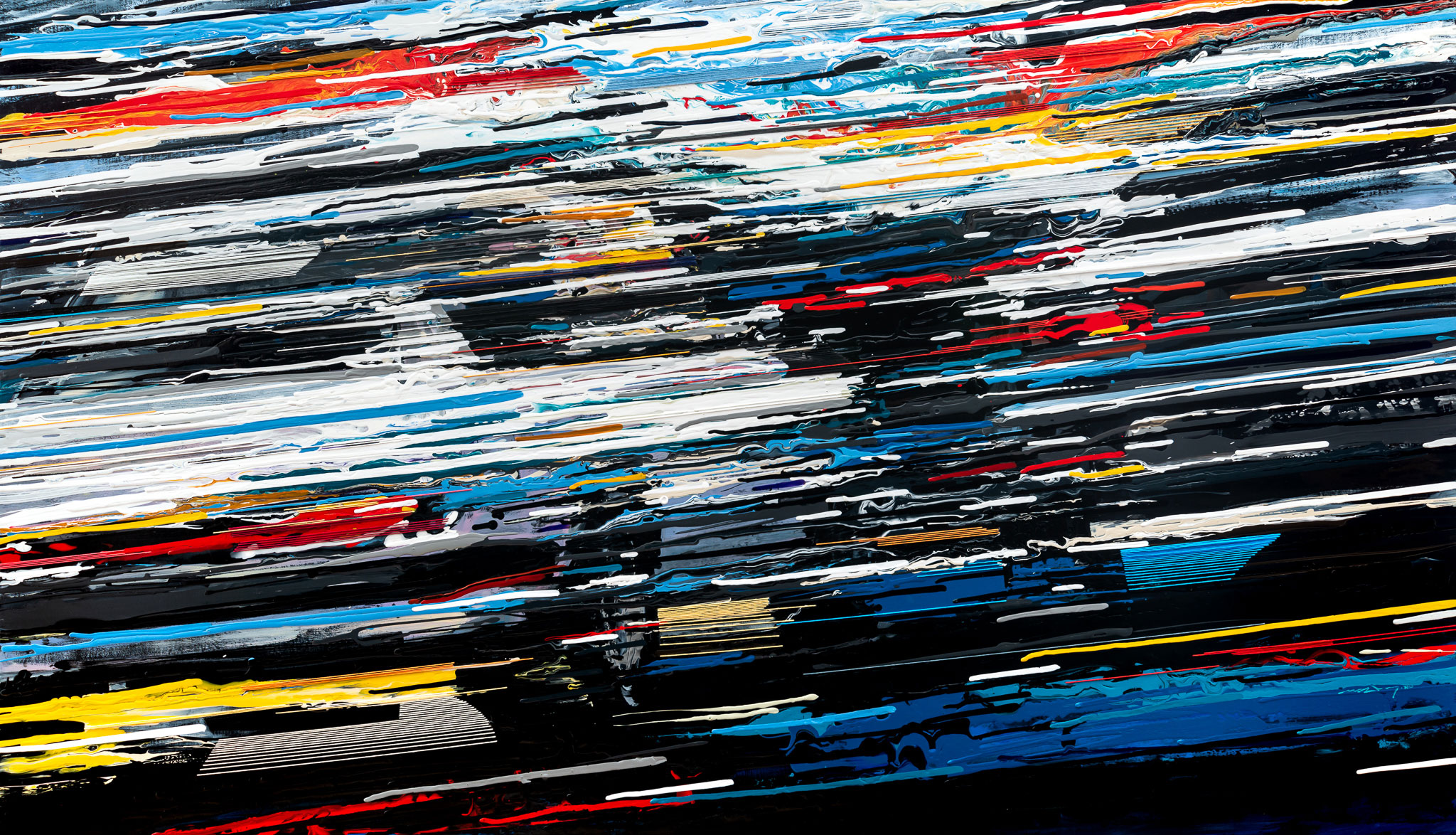
The Squeegee — A Planned Explosion
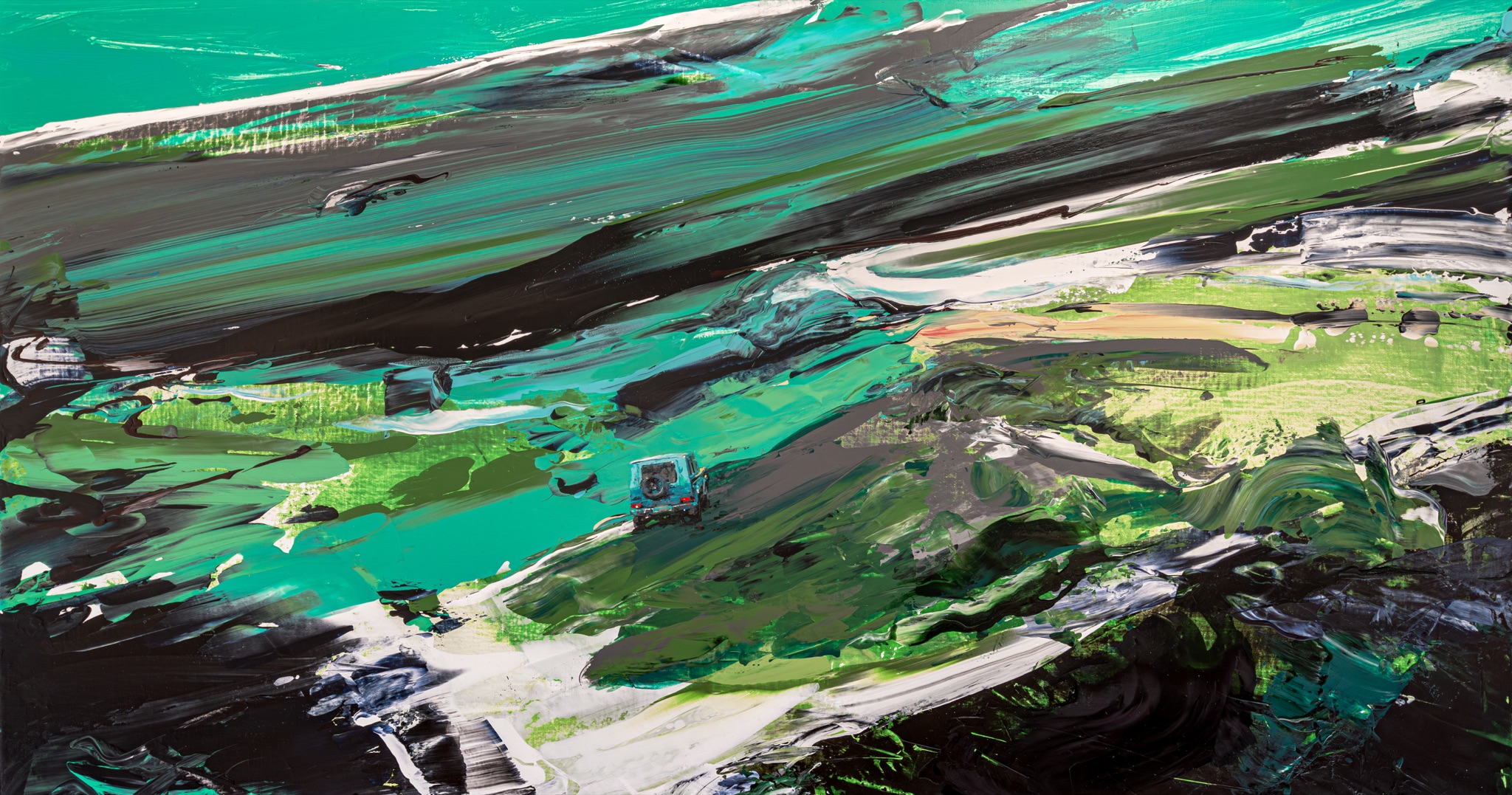
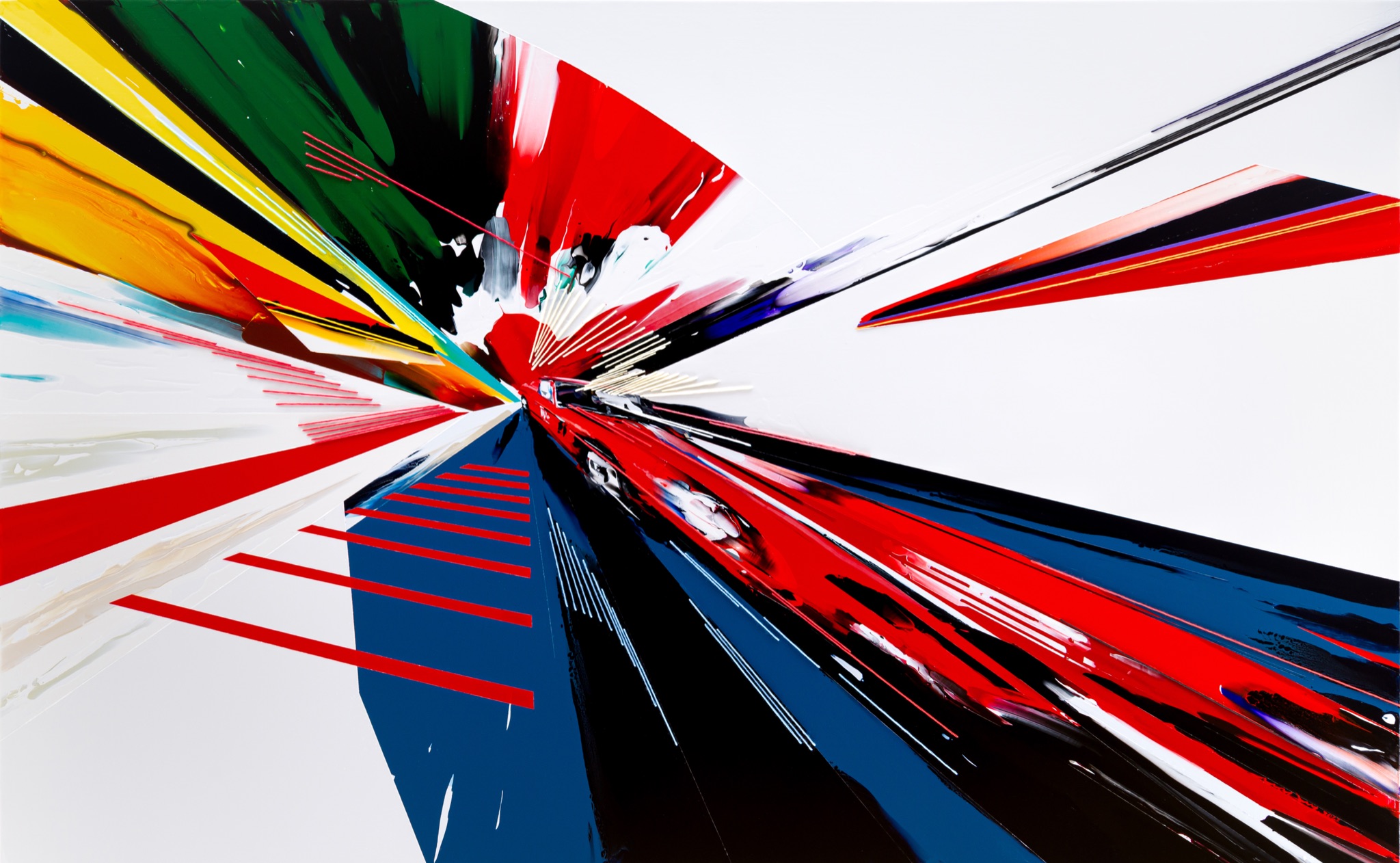
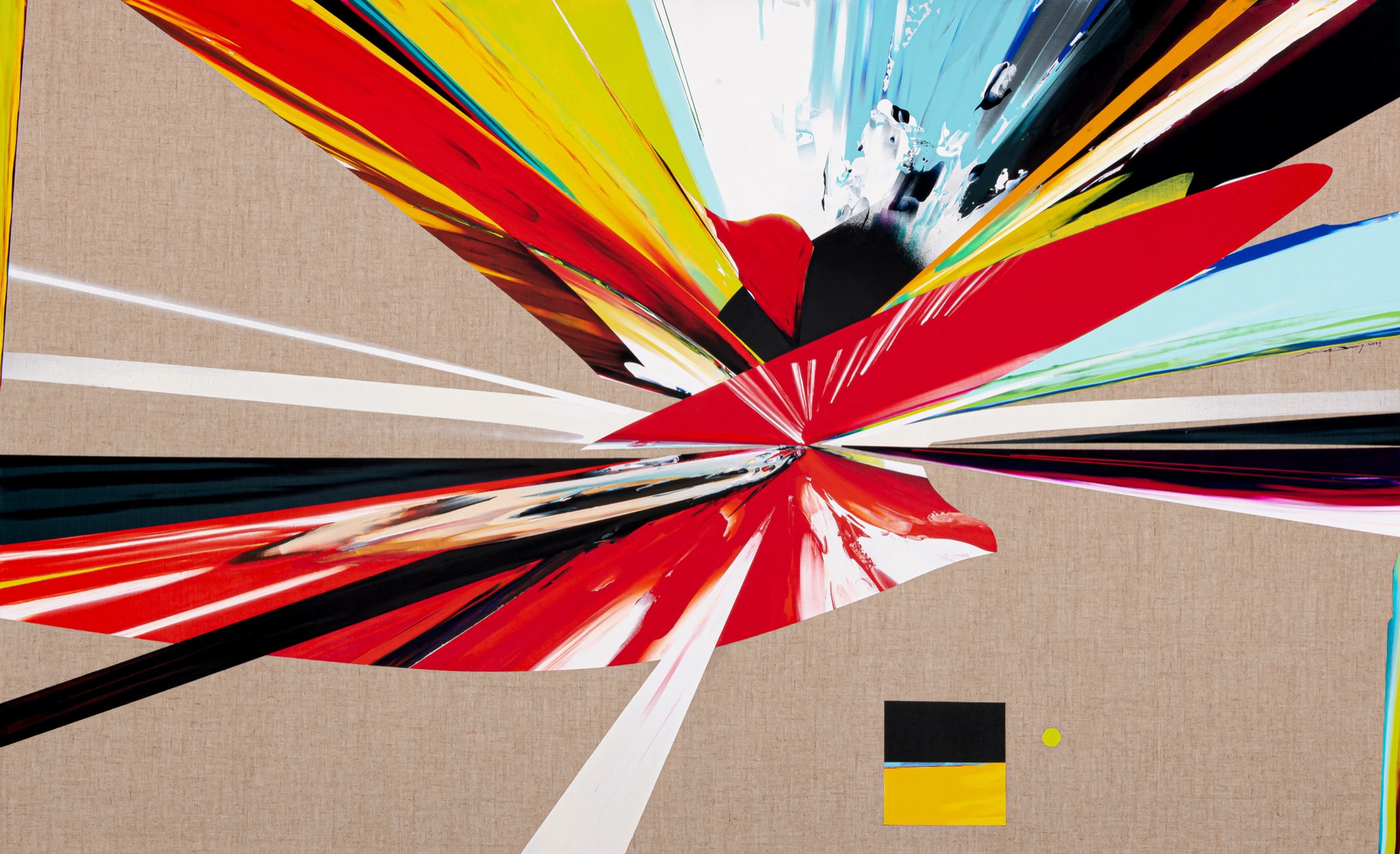
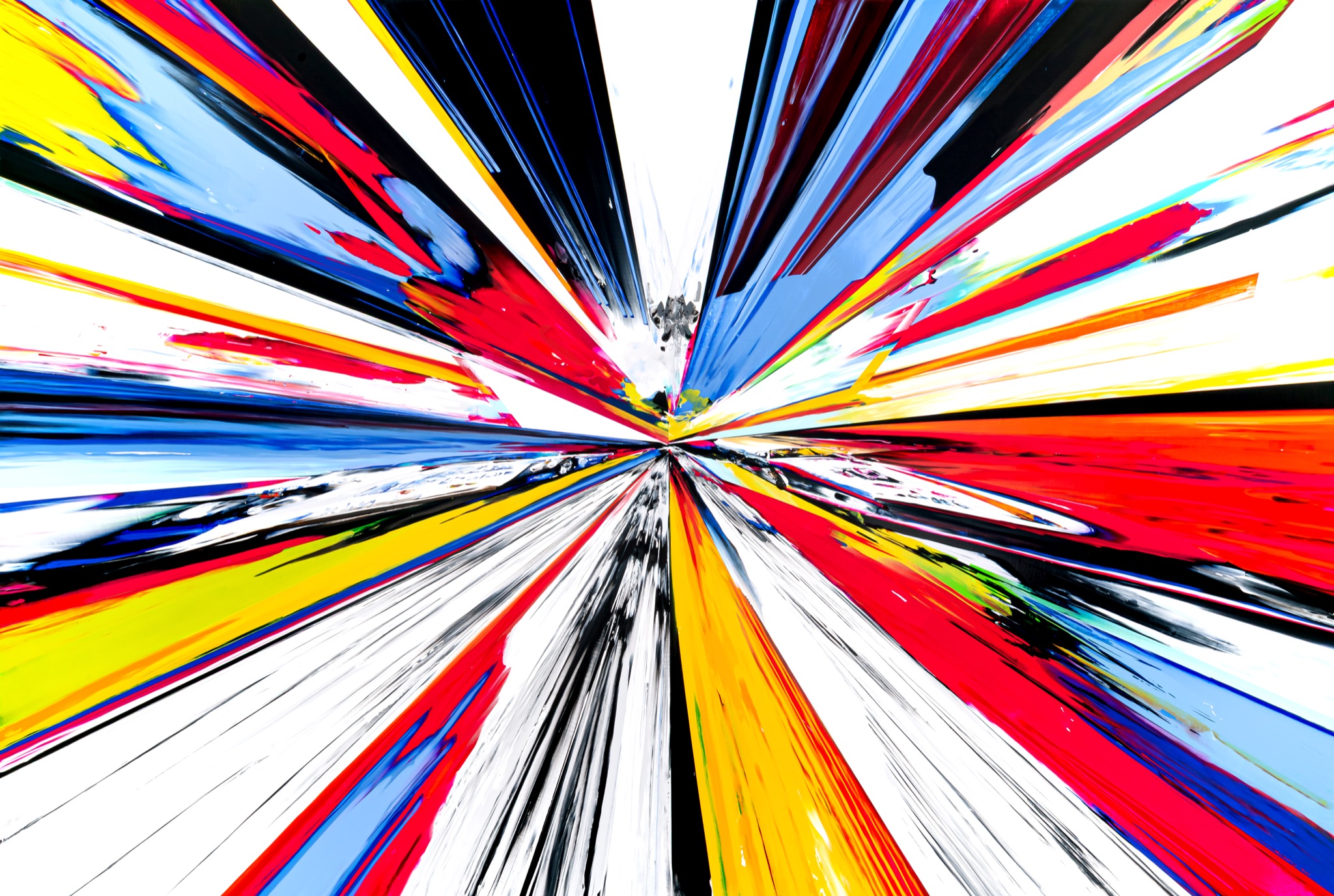
Then comes the squeegee: a tool that pushes paint wide across the surface and scrapes it away before it sets. If pouring meant entrusting the work to gravity, the squeegee means the body pushing through — and what is decisive here is planning. An already-conceived figure is pushed out in an utterly deliberate manner; where to push and where to leave is settled before the hand ever touches the surface. The beast's energy is unchanged, but the painter now designs the path it will travel. The artist's own note sums up the method: "The traces scraped by the squeegee are afterimages of time passed; the canvas is not a space where the car runs, but a space where time passes."
Each scrape is at once an erasure and a revelation. What is removed lets the color of a lower layer rise — and that color is the work of days ago, that is, the self of days ago. Canvases covered over entirely in dissatisfaction, compositions overturned after days of effort: to cover is not to discard but to place beneath. For this painter failure is not waste but material. The paint layers are a geology — dig, and earlier time comes out.
In The Myth of Sisyphus (1942), Albert Camus wrote of the man condemned to roll his boulder forever: "The struggle itself toward the heights is enough to fill a man's heart. One must imagine Sisyphus happy." Every morning in the studio, yesterday's covered-over canvas sits there like the boulder. Camus explained eighty years ago why the hand that mixes paint again does not look unhappy.
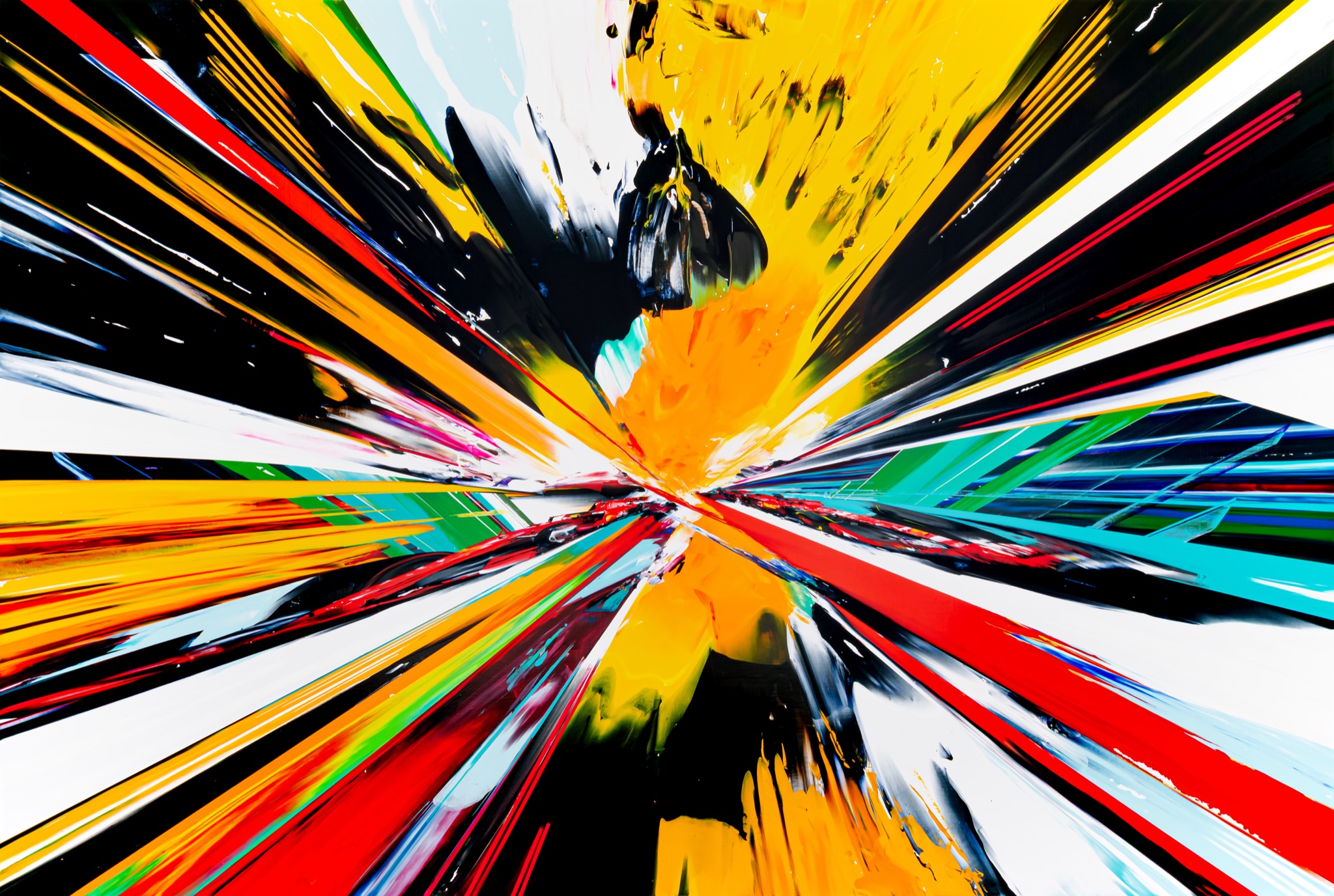
Radial — Completing by Splitting
And now. In the recent canvases the squeegee no longer moves in one direction. It moves radially — splitting the car's form from the center outward, pushing the paint away like the shards of a big bang. Yet this explosion is not an accident; it is a design. Ten years ago the painter watched the beast stream down the canvas; then he bridled it with thread; then he set its road with the squeegee. Now he plans the explosion itself. The final stage of control is not holding down — it is deciding where the burst will happen.
For the artist, this drama of control is not a story about technique but about identity. To govern one's inner world means completing an identity through the stages of understanding oneself and of accepting oneself — his own words, almost verbatim. The philosopher Paul Ricœur wrote in Oneself as Another (1990) that identity is not given but made, woven in the act of telling one's life as a story — narrative identity. Rewriting a single sentence for ten years — the running car, and its direction — Kang's chronology of canvases could fairly be called that concept in paint.
At first, it was a rear view being erased. Now, it is an explosion split and designed by his own hand. The same car, the same run — but the hand that holds them belongs to an entirely different man.
The Canvas Is a Record of the Body
The philosopher Maurice Merleau-Ponty wrote in Phenomenology of Perception (1945) that it is the body, not the mind, that knows the world. Before Kang's paintings the sentence stops being an explanation and becomes a description. What remains on the canvas is not the conclusion of a thought but the time a body has passed through. The dripped rivulets hold the tilted wrist of 2015; the poured layers hold the waiting before an upright canvas; the spacing of the stitches holds the rhythm of breath; the radial trajectories hold the rotation of a shoulder. The speed a viewer feels is the translated total of the ten years one body has spent on that surface.
This is why his paintings change the longer you look. First you see the explosion, then the trajectory, and finally the hand that made the trajectory. The beast has not disappeared. Only now, it is the painter who decides where it runs.
The next note, Reading MINSEOK No.3, turns to a declaration from the autumn of 2025 — RED LINE: the line you must not cross, and the line you must.
References
· Minseok Kang, series notes for Endless Force, Time Horizon, Timeleap, and Endless Impact — minseok.gallery · Friedrich Nietzsche, Die Geburt der Tragödie, 1872 · Henri Bergson, Matière et mémoire, 1896 · Harold Rosenberg, "The American Action Painters", ARTnews, 1952 · Albert Camus, Le Mythe de Sisyphe, 1942 · Paul Ricœur, Soi-même comme un autre, 1990 · Maurice Merleau-Ponty, Phénoménologie de la perception, 1945
All images in this note are works by Minseok Kang © MINSEOK Studio. Unauthorized reproduction or use is prohibited.