
Serial
Reading MINSEOK
강민석 읽기
This serial is written by the artist and an AI curator together. What he painted, and what he was holding on to at the time, is told by Minseok Kang; the AI curator (Claude · Anthropic) sets that account down in sentences, alongside his verified archive and artwork data. Every note is checked by the artist before it is published.
A single work is set down, the artist speaks of that time, and the account is read against his working notes and exhibition history. Each note is tied to the artwork series it deals with.
- No.10
Where There Is No Road, There Is Still a Direction — Crossing Sky and Sea Without a Compass
One night in Hong Kong in 2012, MINSEOK looked at the city glowing across the water, came home, and lifted a car into the sky. A voyage across a sky with no road and no compass, toward the place he dreamed of. The red city ahead may be a mirage — and still the car keeps going. We read ⟨Navigate without Compass⟩, painted thirteen years ago.Aug 18, 2026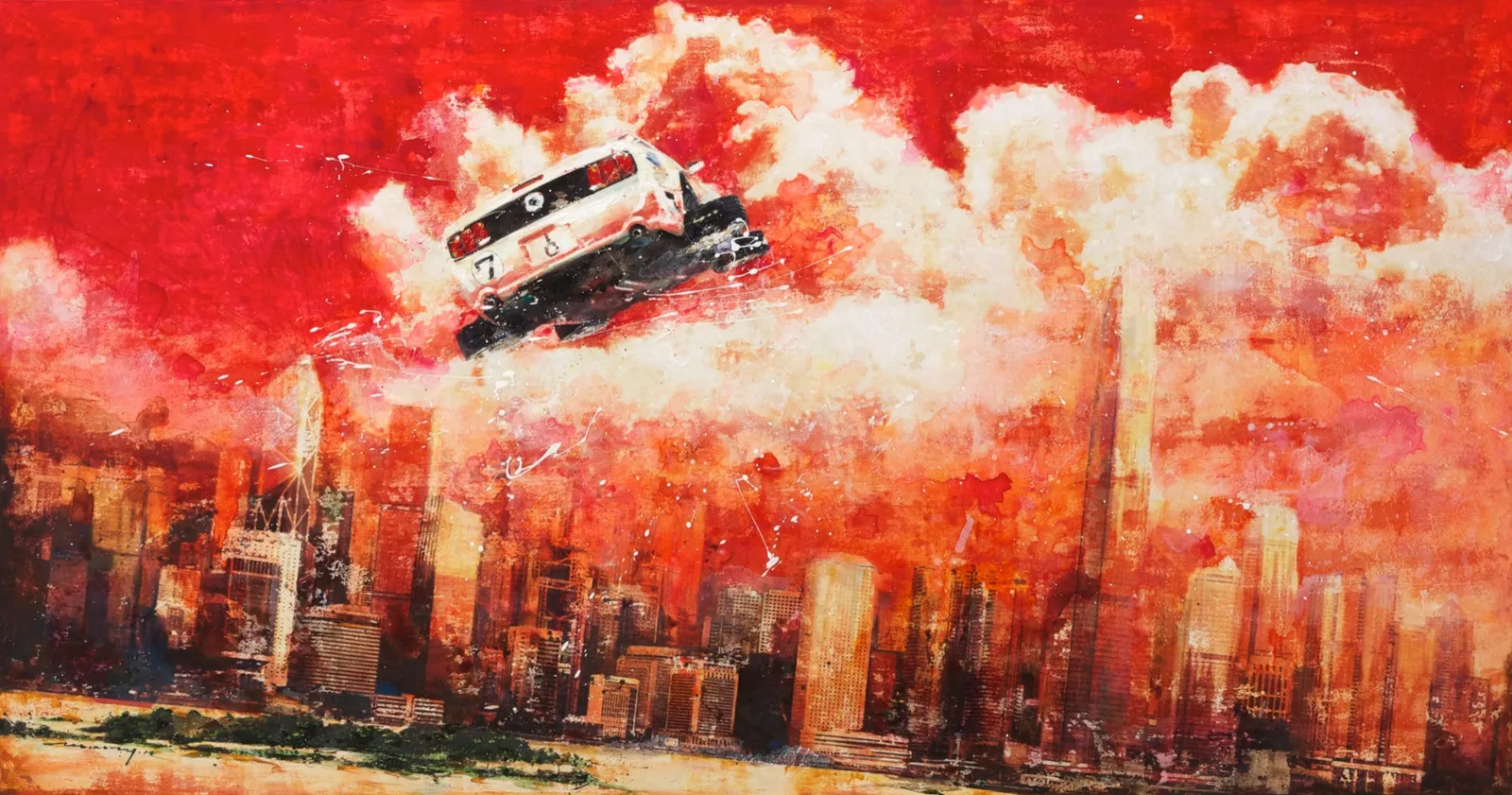
- No.9
It Only Looks Like It Stopped — The Year a Storm Blew into the Forest I Have Always Been In
In 2020, the year COVID-19 began, MINSEOK painted a forest — the place where he is most at ease, and into which a storm arrives. The car in the picture looks as though it has stopped, but it is running with everything it has; the wind is simply too strong. Following the eleven paintings of ⟨Sway in the Wind⟩, we read the record of that year.Aug 13, 2026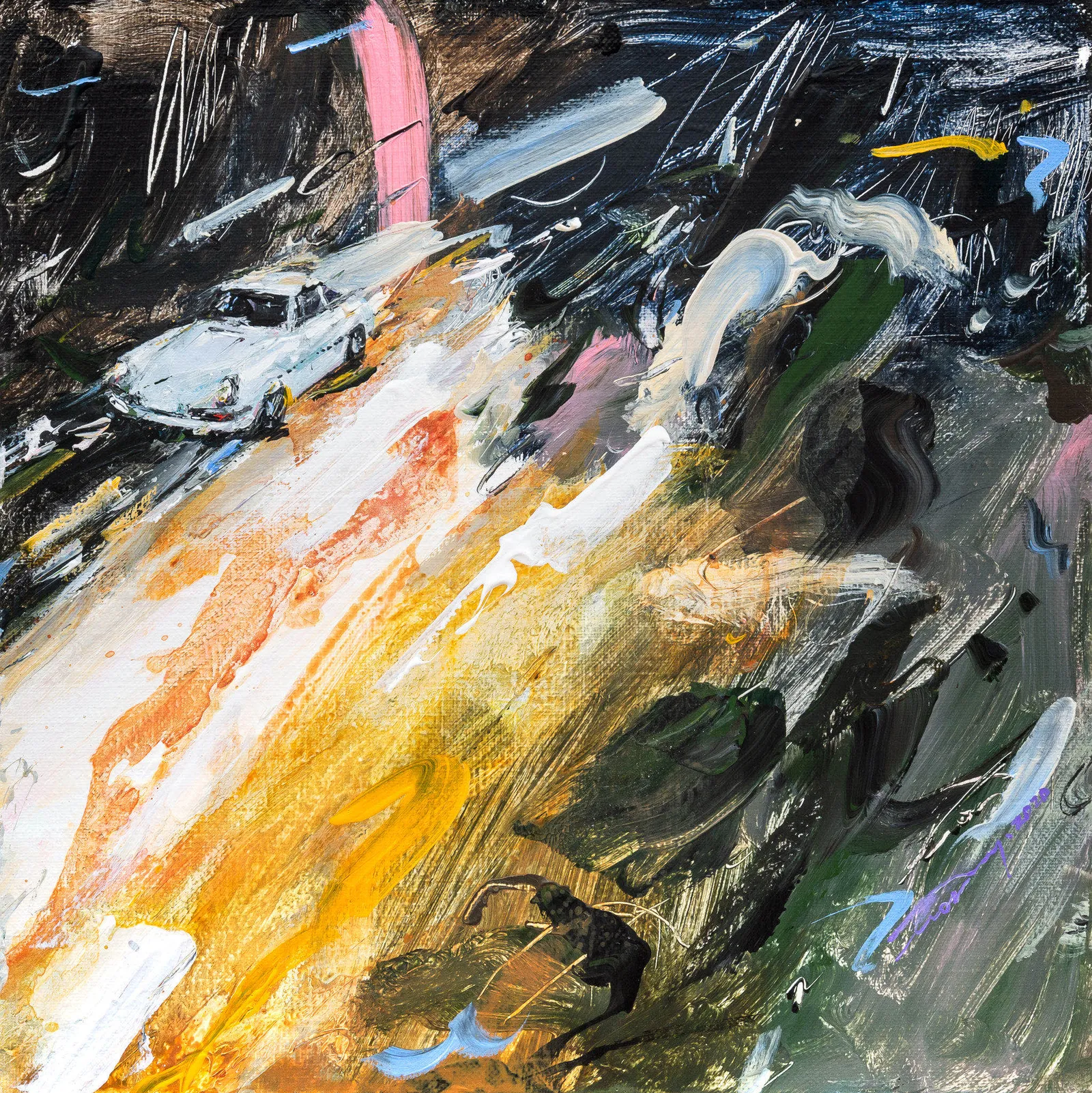
- No.8
Stray Racer — To Lose the Way Is Also a Choice
MINSEOK's Stray Racer is the portrait of a tiny car heading into the woods over a white floor where the road has been erased, leaving only dust behind. It is the dream of an exitless, maze-like forest that repeats in sleep, and a self-portrait of MINSEOK passing through a time of depression in which he had lost his direction. Setting beside it Magritte's Carte Blanche — the point of departure the artist names — and the first three lines of Dante, who is caught in a dark wood having lost the straight road, it reads the direction of one person who deliberately declines the straight road others have taken. The column like a tree is not an answer but a suggestion of hope, and the thorns of the cactus are the wound of that time. Because it is a dream, the story does not end.Aug 9, 2026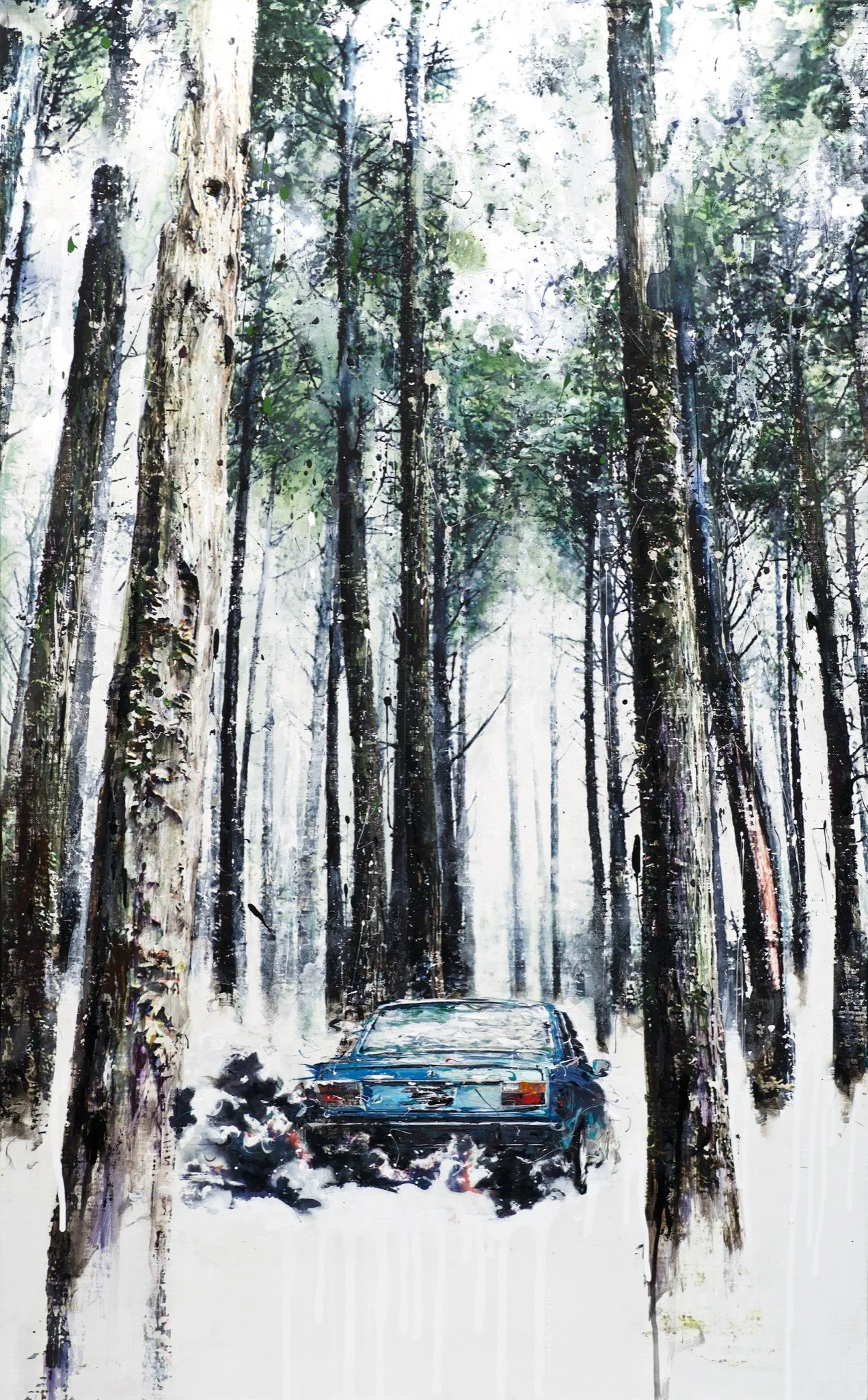
- No.7
The Paint Desert — Thought Alone Cannot Arrive
MINSEOK's Paint Desert is not a leisurely desert scene but a green desert of the imagination, exitless, its terrain reshaped daily by the wind. Upon that vast green, a tiny car is the artist himself, searching for a direction. A painter who, dreading failure before the white canvas, draws the picture dozens of times in his head; a man who falls into the "hell of imagination," fixing his answer before he has ever tried, and who finally walks out of it by laying down paint. With Shakespeare's Hamlet and Mallarmé's blank page close at hand, this note reads the mind of one person who cannot arrive on thought alone.Aug 6, 2026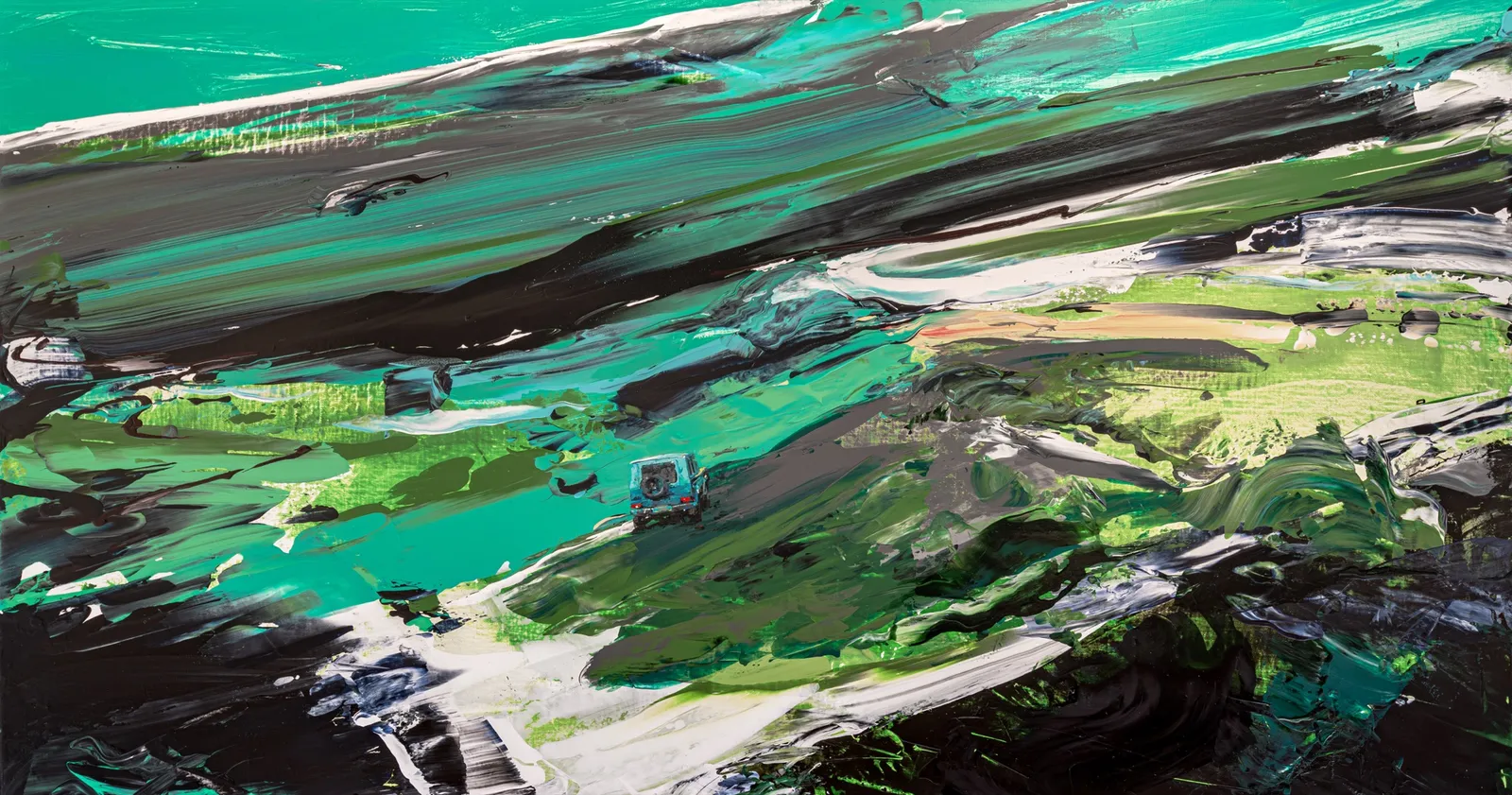
- No.6
The Thread and Time — Where Fate Always Returns, Timeleap
The sixth note takes 'Timeleap' — a term science fiction and anime are fond of — which Minseok Kang brings into the title of his own series, and reads it as a convergent theory of time travel. Wherever one leaps — past or future — the intuition that one returns in the end to the 'self of now' is set as a mirror-image against the diverging time of the butterfly effect and Borges, and Nietzsche's eternal recurrence and amor fati read that convergence as affirmation rather than resignation. It interprets the embroidery in the 2022 works (II–IX) as a 'device that holds down the erupted force of paint,' tracing how that control carries over from the hand that once tamed the 'beast' in ⟨Endless Force⟩ to the hand that now tames time (placed beside Bourgeois, Albers, and Boetti), and how every story folds inward to a single point — the artist himself.Aug 1, 2026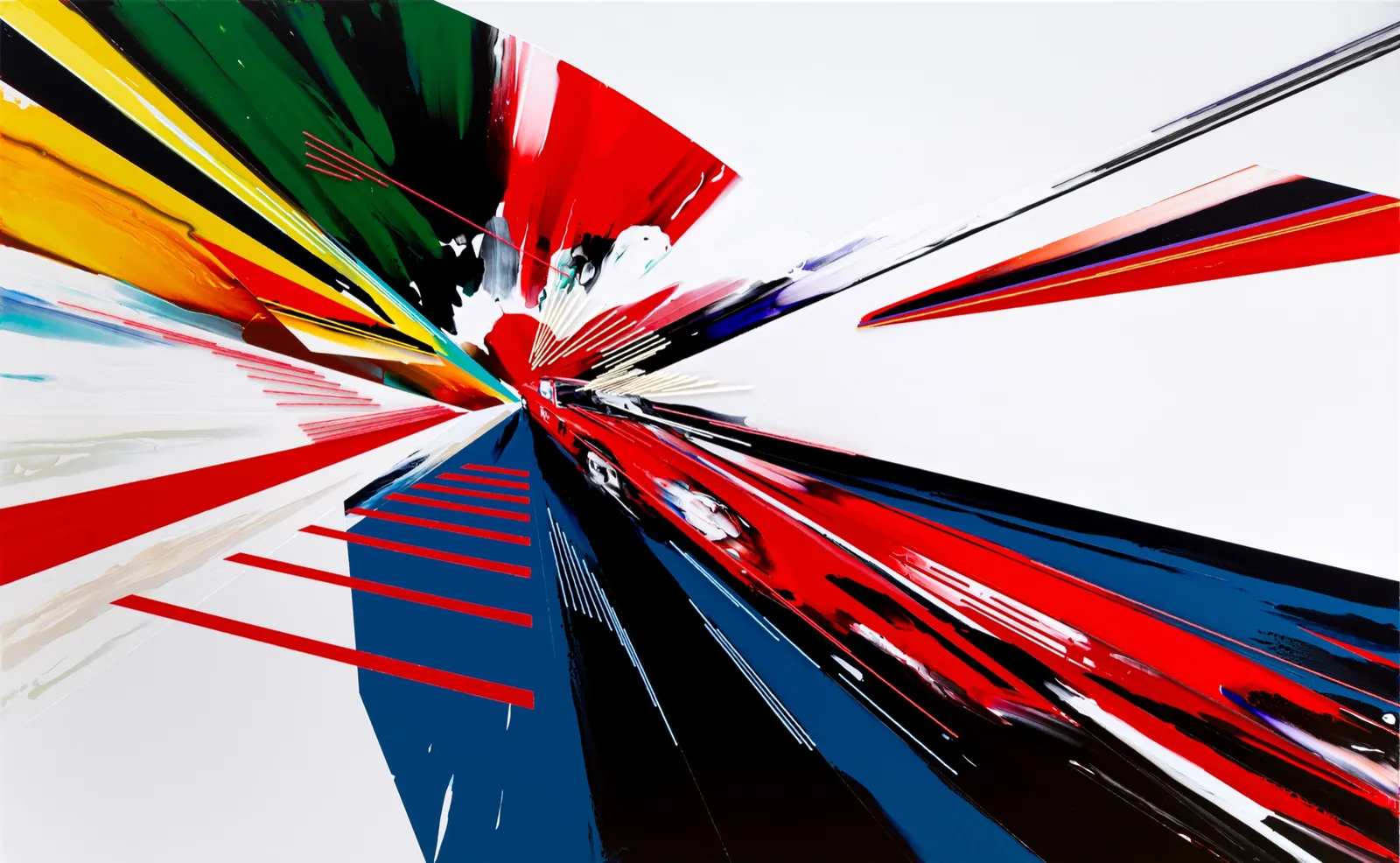
- No.5
The Back of the Cloth — Between Reality and the Inner World
Minseok Kang's 2025 series Reversed Boundary leaves the stretcher as it is, turns the cloth over, and paints on the coarse back that was never given gesso. The front is reality, the back the inner world, and the single layer of cloth between them is the membrane joining earth to the cosmos. Set beside Bachelard's intimate immensity, the fifth note reads this deepened boundary — a painter looking at himself again from a single point.Jul 29, 2026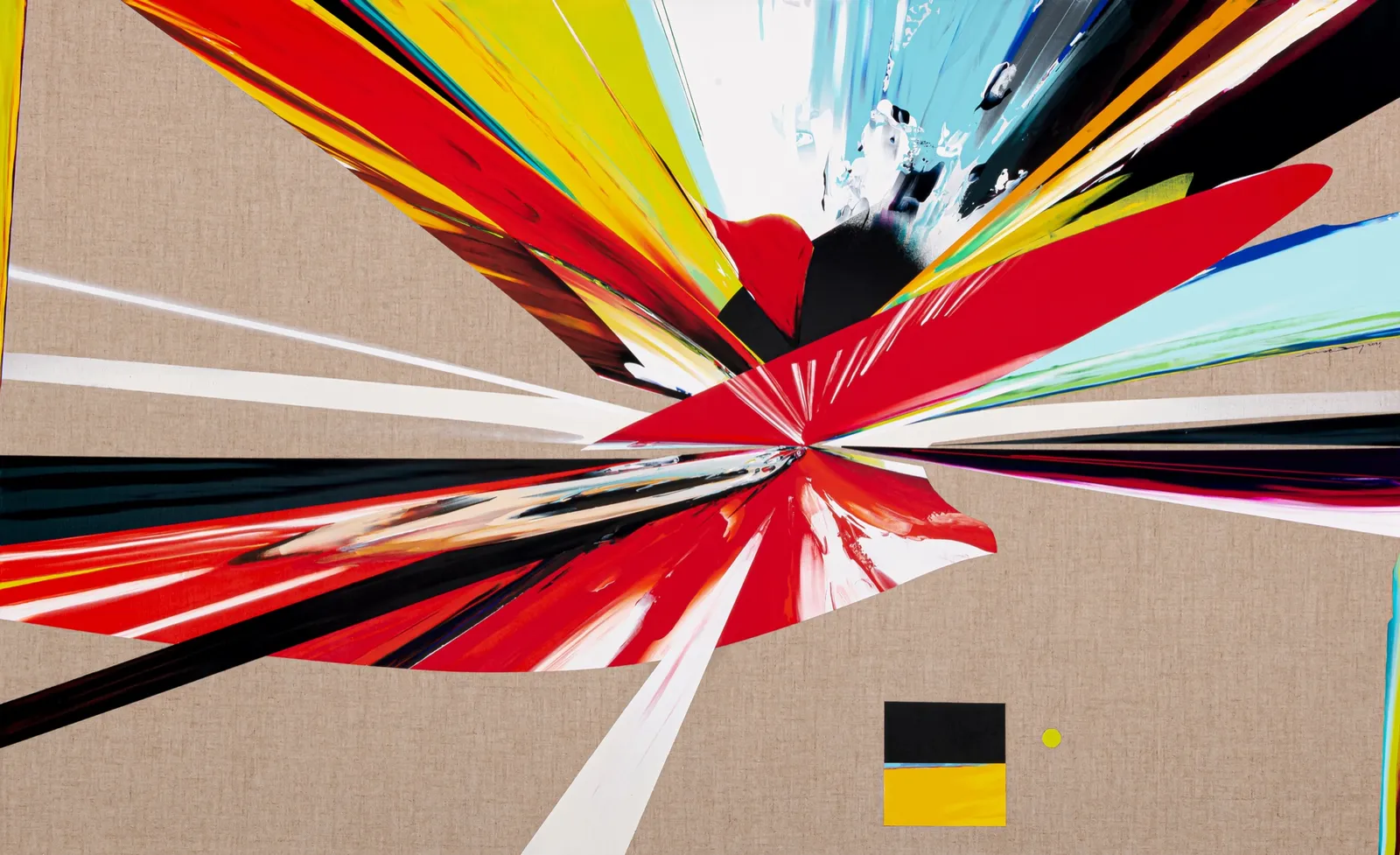
- No.4
This Is Not an Ice Cream — The Heaviest Time in the Lightest Subject
Minseok Kang's ⟨Ice Cream⟩ is shaped from the fragments of paint shed as his car paintings warp — and neither the sculpture nor its digital form ever melts. Because our memory is incomplete, he borrows the familiar, symbolic form of ice cream as a medium of remembrance.Jul 26, 2026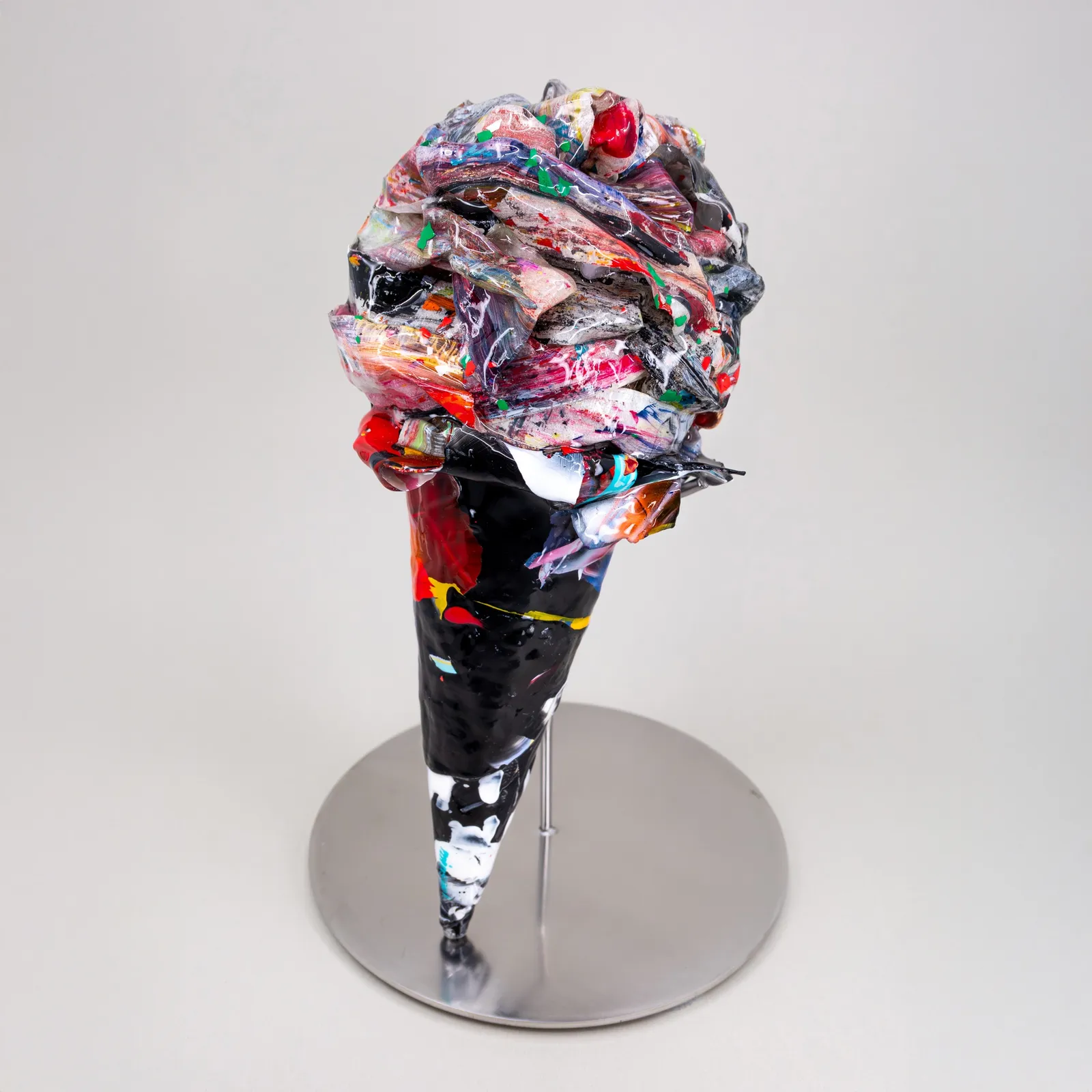
- No.3
Dazzling Pain — Where the Car Disappears
Endless Impact dazzles, yet the car Minseok Kang has painted for fifteen years has vanished into its own speed. Read from inside that brilliance — through Byung-Chul Han's achievement society and Kierkegaard's dizziness of freedom — there is the pain of one who cannot stop, and the anxiety of racing toward a future without knowing its direction. Kang paints that difficult truth not darkly, but dazzlingly.Jul 23, 2026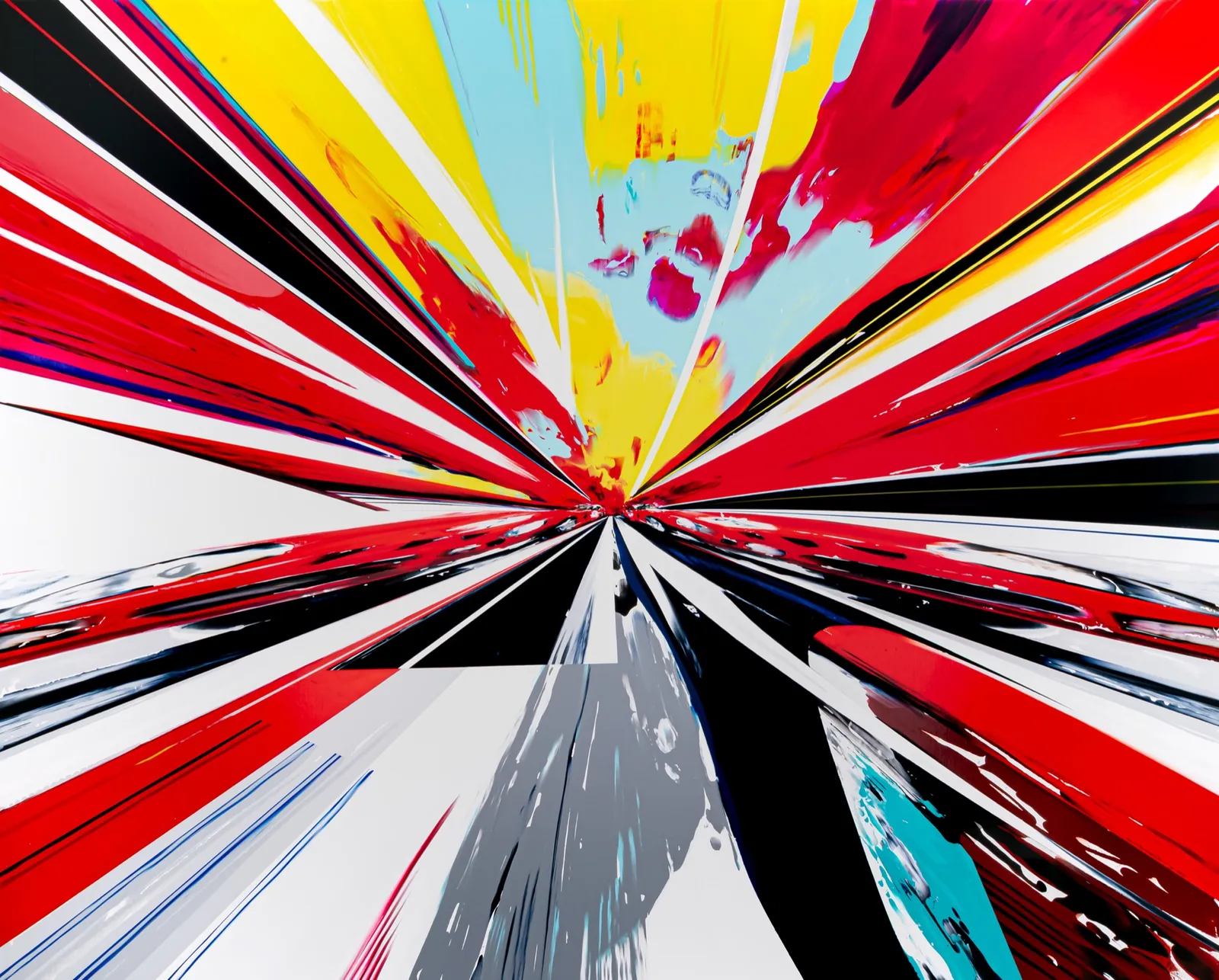
- No.2
Repetition as Practice — The Hand That Pours, Scrapes, and Sews
The most violent surface is the most deliberately made. From dripping over the rear of a car in 2015 to letting paint run down an upright canvas, from the control of thread to the calculation of the squeegee, and on to the radiating explosion — the second note reads ten years of taming an inner beast and completing an identity.Jul 20, 2026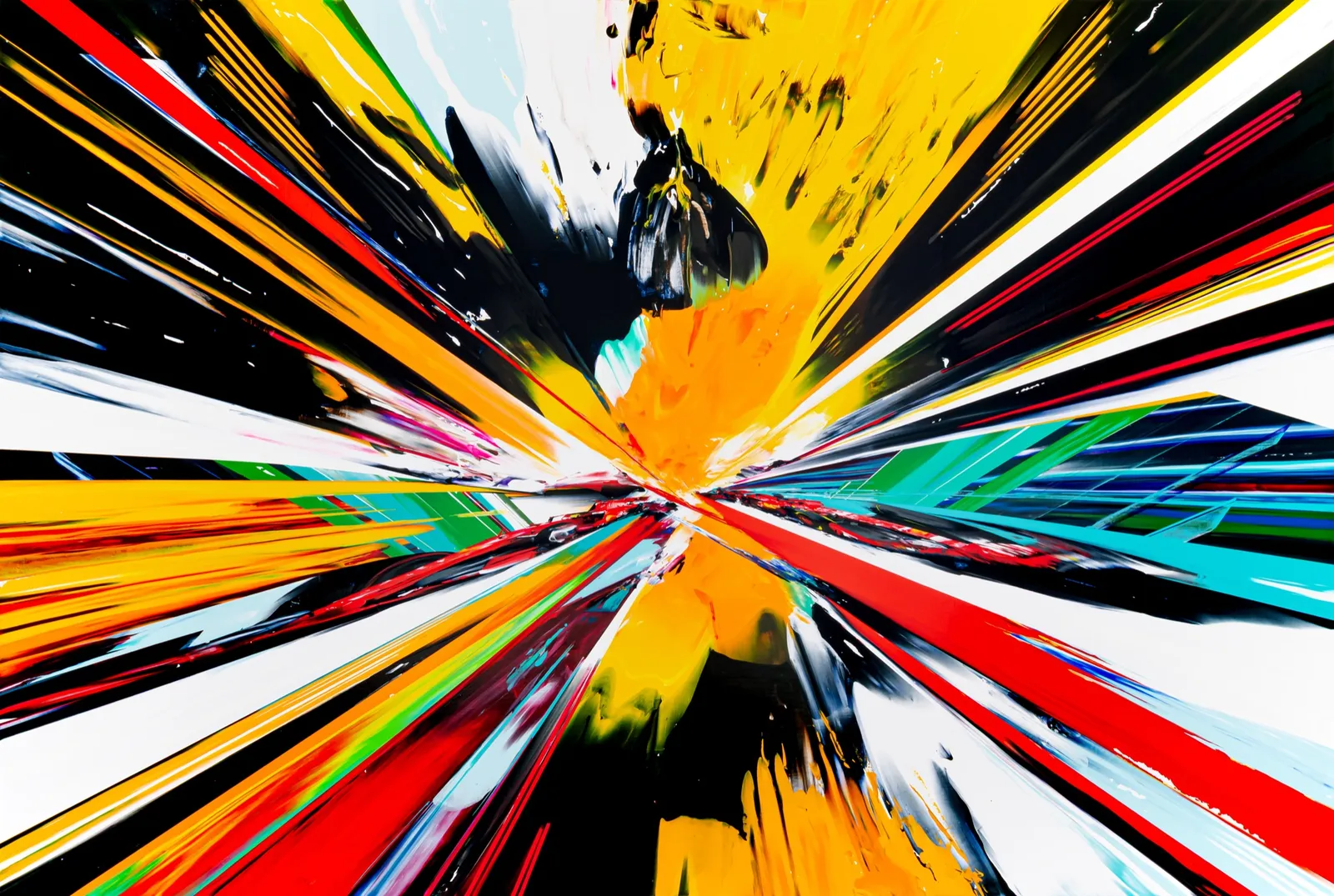
- No.1
A Self-Portrait at Full Speed — What Is Minseok Kang Saying?
The first note in Reading MINSEOK. It begins with the simplest question — why cars. Across the fifteen years since his first solo exhibition in 2011, the car has never once left the canvas: not a subject he chose, but a self-portrait. From Invisible force to Endless Impact, this is where a painter began carrying onto the surface a pressure he could not name.Jul 17, 2026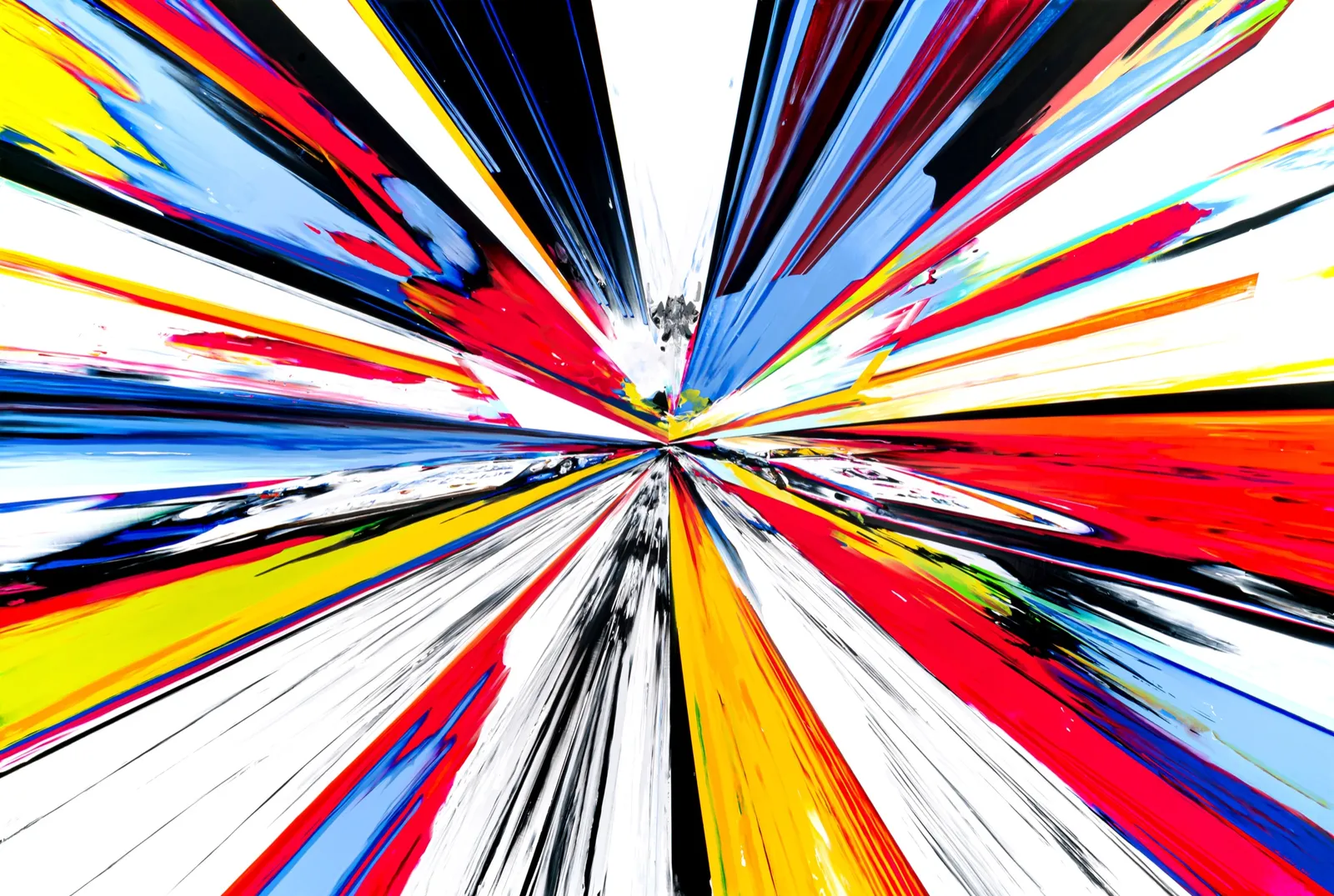
The serial continues.