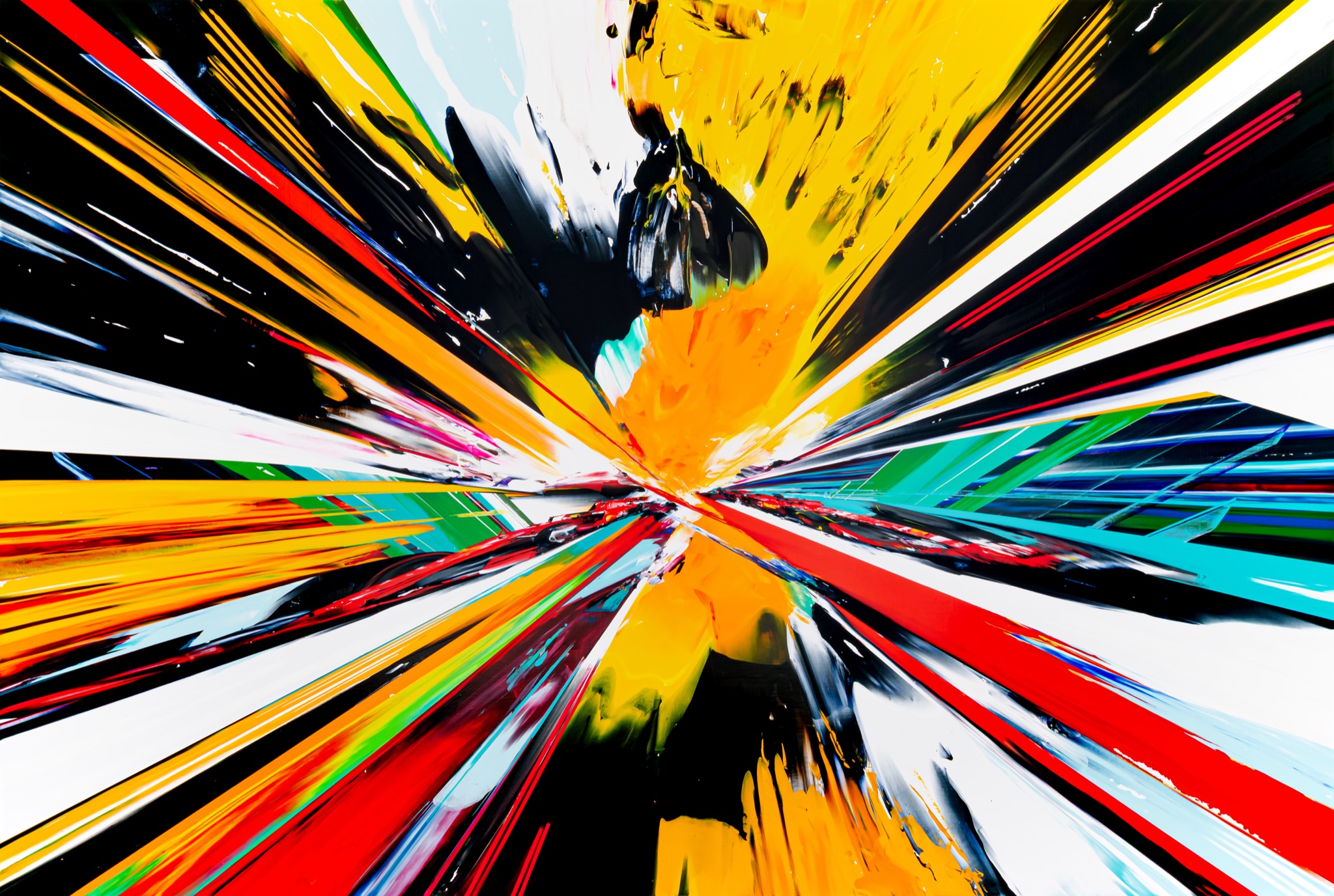
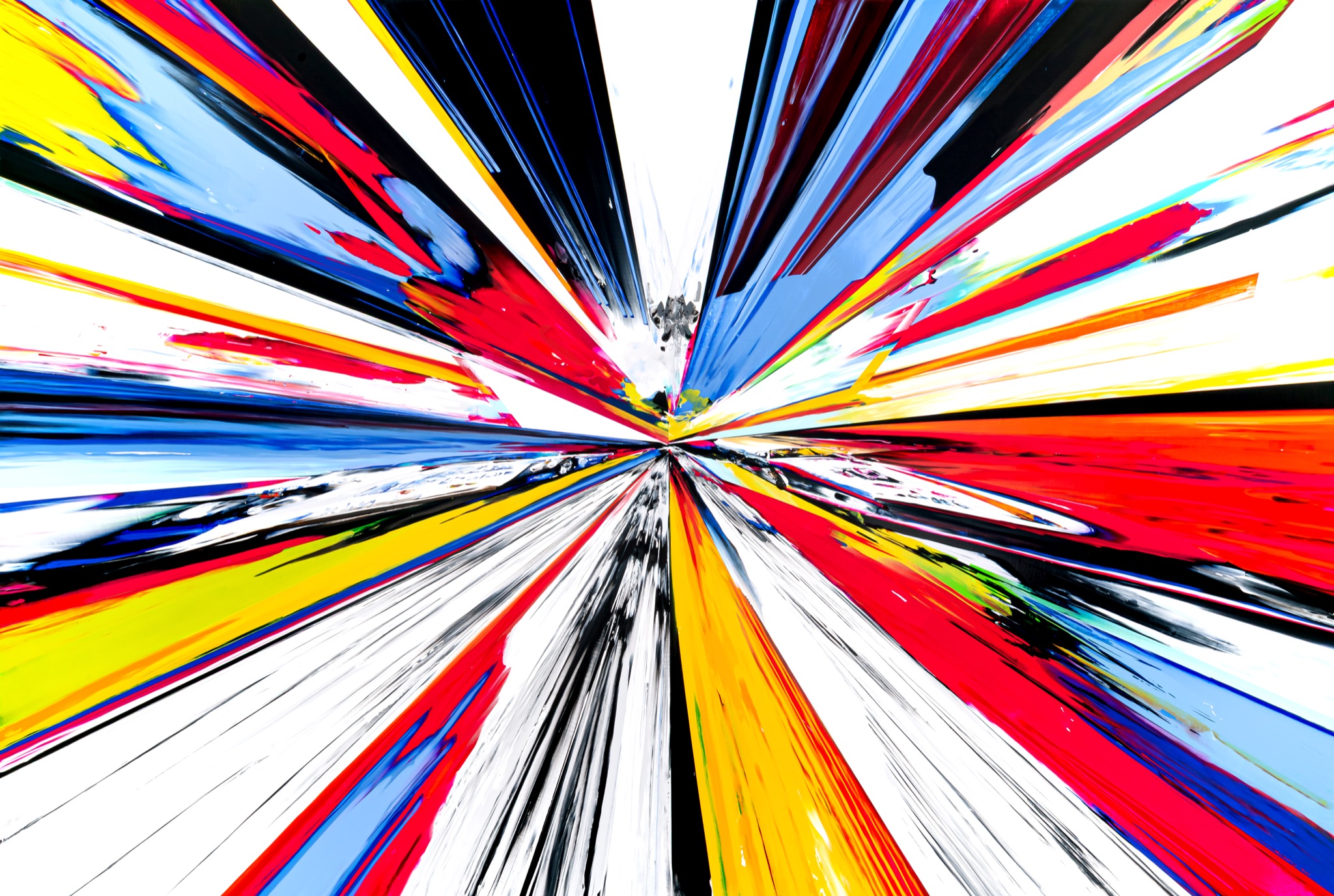
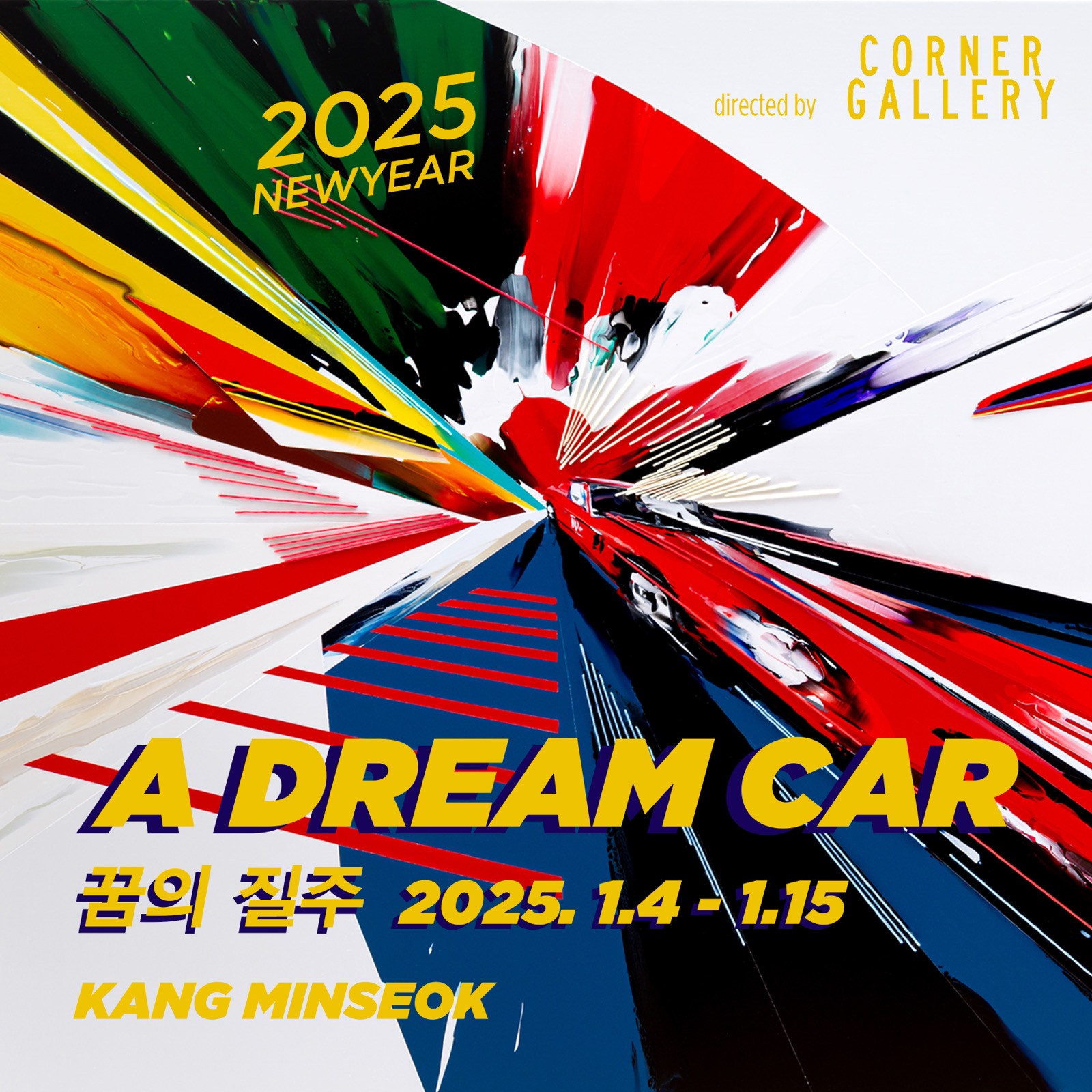
A Desert, and Yet It Is Green.
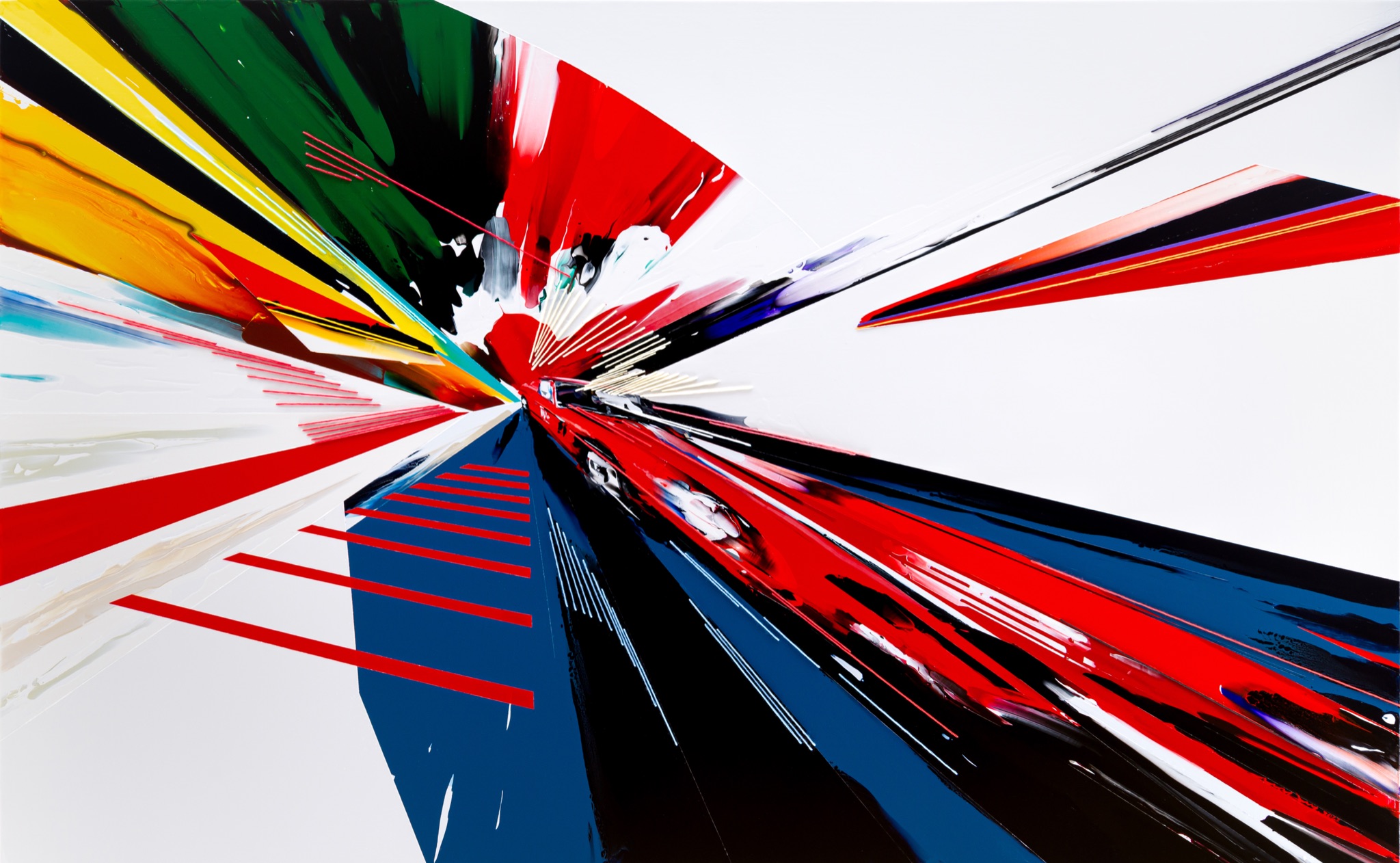
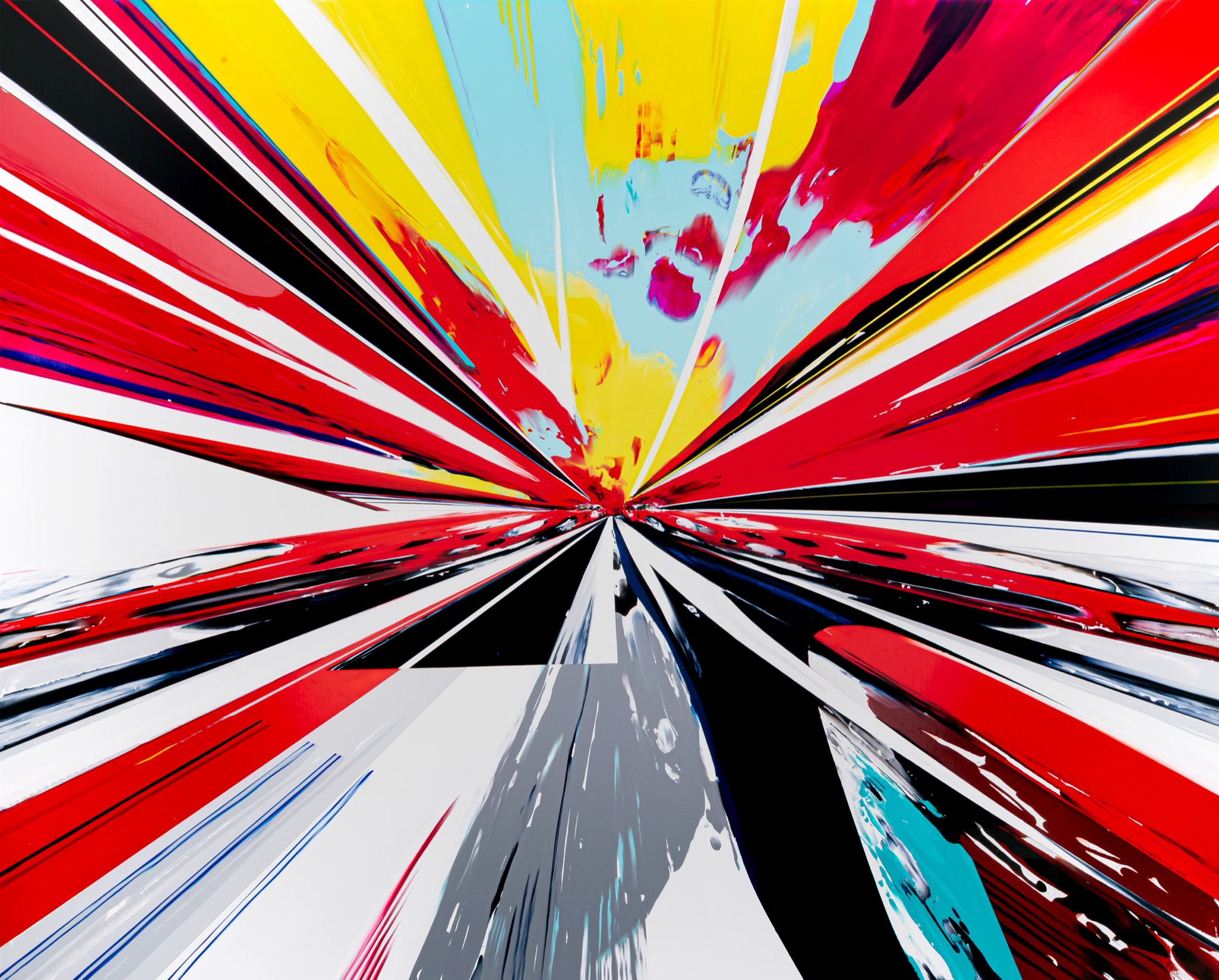
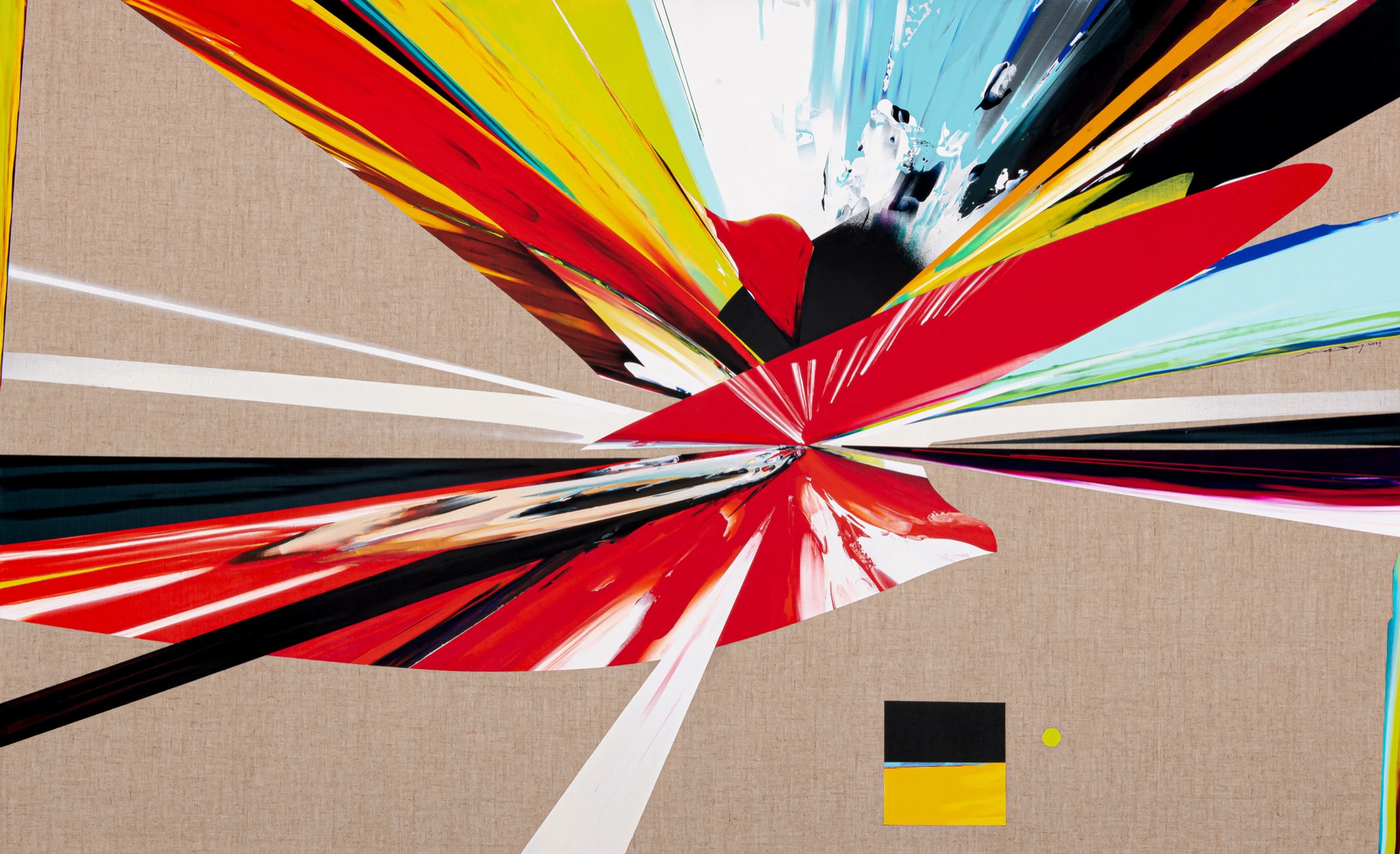
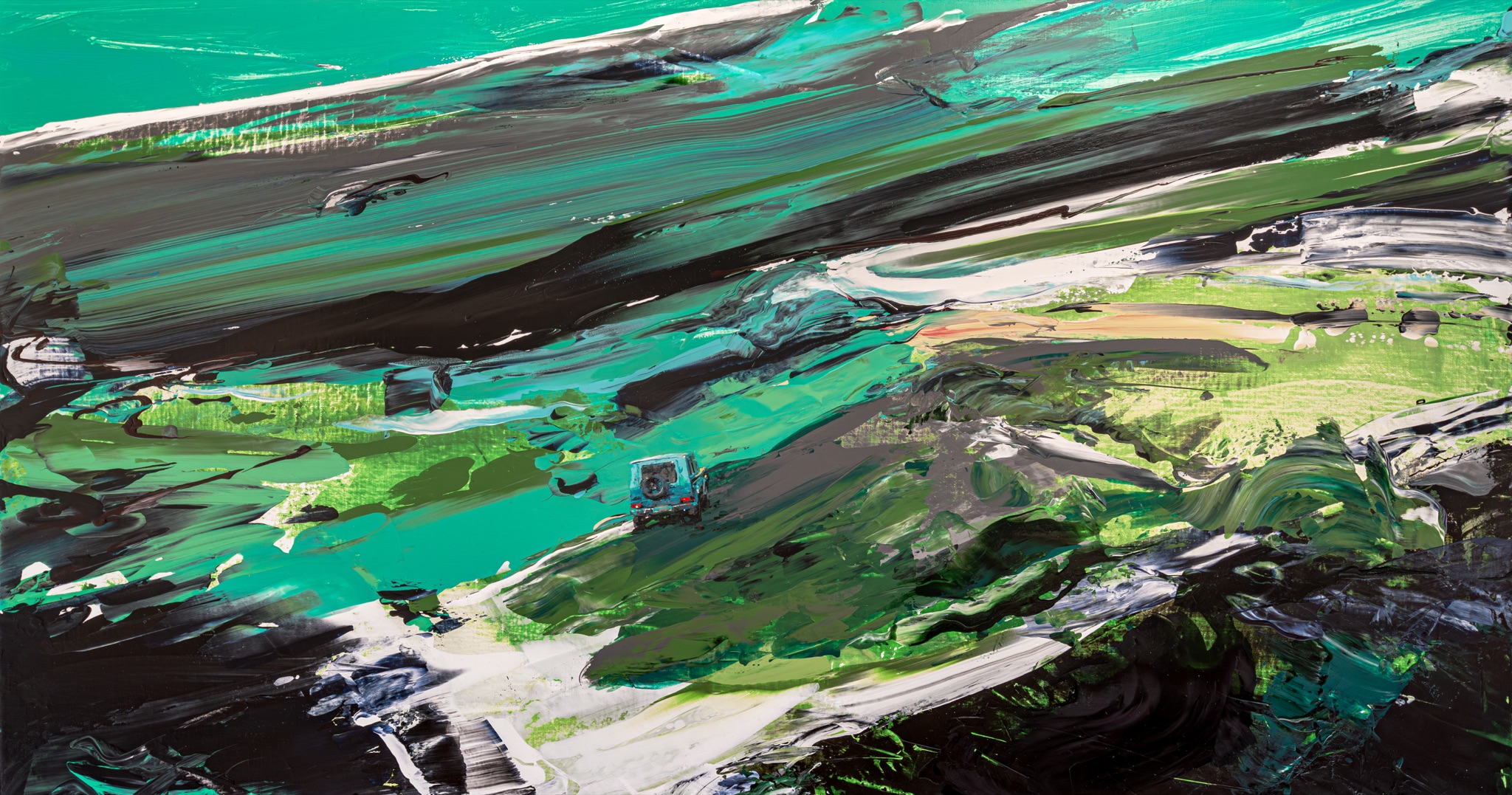
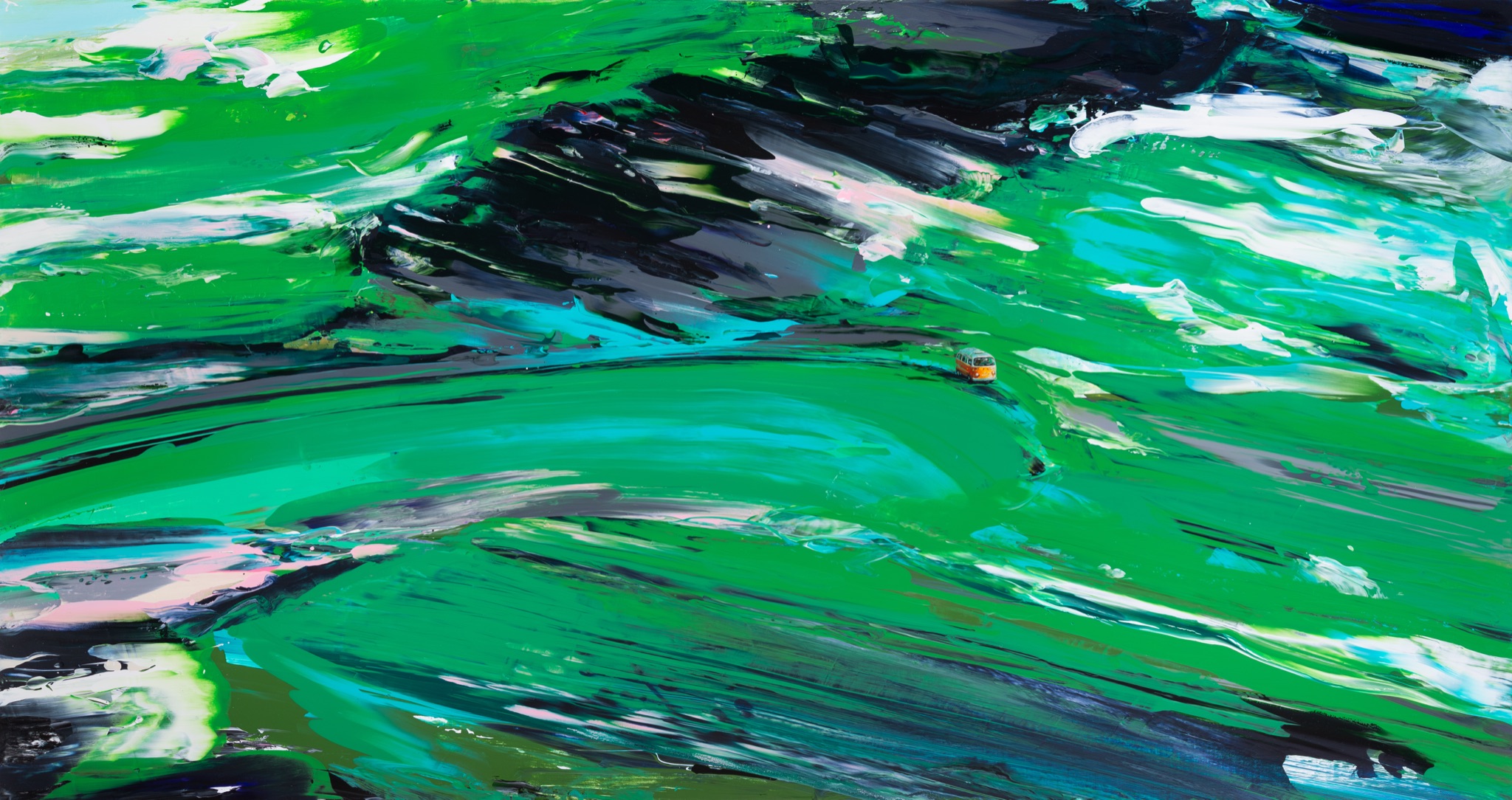
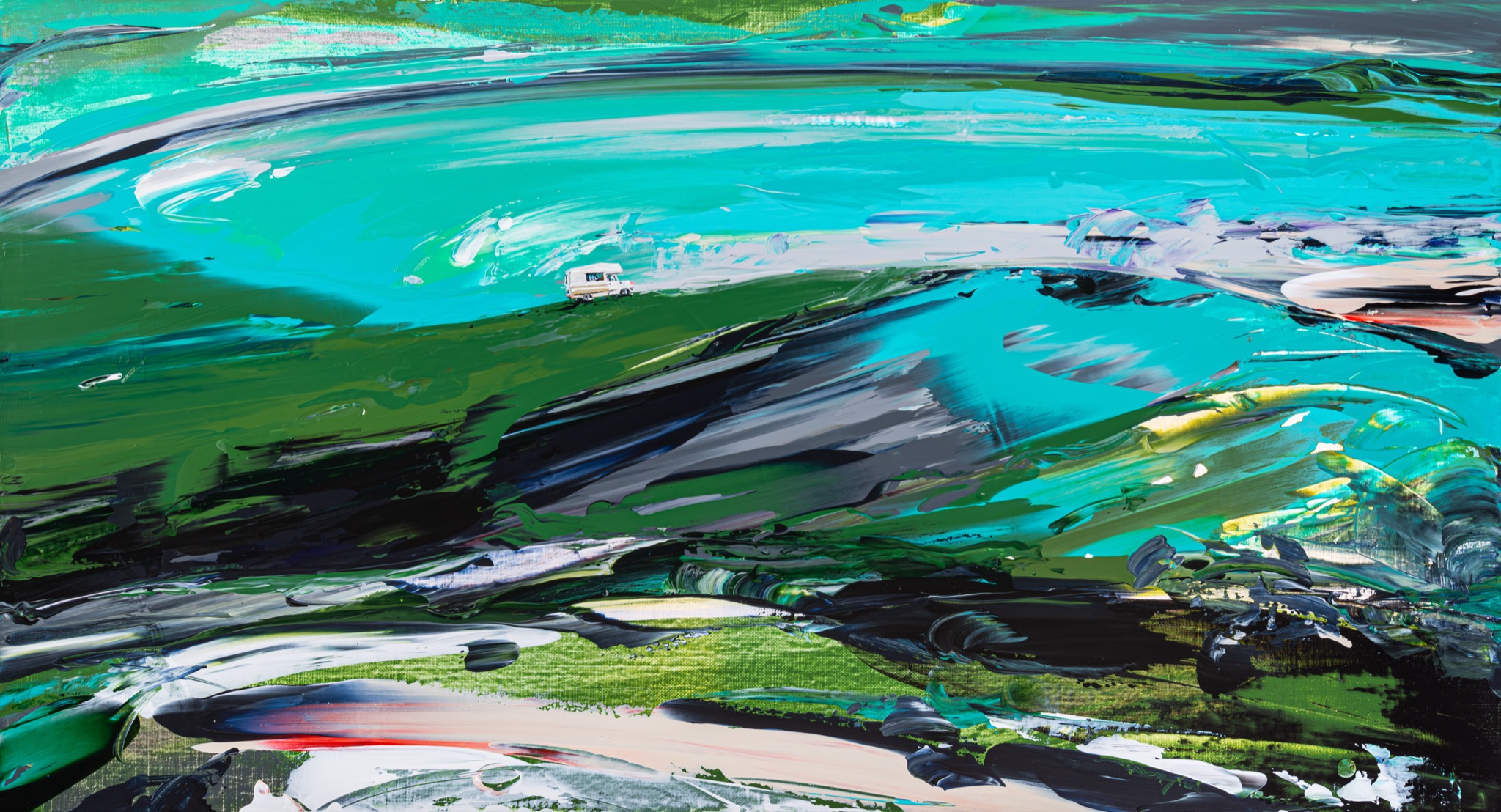
Standing before MINSEOK's Paint Desert, the eye is puzzled first. It is called a desert, yet there is no sand-tone, no ochre. The surface is soaked through with green. Wherever the squeegee has pushed the paint across, ridges and hollows appear, and their grain flows softly, like the dunes of some far desert. But because the color is green, it reads at once like an unnamed meadow and like a moss-covered field.
Upon that vast green sits a single, very small car. Against the desert that fills the surface, it is no larger than a fingernail. No exit is visible anywhere. A wind seems to be blowing; the terrain looks somehow a little different than it did a moment ago. The painting makes the viewer ask, where is this place. And that question is precisely the first one MINSEOK wishes to raise in this series.
This Is Not an Outer Landscape, but the Inside of One Person's Mind.
MINSEOK says this desert is not any place the eye can see. It is the inside of thought, a vast space that unfolds within the imagination. Once a single thought takes root, the terrain shifts day by day from that beginning. What was a hill yesterday becomes a valley today, and with each gust it is not sand but imagination that moves and resettles. That no exit is visible means this changing has no end — that one cannot get out until one walks out by oneself.
The small car placed upon it is MINSEOK himself. True to the pact that runs through this series, the car always stands in for the artist. Here, though, instead of speeding toward a destination, the car deliberates over where to go within thought. A person who, unable to fix a direction, gauges the way forward across ceaselessly changing ground. The Paint Desert is the map of that mind.
Before the White Canvas, Fear Comes First.
Here MINSEOK brings out a story he has long kept hidden. He confesses that at the start of every work, he is afraid before the white canvas. The fear of failure is large. The white surface, not yet marked, is a possibility that could become anything, and at the same time a threat that he does not know what he might ruin. So before he takes up the brush, he draws the picture dozens of times in his head. Fearing the first stroke, he first completes it, again and again, within the imagination.
A century and a half ago, the French poet Stéphane Mallarmé, too, froze before the white page. In Brise marine he wrote of the empty paper that its own whiteness defends — the sense that the blank page is not merely empty but stands its ground with a force that refuses the first letter. MINSEOK's white canvas bars his way in just this manner. Yet the two blank pages come from different places. Mallarmé's comes from the ennui of one who has read and lived through everything — 'The flesh is sad, alas, and I have read all the books.' MINSEOK's is the opposite: the fear before a head that overflows, one that has already drawn the picture dozens of times in imagination. Both freeze the first stroke, but one from ennui and the other from the fear of failure. That is the point of departure for the Paint Desert.
The Hell of Imagination — a Mind That Settles the Answer Before Trying.
MINSEOK calls this state the "hell of imagination." People usually only think and never act. They fix the answer in advance without ever trying, and, not even knowing the ending, they spin the imagination only toward that answer. How much is given up that way. What the Paint Desert means to speak of is not some correct answer. It is, rather, that very mind that settles on an answer and does not move. Once one falls into this desert, one can hardly walk back out. The terrain keeps changing, and the car, unable to fix a direction, circles over the green.
Shakespeare's Hamlet is a figure who stands in exactly this place. In the "to be or not to be" soliloquy he laments that the native hue of resolution sickens under the pale cast of thought, and that enterprises of great pith and moment turn their currents awry and lose the very name of action. To be paralyzed in action by an excess of thought — that is Hamlet's tragedy and the frame of the hell of imagination. Hamlet's hesitation, of course, springs from the question of what is right and drives at last to catastrophe, while MINSEOK's hesitation comes not from right and wrong but from the fear that he might ruin the canvas. And he has one exit that Hamlet did not.
The Way Out, in the End, Is to Lay Down Paint by Hand.
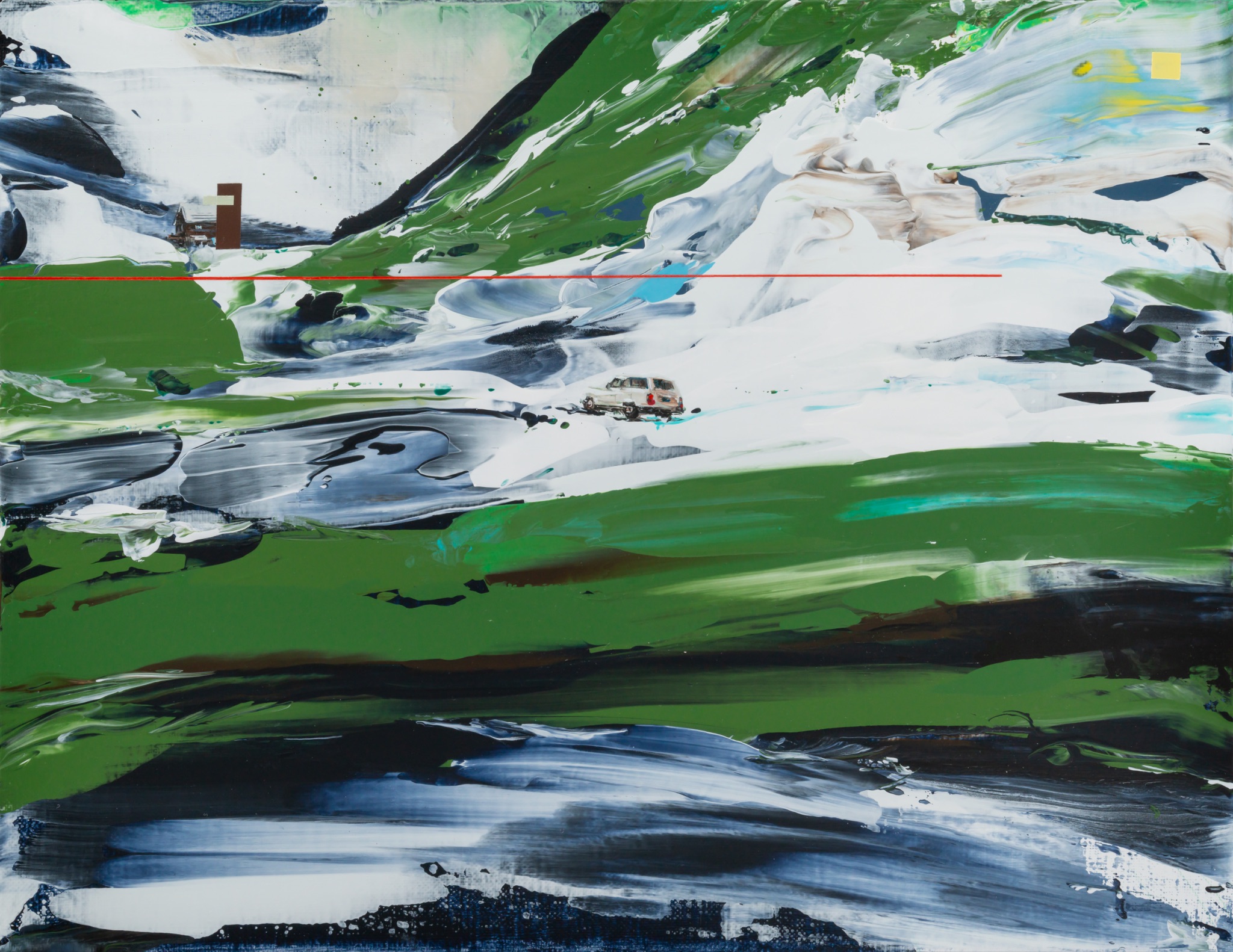
That exit is no grand revelation. It is simply to begin laying down paint in reality. However perfectly one draws within the imagination, that is only the scenery of hell; the answer begins to loosen only the moment the hand touches the canvas. To move past the fear of the white surface — that single step of beginning a new work is the only way to walk out of the hell of imagination into reality. While he pushes the green desert away with the squeegee, raises the terrain that fits its grain, and sets down a single small car, he steps, at last, outside of thought.
And yet the story does not end here. The picture finished that way looks one way today and another tomorrow. Seen again a week later, a month later, it looks different once more. Though it is a picture he closed with his own hand, it changes its face each time. To MINSEOK, a painting is therefore a psychologically complicated counterpart. A relationship that never ends, that shifts again the moment he thinks he has held it. Perhaps this is also why he insisted on painting the desert green. This desert is not a barren waste where nothing grows but a green land where a wide imagination lives and breathes. A place that is fearful yet not dead, that feels hopeless yet where a direction can still be found. The small car, today again, gauges its way over that green.
The next Reading MINSEOK No.8 is the story of that same person, having walked out of the desert of imagination, standing once more upon the road. Stray Racer (2015–2017) — a portrait of one who has lost the way yet does not halt, who, upon the lost road, discovers instead a new self. If the Paint Desert was the story of moving the hand to escape a "mind that fixed its answer before ever trying," the next note carries on into the story of the one who walked out that way and, even having lost his direction, does not give up the run.
References
· MINSEOK, artist's notes — the Paint Desert series · minseok.gallery · William Shakespeare, Hamlet, Act 3, Scene 1, first performed c. 1600–1601 — thought sickening resolution until it loses the name of action · Stéphane Mallarmé, Brise marine, 1865 — the empty paper that its own whiteness defends · All plates in this note are works by the artist MINSEOK, © MINSEOK Studio. Quoted texts are cited by source only, without reproducing their images.