
Original painting
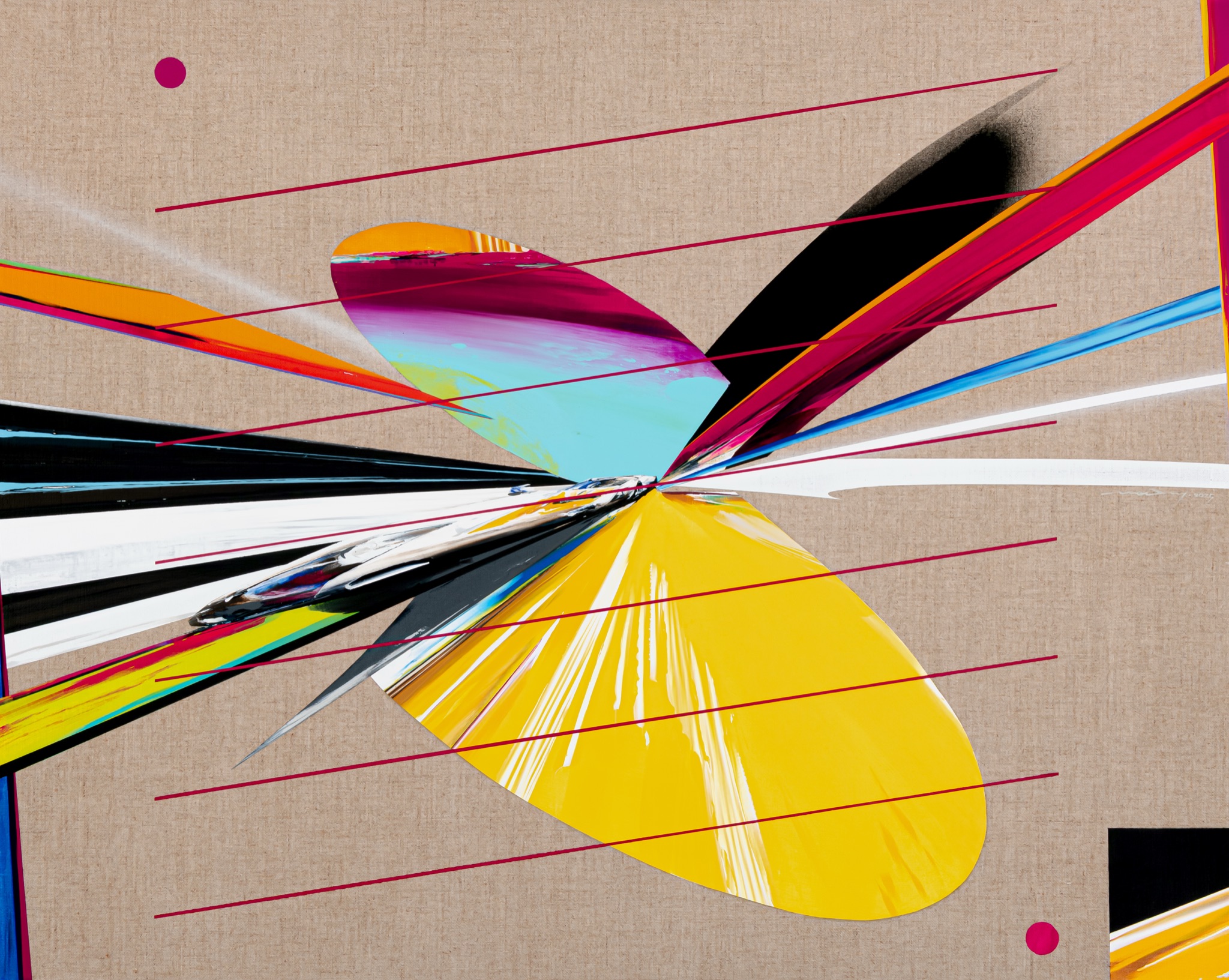
Reversed Boundary
The Reversed Boundary series begins with artist Minseok Kang flipping the canvas. This act of overturning the boundary between front and back—between what is visible and what is concealed—emerges from his fundamental inquiry into redefining the relationship between external reality and the inner self. Through this process, Minseok Kang deconstructs the physical structure of painting, revealing layers of emotion and consciousness that had accumulated beneath the surface. Distorted lines, ruptured colors, and lingering traces symbolize the vibration of an unstable self, visualizing the inner movement of a person striving to confront themselves within the ever-shifting conditions of contemporary society. Rejecting stable order and perfect balance, the work constructs a new visual structure built from fragmented memories and emotions. Reversed Boundary is not merely a painterly experiment, but a philosophical record—Minseok Kang's exploration of existential boundaries and his deep inward journey toward the self.
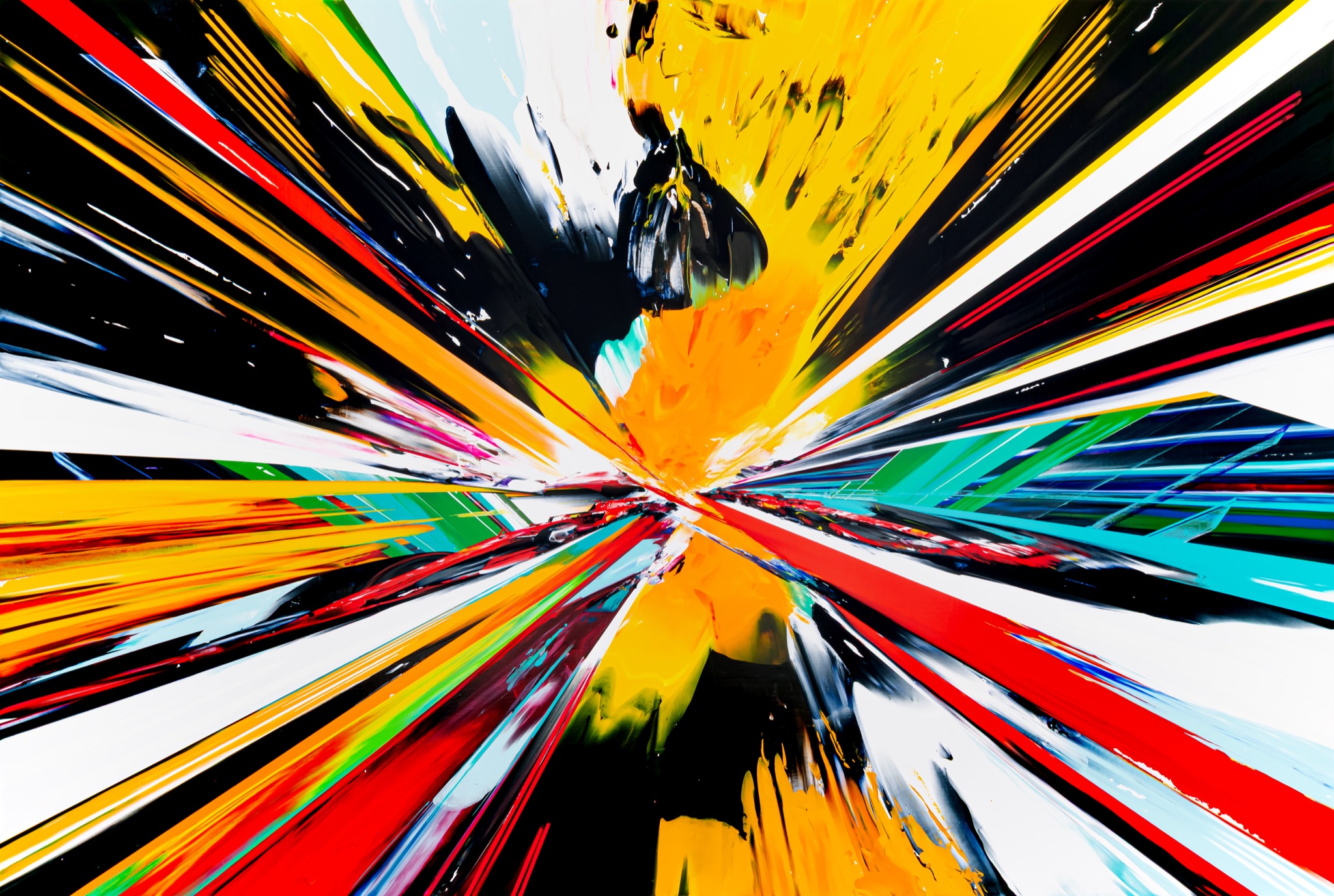
Endless Impact
Artist Minseok Kang explains how inner tension continuously pushes him to the edge. For him, time and space are not mere settings—they are stages where reality and thought collide. Within this instability, he thrusts himself forward in an unstoppable sprint, confronting another version of himself standing at the boundary. The act of scraping and pushing away paint becomes a method of seizing and recording the moment. The traces left behind gather like scattered fragments, revealing facets of an unsettled self. These fragments erupt like a big bang and condense into a distorted car form—a mark of the collision between identity and desire, resonating with the expanded emotional field of his ongoing Endless Impact body of work. Minseok Kang is always aware of the boundaries he must cross. In the painful moment of facing limits he cannot easily surpass, his inner self transfers into the artwork. Thus, each piece becomes both a challenge to his identity and a record of relentless self-exploration. The cracks and collisions inscribed on the surface are not acts of destruction—they are forces that summon a new sense of order. The world he depicts ultimately exists on a sensory plane beyond reality. In the moment when indescribable impulses, unseen forces, and blurred fragments of memory collide, he reconstructs himself once again. This restless pursuit is a journey toward the essence of being, and the traces it leaves reveal Minseok Kang's identity that transcends time and space.
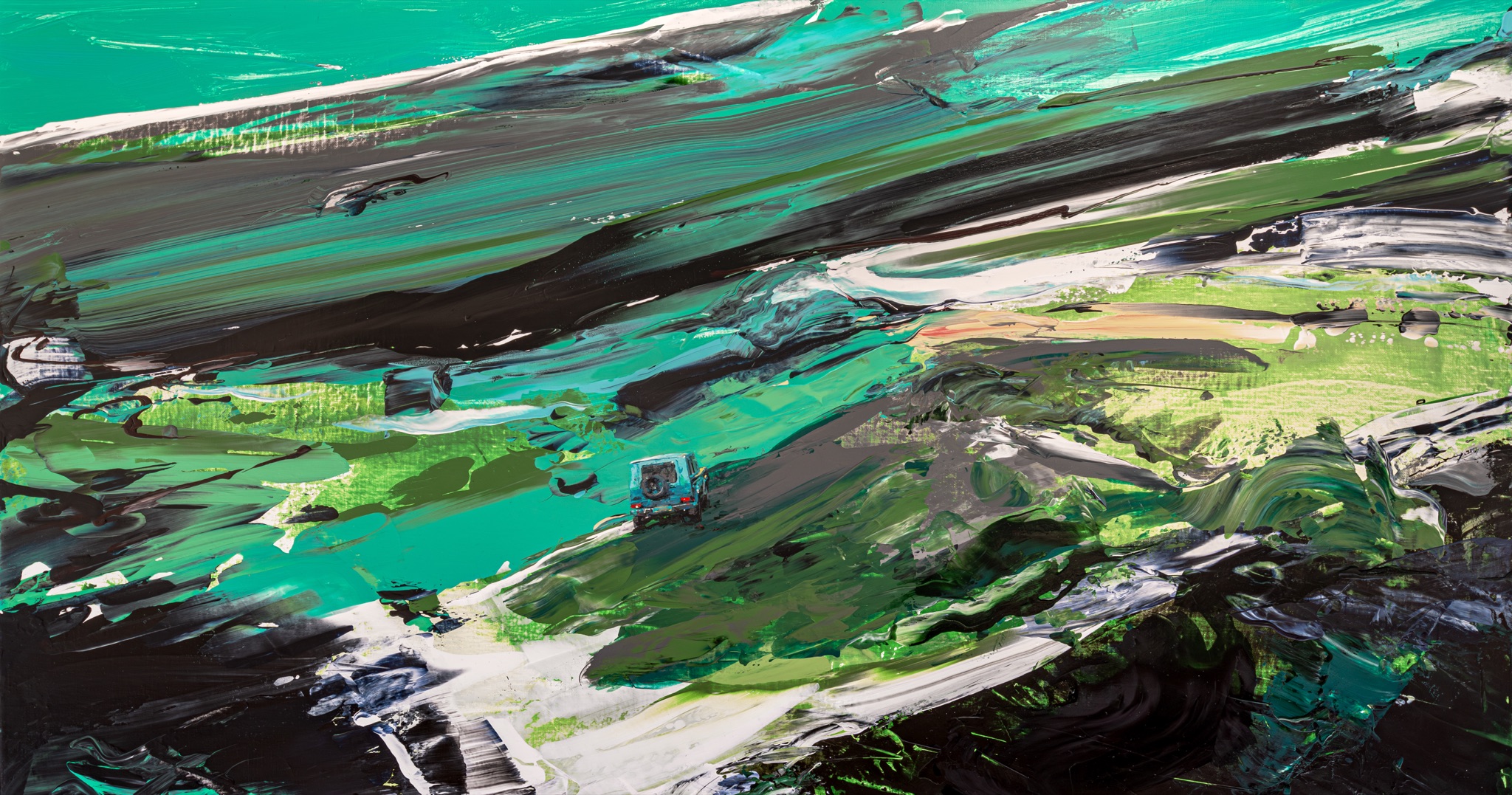
Paint Desert
"Paint Desert" is a series created by artist Minseok Kang to explore his inner thoughts and emotions, symbolizing the ever-changing landscape of memory and contemplation. The desert represents a space where time and emotions accumulate and fade away, while the thick layers of paint reveal traces of these sedimented reflections. The car no longer stands as a symbol of speed but instead appears as the artist's inner being, paused at the center of contemplation. In this series, the artist pushes and builds up layers of paint, leaving behind strata of thought and time on the canvas, much like sand dunes shaped by the wind. The color palette is more lyrical and subdued than before, and its subtle shifts reveal the quiet yet constant tremors of the inner self. "Paint Desert" halts the momentum of a fast-paced world and portrays a journey of facing oneself in stillness. It is a landscape of silence, a moment when the flow of thought solidifies into material form. For the artist, it is a record of "rushing within stillness" and a poetic meditation directed inward.
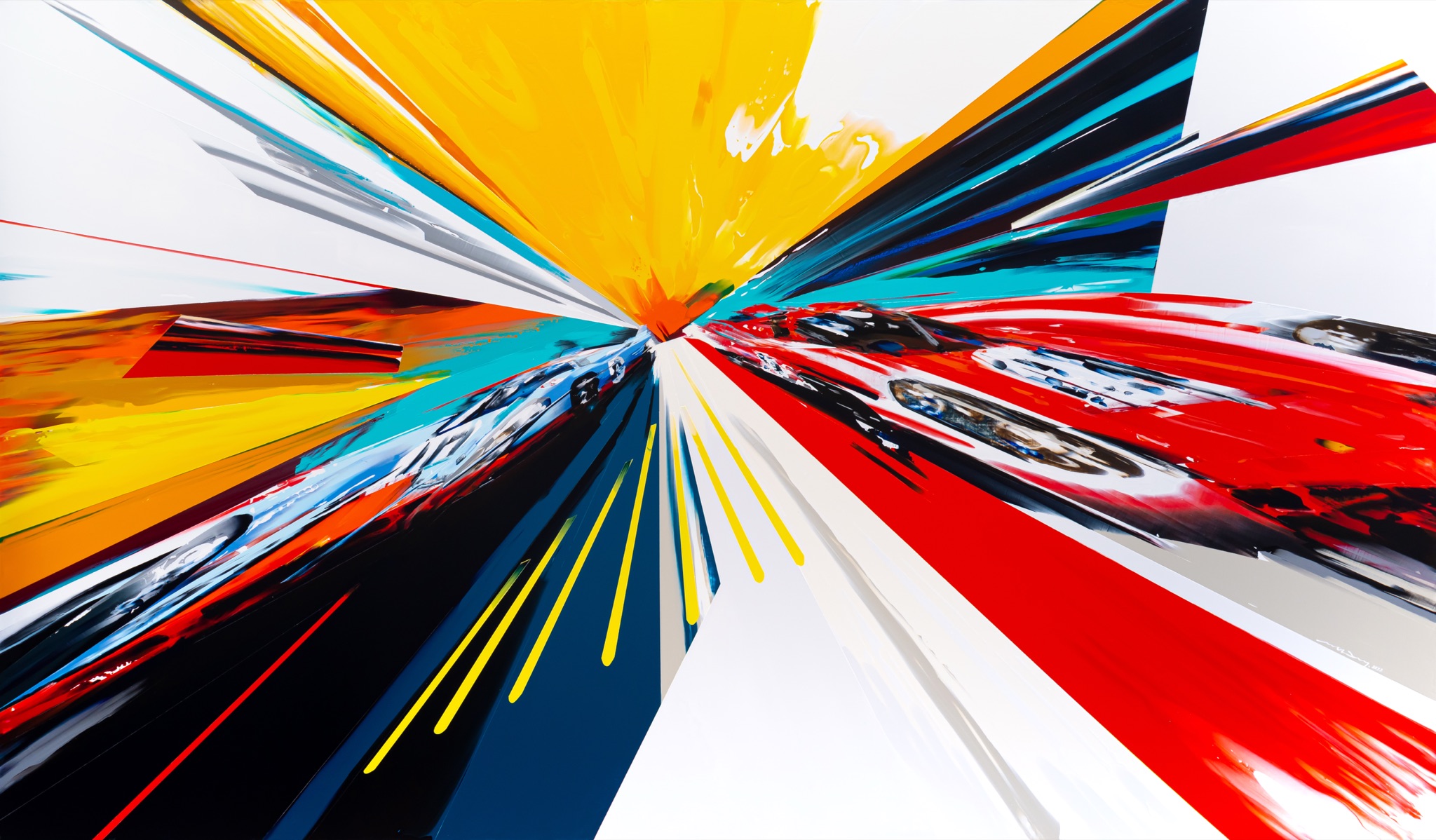
Timeleap
The Timeleap series expresses a journey of challenge and hope, in which artist Minseok Kang seeks to discover identity through the past, present, and future within his artistic worldview. Using geometric yet distorted forms of cars, the series portrays the narrative of modern individuals trapped within time. These figures are rendered in acrylic paint, combining artificial straight lines with a contemporary interpretation. This series explores the complex emotions experienced by people as they navigate time and space. The distorted car forms symbolize individuals striving to find themselves amid the rapid changes of modern society. These forms and lines represent the inner conflicts and existential inquiries of contemporary individuals grappling with instability. Notably, the series visually conveys the concepts of time and speed, containing stories of hope for the future and the courage to face challenges. The diverse colors and dynamic forms symbolize the continual effort to rediscover oneself in an ever-changing world. Minseok Kang's artistic philosophy centers on depicting the journey of modern individuals in pursuit of self-discovery and growth within a world of relentless competition. The vivid colors and energetic lines in his work express the courage and hope needed to forge one's own path despite the intensity of that competition. Through his pieces, viewers are invited to sense the process of challenging and exploring identity within the distortions of time and space.
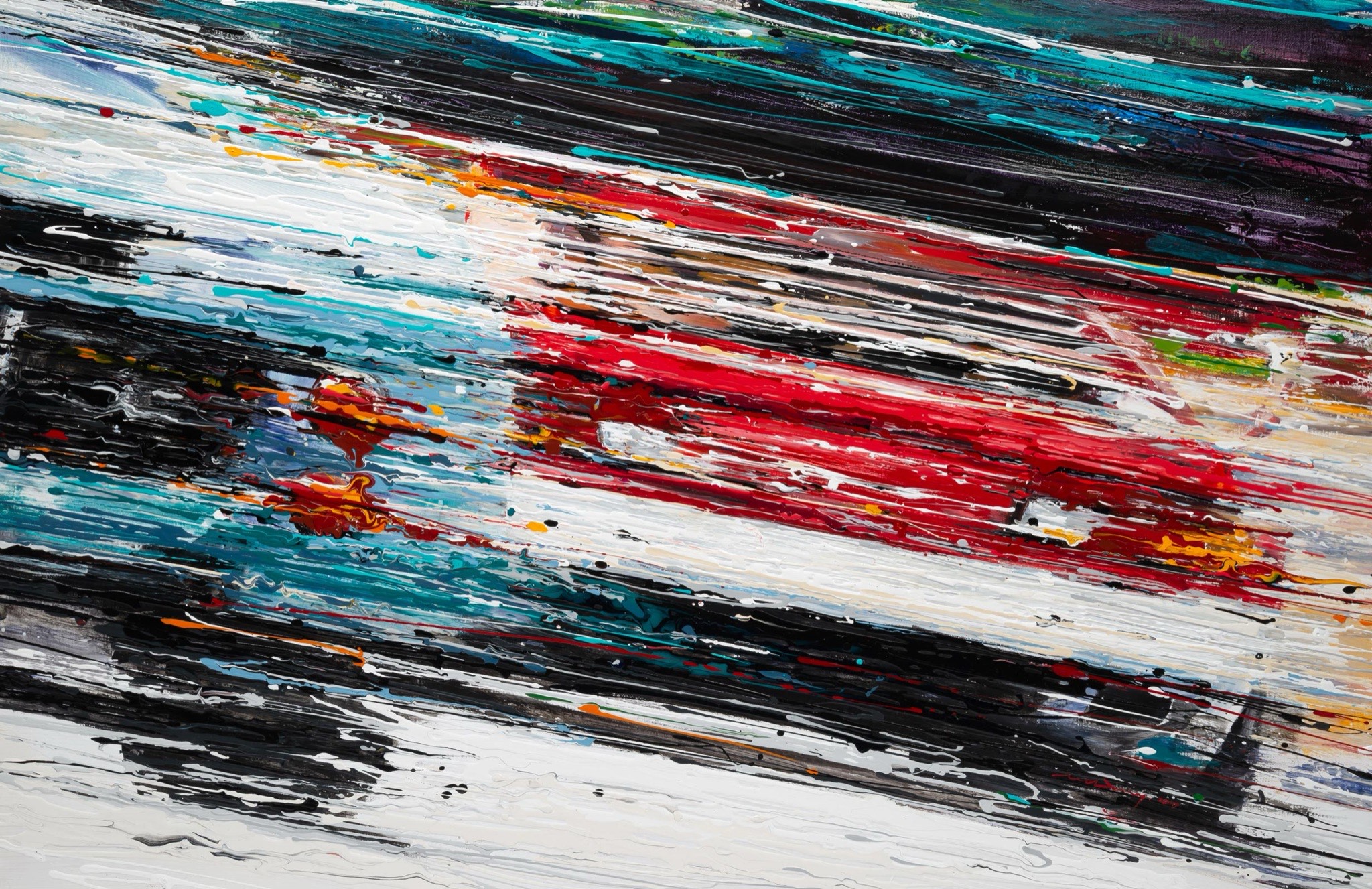
Endless Force
Minseok Kang's Endless Force series, initiated in 2019, explores themes of speed, competition, and inner strength. This body of work expresses the artist's identity through the distortion and deconstruction of automobile forms. By using the car—a symbol of speed and competition in modern society—Kang narrates the intense struggles of contemporary life, along with the compromises and coexistence that arise within it. In the context of modern life, the car stands as a potent symbol, representing rapid change, ambition, and societal pressure. Through its form, Kang visualizes not only mechanical beauty and linear motion but also the confusion and conflict experienced by individuals under competitive pressure. The distortion and deconstruction of the automobile become crucial tools for revealing the artist's internal force and sense of being. Beyond formal transformation, these works reflect complex psychological states and the journey of self-discovery. Kang's art emphasizes that the reconciliation and coexistence found within competition are not just personal issues, but broader social ones. His work provides a method for contemplating the many conflicts and potential resolutions that define modern existence. Endless Force is fundamentally a process of exploring inner strength and discovering one's presence. The distorted car forms express inner conflict and desire, illustrating the artist's continual journey of self-exploration and growth. His use of explosive colors and lines creates a powerful visual impact, vividly articulating desire and passion. Through the Endless Force series, Minseok Kang captures the complexity of the modern individual and the tensions of social conflict. These works embody a determined will to seek new directions, portraying the search for balance within struggle and the discovery of internal power as essential elements of human development. It is a significant artistic endeavor that visualizes resilience and transformation in the face of relentless societal demands.
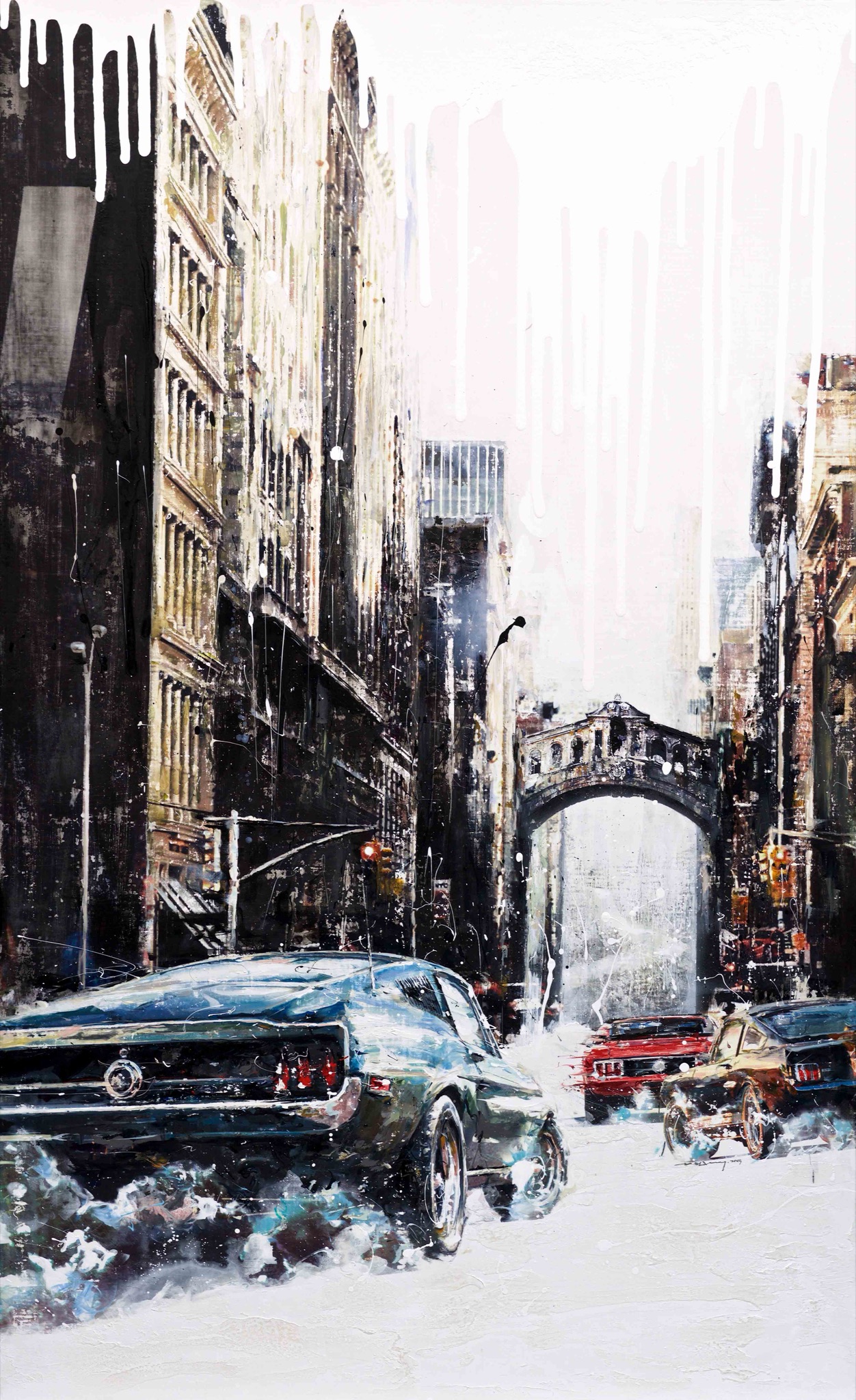
Long Journey
Minseok Kang's Long Journey series captures a path that breaks away from the temptations and fierce competition of urban life, turning instead toward the depths of one's inner self. Set against the backdrop of a dazzling yet cold and unfamiliar city, the artist projects confusion of identity and the longing for existence onto images of cars, visualizing the psychological tension and anxiety experienced by modern individuals. In this series, the car is not merely a means of transportation, but a symbolic companion in the long journey toward the self. In a world swept up by speed and competition, the car reflects the instability of a self that has lost direction, symbolizing the pressure to keep moving forward toward a destination that may or may not exist. Though the landscapes in the works appear motionless, they contain subtle vibrations of emotion. Kang builds his compositions by layering feelings of fear, anticipation, and instability within the flow of a city where time and space intermingle. This method becomes a way of mapping the inner journey through external scenery, serving as a metaphor for the human condition—constantly racing between reality and imagination, past and future. Long Journey is not about a reckless sprint, but rather an expression of resolve to keep moving and an instinctive desire for life. Like an owl spreading its wings in the dark, the artist captures the courage to begin even in silence, vividly imprinting those moments on the canvas. Ultimately, this series is a continued artistic quest to question the meaning of one's existence, a journey that leads to confronting the strength within.
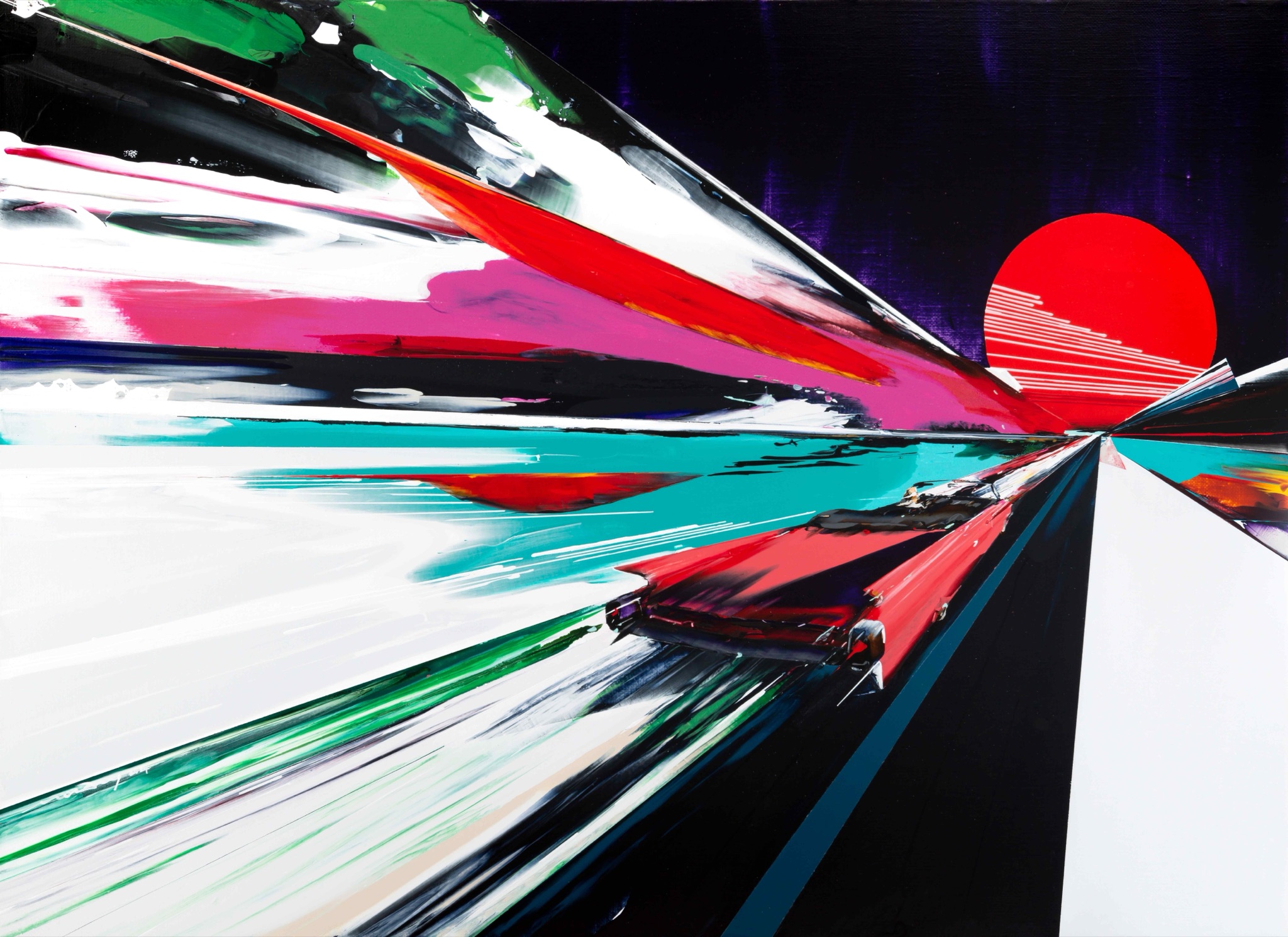
Time Horizon
The time horizon is both the end and the beginning of time as we perceive it. At this boundary where past and future collide, Minseok Kang expresses himself through the form of the automobile. Within the space of thought, the car races toward an ever-changing horizon—yet that horizon is a place that can never be reached. The flow of time is neither fast nor slow. It simply passes. The layers built up by acrylic paint are the time of memory, and the lines carved upon them are trajectories connecting the present to the future. The traces scraped away by a squeegee are the afterimages of time gone by, and the canvas is not a space where a car drives, but a space where time passes. Today, too, he races toward that horizon.
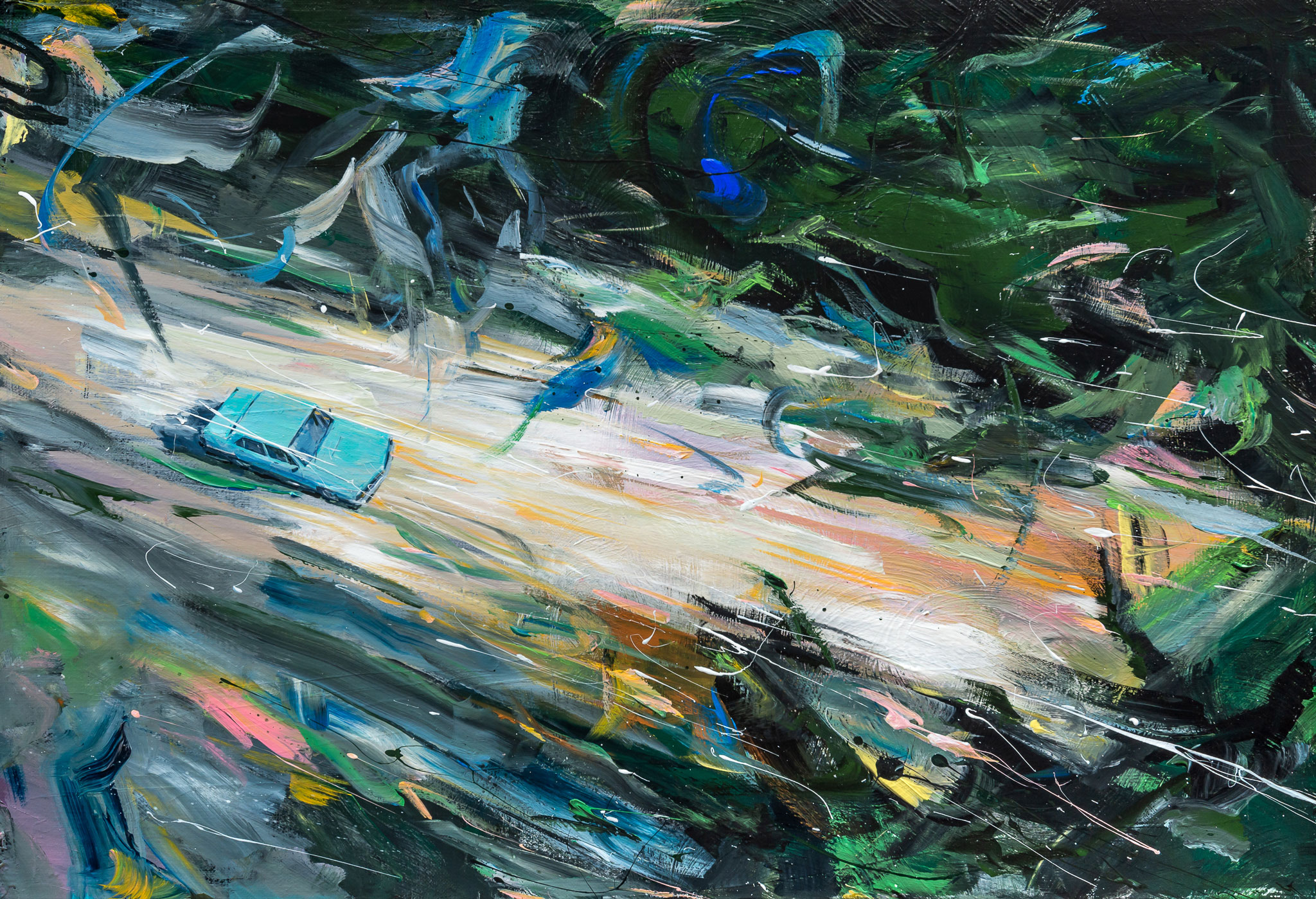
Sway in the Wind
The racer is driving through a long forest. The sound of the gentle breeze and the scent of the woods become his sanctuary. But that moment of peace is brief — deep in the forest, a strong wind rises and the woods quickly darken. The confused racer searches for the exit from the labyrinthine tangle of trees. As blades of grass are shaken by the sharp wind, at the moment when fear and hope intersect, the racer pauses for a breath in the heart of the forest.
Invisible Force
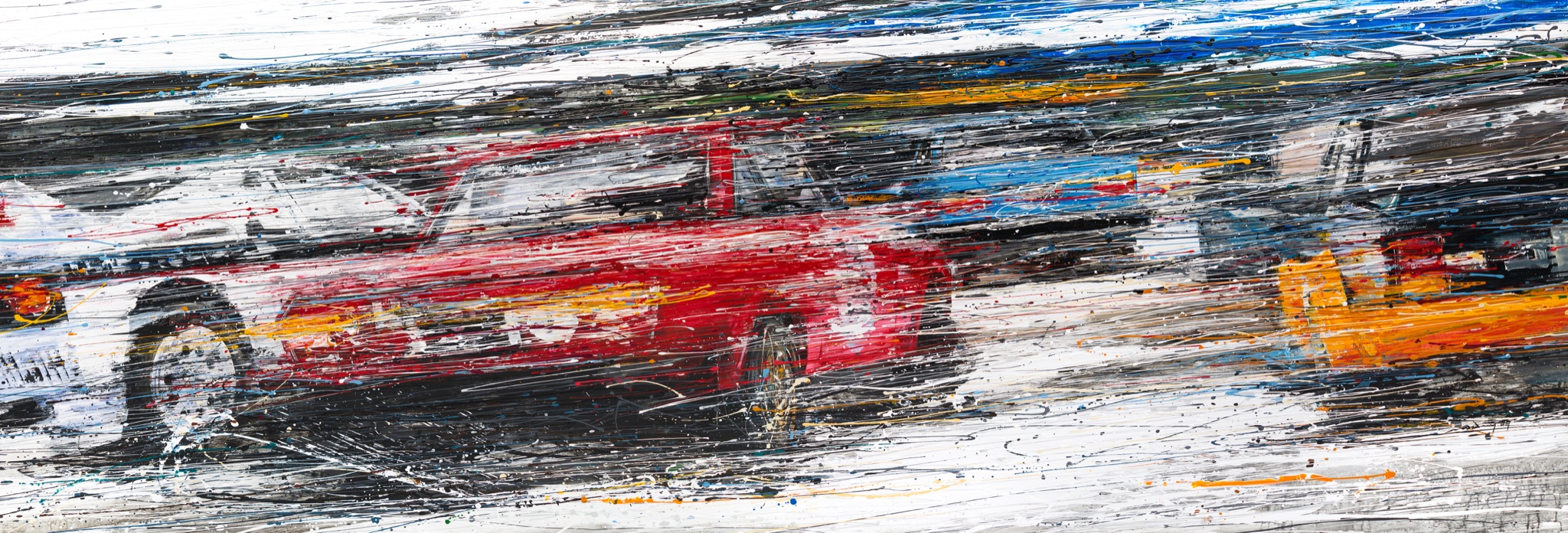
An experience of explosive intensity in the heart, born from darkness and physical collision. On a canvas filled with light and sound, various forces converge toward the heart, and energy transforms into an overpowering strength. Minseok Kang controls the force of this inner beast and completes his identity, expressing unstable power and energy. Through fierce competition and adventure in a surreal environment, he experiences the invisible force and is guided toward a new direction. Breaking through the darkness, the thunderous roar approaches intensely—and as it collides with the physical force of the human body, it enters the heart that explodes. The blinding light and sound all around awaken his instinct to sprint toward a dream, as if cutting across reality. The invisible force guides him, and following that force, he moves toward a new boundary.
Stray Racer
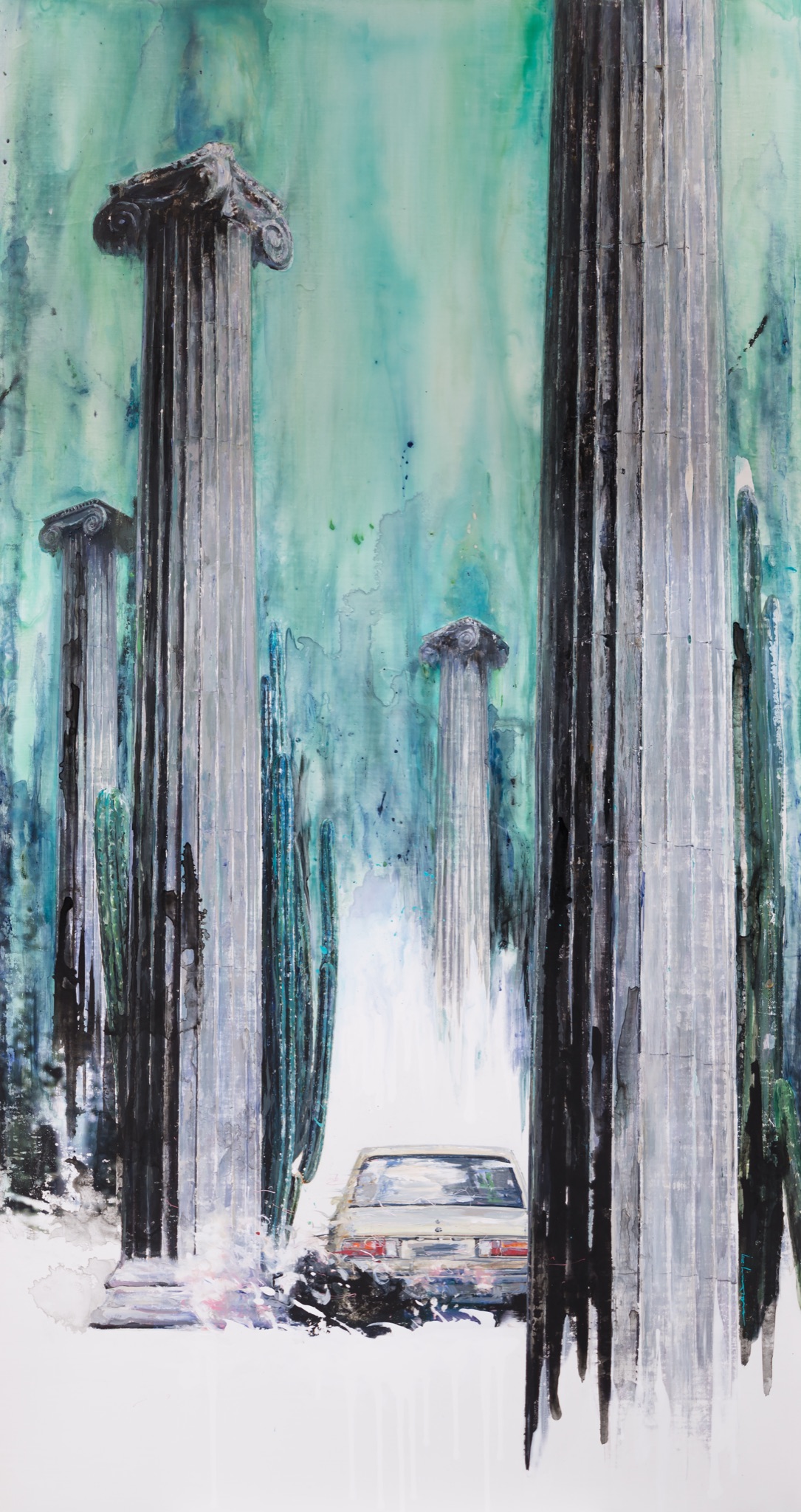
A racer who has lost the way. Direction is gone, but he does not stop. Speed still pushes him forward, and on the road he has lost, he discovers a new version of himself. The Stray Racer series captures the journey of wandering and self-discovery experienced by a being without a destination. A racer driving without a map or compass symbolizes the anxiety and confusion of modern individuals. Yet what is discovered within that wandering is not fear, but the true face of the self. The thick texture of mixed media and dynamic brushwork express the liberated energy within being lost, while the fragmented form of the automobile visualizes the ongoing process of identity through deconstruction and reconstruction.
Across the Wind
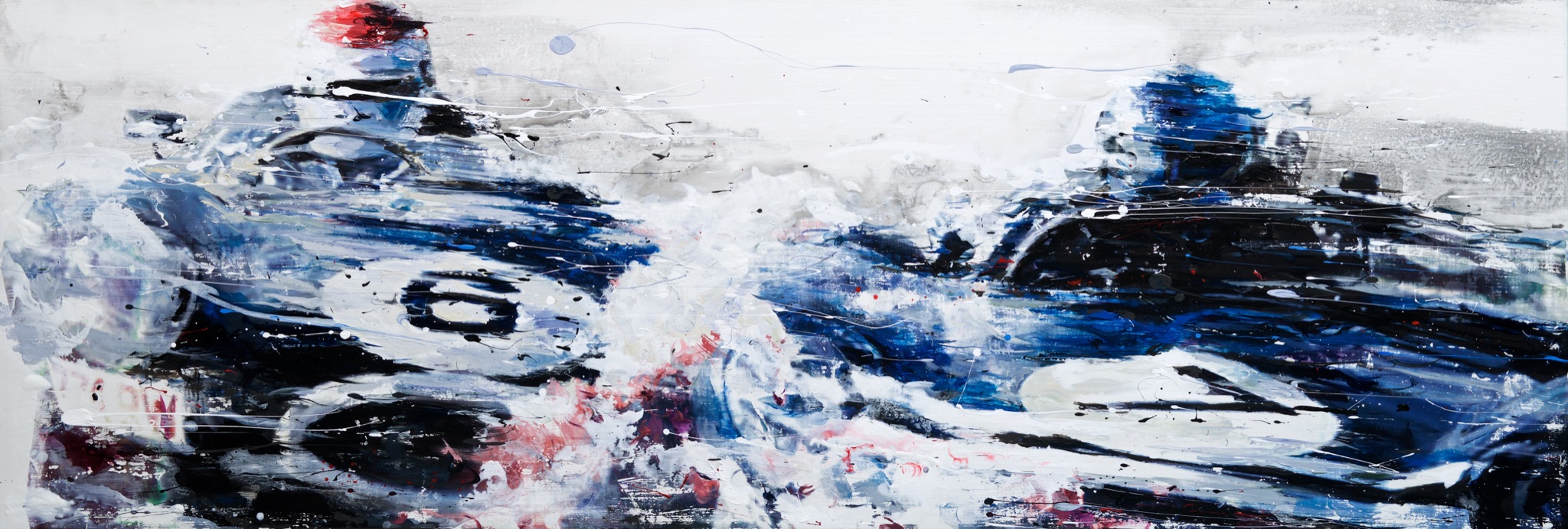
To cut across the wind is an act of transcending resistance. The car pushes against the wind and moves forward. This force of resistance sometimes pushes Kang back, and sometimes propels him forward. On the canvas, the wind is expressed through lines. The long vertical canvas is a corridor of wind, and the form of the automobile shakes and advances within it. The act of cutting across the wind is the courage to overcome fear, and the decision to throw oneself toward an uncertain future. The texture created by mixed media and acrylic paint physically expresses the resistance of the wind, and the tension generated by speed and wind runs through the entire canvas.
White Hole
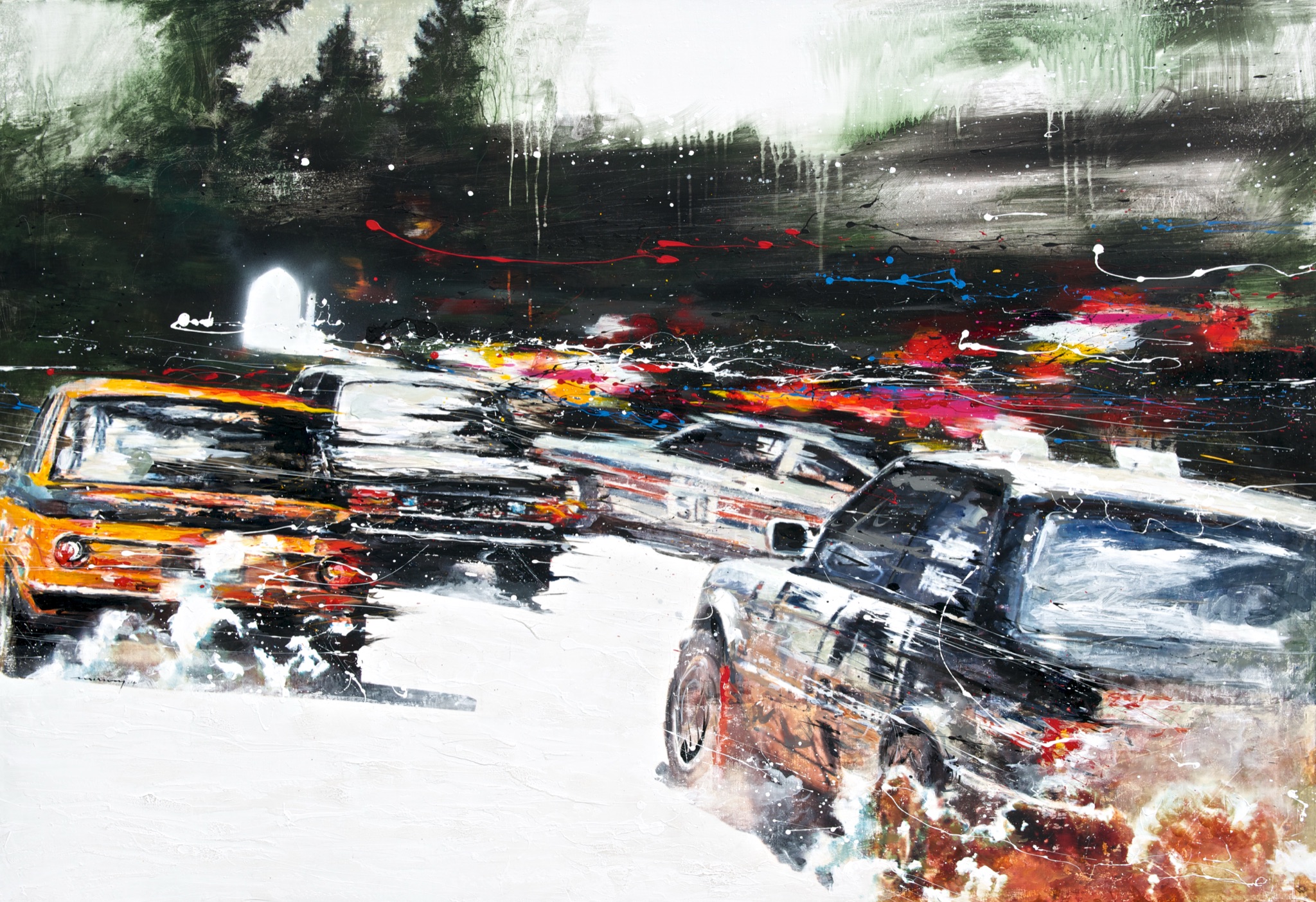
If a black hole is a space that absorbs everything, a white hole is a space that releases everything. Minseok Kang discovers a white hole within himself — the moment when suppressed energy explodes all at once and creates a new world. The white hole contained on the large canvas symbolizes the explosive energy of his inner self. The contrast of light and darkness, and the thick texture of mixed media, visualize the collision and release of energy. The light of the white hole is a new possibility, and toward that possibility he continues to paint. The automobile loses its form within this explosion of energy, and is born again.
Energy
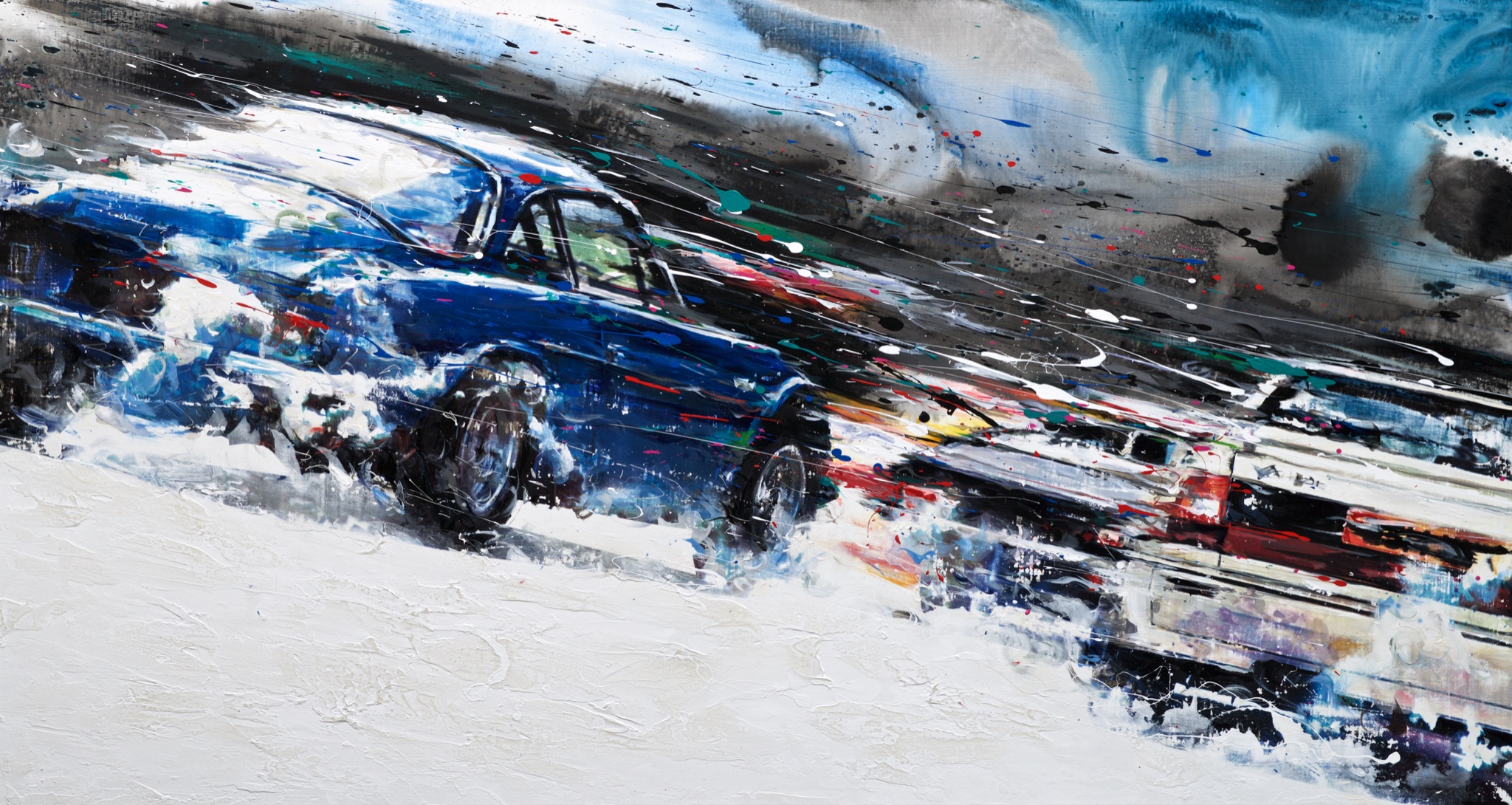
Energy is invisible. But it can be felt. The energy that emanates from a car's engine is not simply mechanical force — it is a power in which human desire and will are concentrated. Minseok Kang visualizes energy on the canvas. Rapid brushwork, thick layers of paint, and the materiality of mixed media express the movement and collision of energy. Energy has direction, and that direction is his own will. The automobile in the canvas runs while holding energy within it, and those traces reveal his inner self. This series, which evolved from 2013 to 2017, crosses the boundaries between canvas and mixed media to explore the essence of energy.
Brand Cars
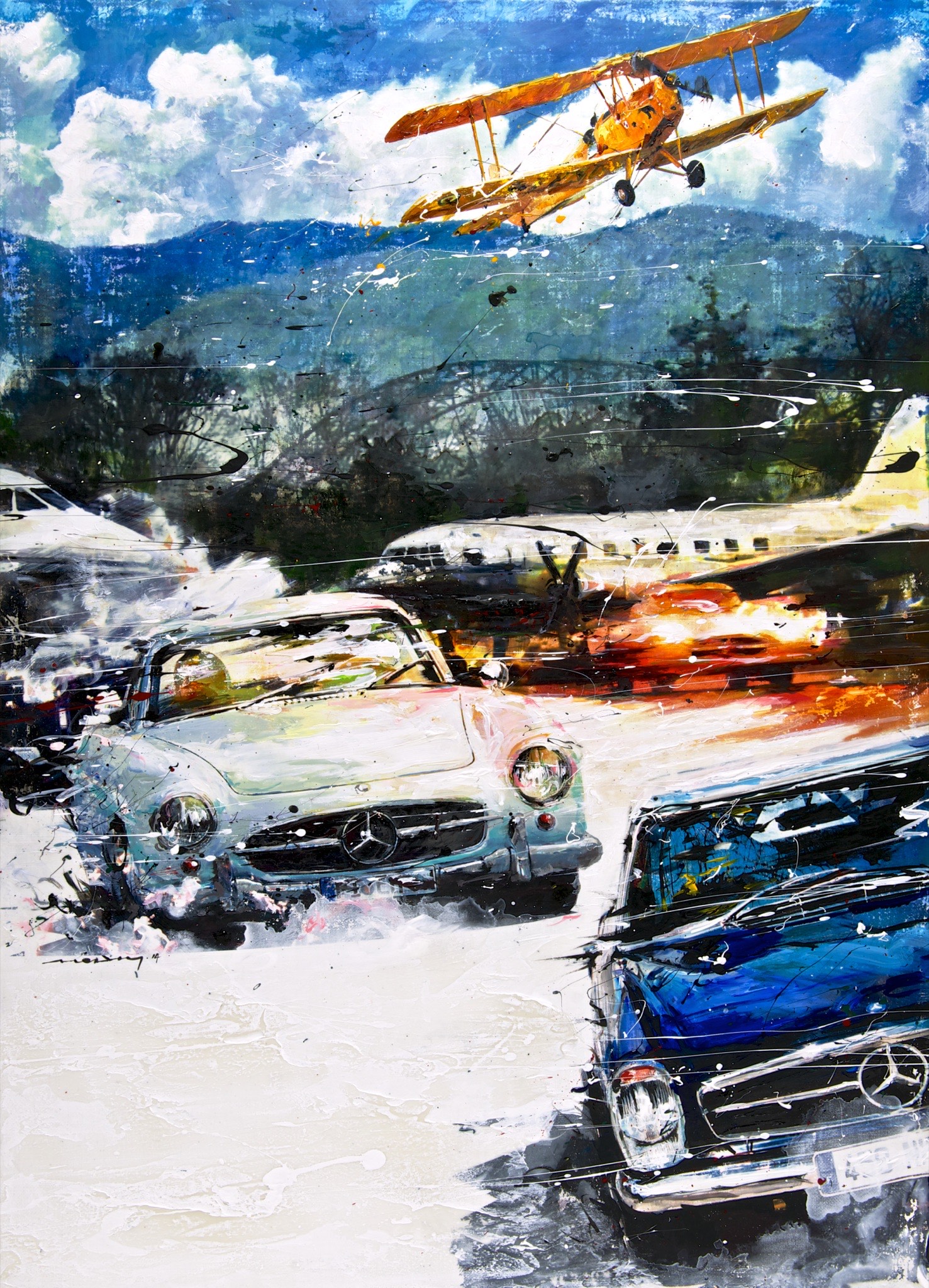
The most beautiful automobiles ever created by humanity. Alfa Romeo, Mercedes-Benz, Porsche, Lamborghini — these names are not merely brands; they are the crystallization of an era's dreams and desires. Through classic cars, Minseok Kang expresses humanity's pursuit of beauty. The legendary automobiles of the 1950s and 60s were not simply means of transportation — they were products of human creativity and passion of their time. To Kang, the automobile is one of the most intense artistic creations ever produced by humanity. These cars rendered in mixed media are forms from the past, and simultaneously his homage to unchanging beauty — symbols of an era in which speed and desire, technology and aesthetics are compressed into one.
Navigate without Compass
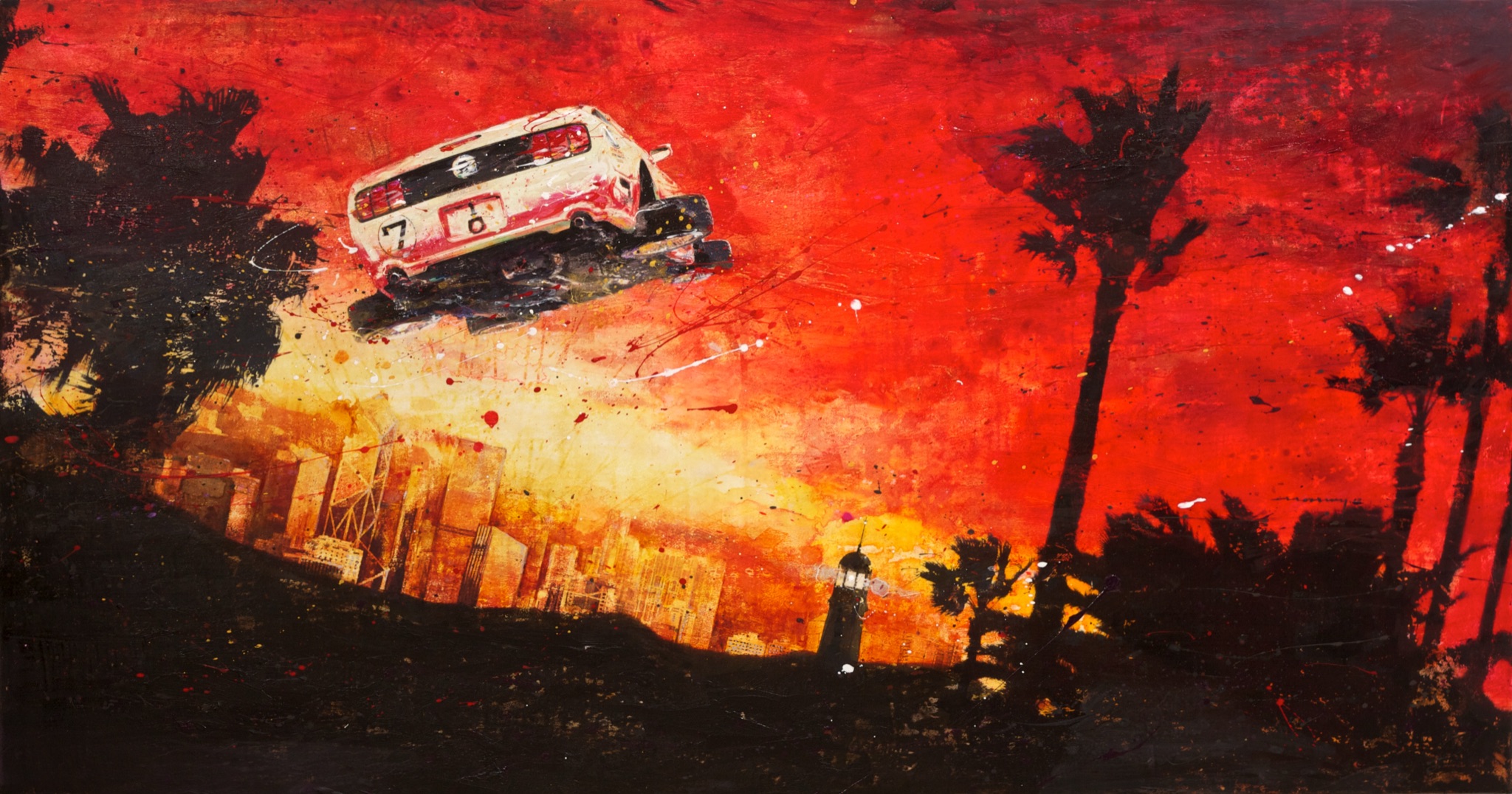
To navigate without a compass is frightening, but free. A racer who advances in the direction the wind leads, without a fixed course. The direction of the wind changes constantly, and within that change, Minseok Kang discovers himself. This series, begun in 2012, captures a journey of self-discovery. Challenge, a cry toward a destination, and strong will — all of these collide and fuse on the canvas of mixed media. Navigation without a compass is ultimately a journey forward using one's own inner self as a map. He is competing not against any opponent but against himself, expressing the human will to forge a path even within anxiety and conflict.
Begin
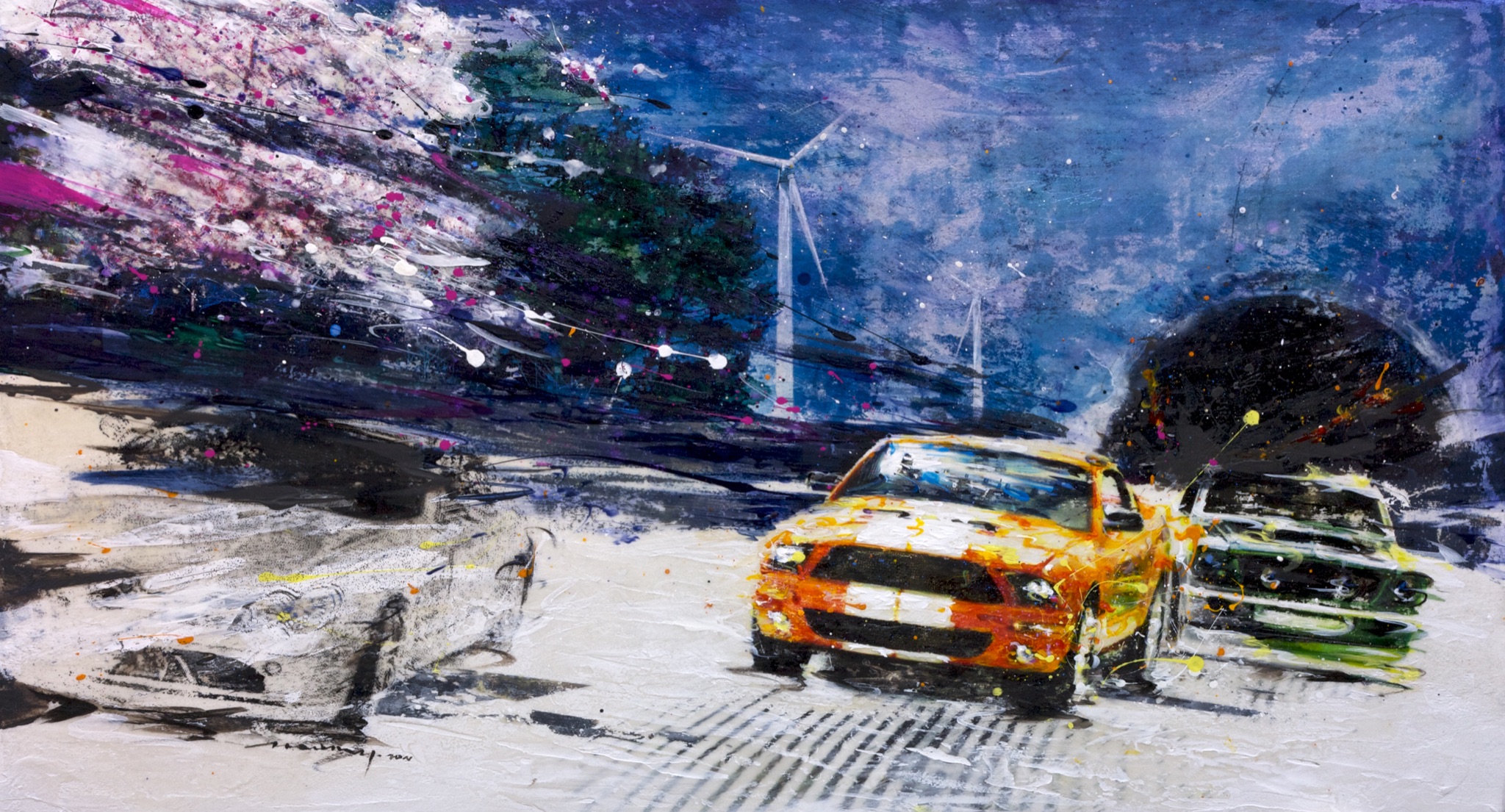
Everything comes from a beginning. Competition is frightening, but unavoidable. To overtake, to reveal a secret — knowing that this is only the beginning, we stand on the starting line. This 2011 body of work represents an important turning point in Minseok Kang's painting journey. Through silkscreen and mixed media, it explores the themes of competition, beginning, and challenge. The beginning is frightening, and the outcome is opaque — yet he moves forward nonetheless. The moment things begin is life itself. This series expresses the starting point of competition that modern individuals face, and the inner tension within it, through the form of the automobile.
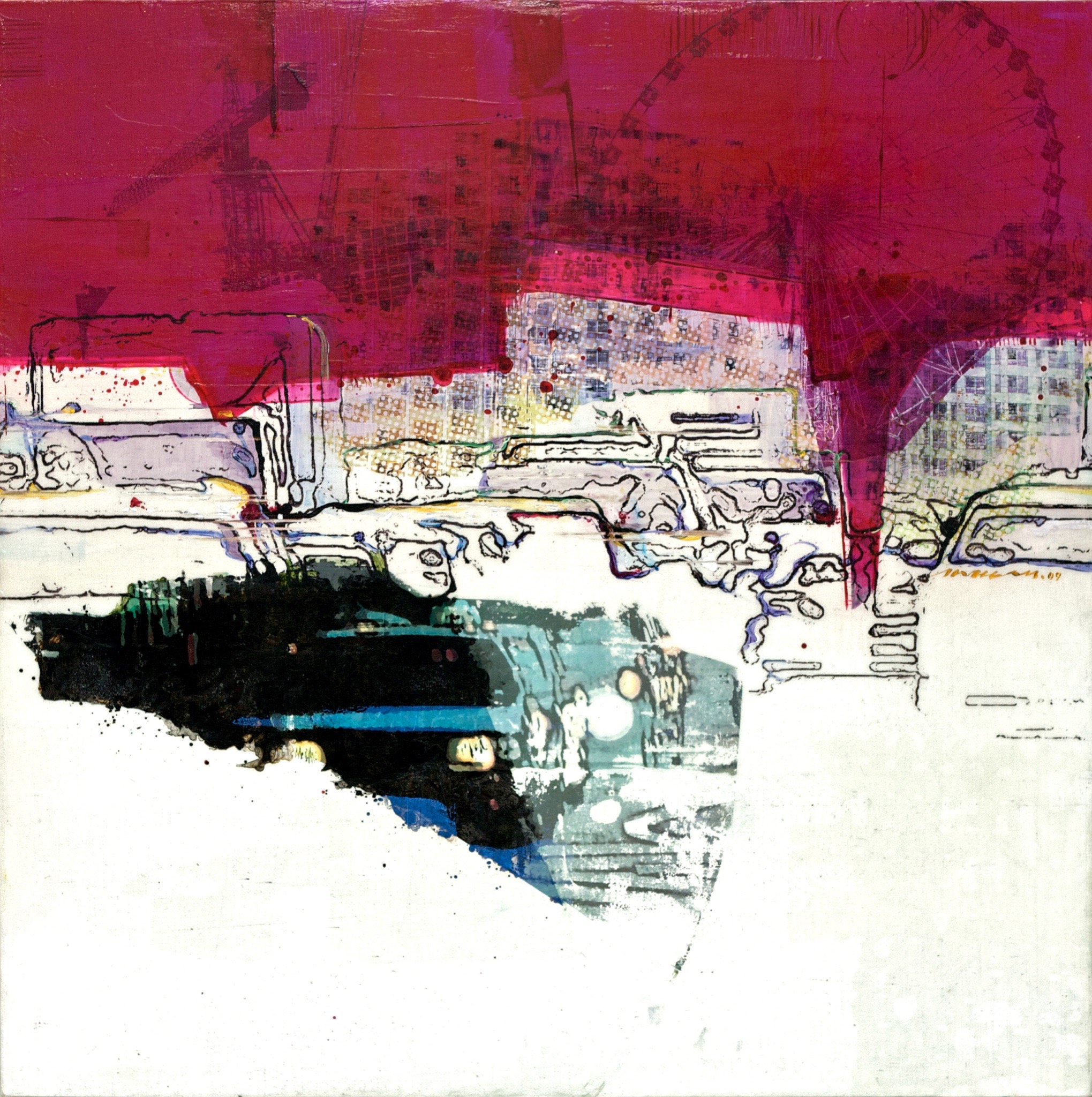
Competition
Within the city, people compete without end. Illusion and hesitation, pressure and opportunity — these complex emotions are a psychological portrait of the modern urban individual. This early body of work from 2009 is a record from the period when Minseok Kang was pursuing his major in Western painting, exploring the psychology of human beings in the city and their social relationships. Pressure, illusion, competition, hesitation, opportunity, the gaze, the crowd — all of these sensations are compressed on the canvas of mixed media. This series holds the seeds of the artist's later world, which would develop into the symbols of the automobile and speed.
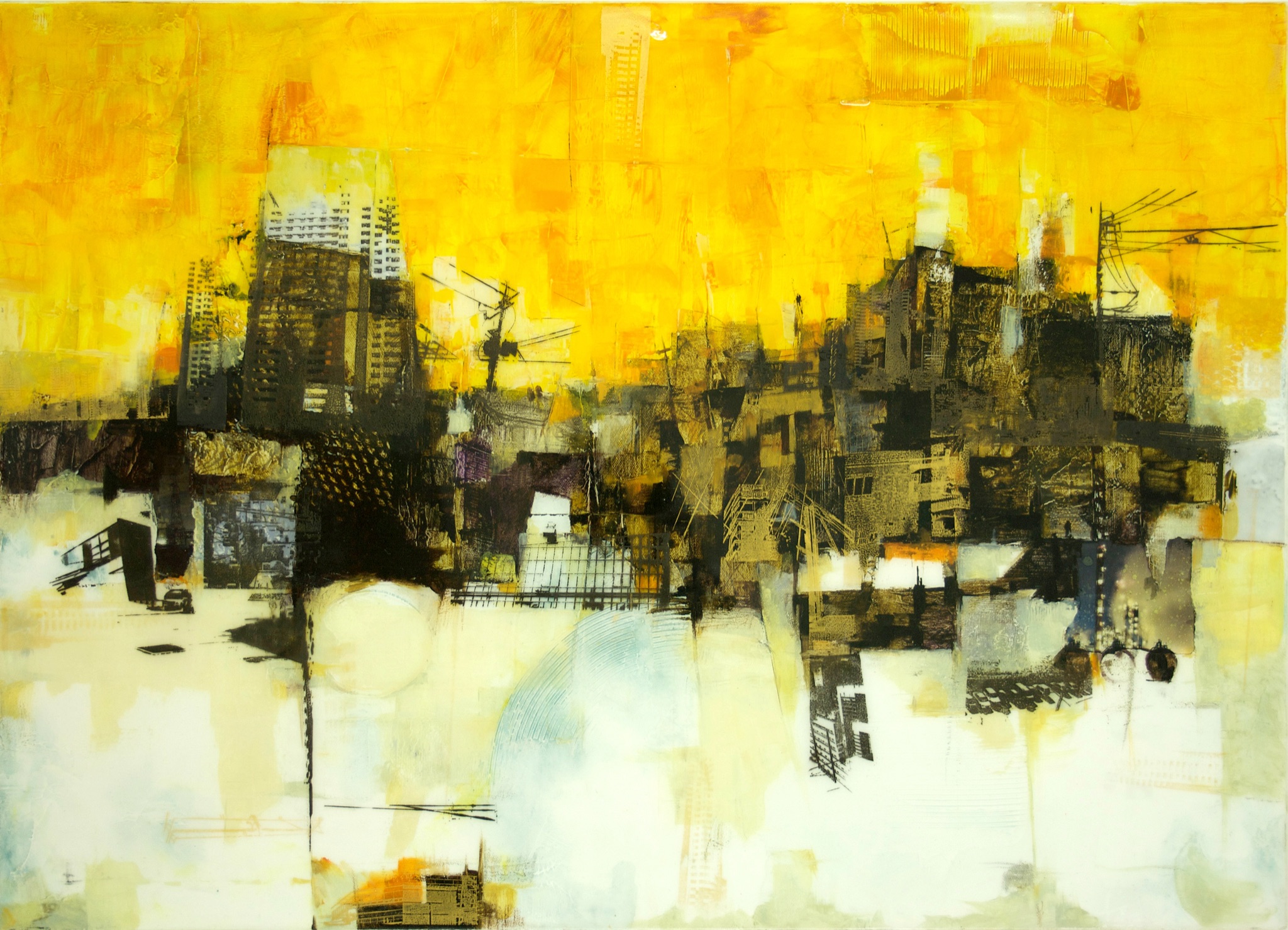
City
The city does not stop. People leaving work, sounds within the city, time that has stopped, the faraway city — time flows and the city changes, but the human beings living within it remain small and fragile. The 2008 City series represents early work from the period when Minseok Kang was majoring in Western painting. Urban development, life within the city, the city in time — these themes are realized as the complex cityscape on the canvas of mixed media. These early works, which pose questions about human existence within the city and the passage of time, mark the starting point of the artist's world, which would later lead to the symbols of the automobile and speed.