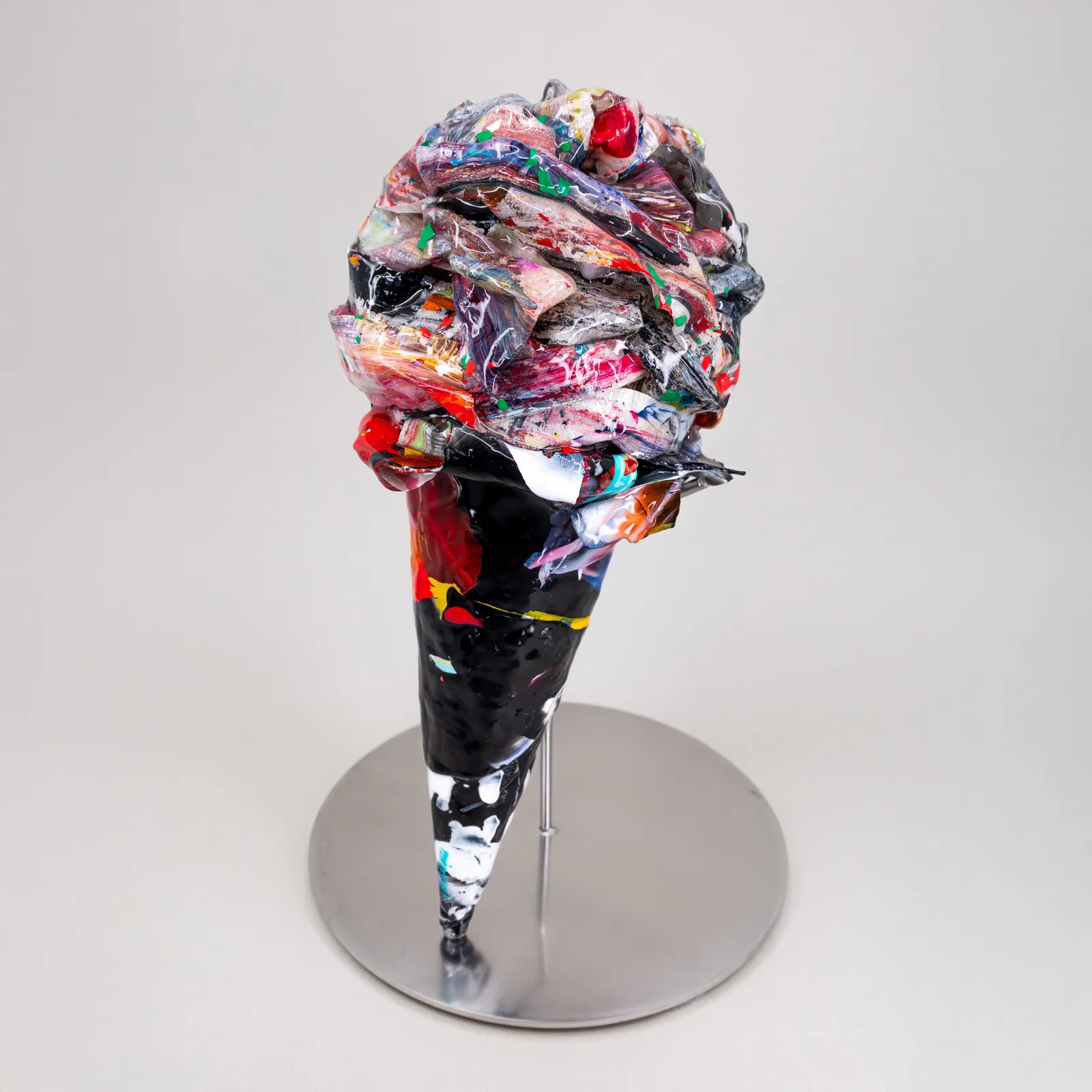
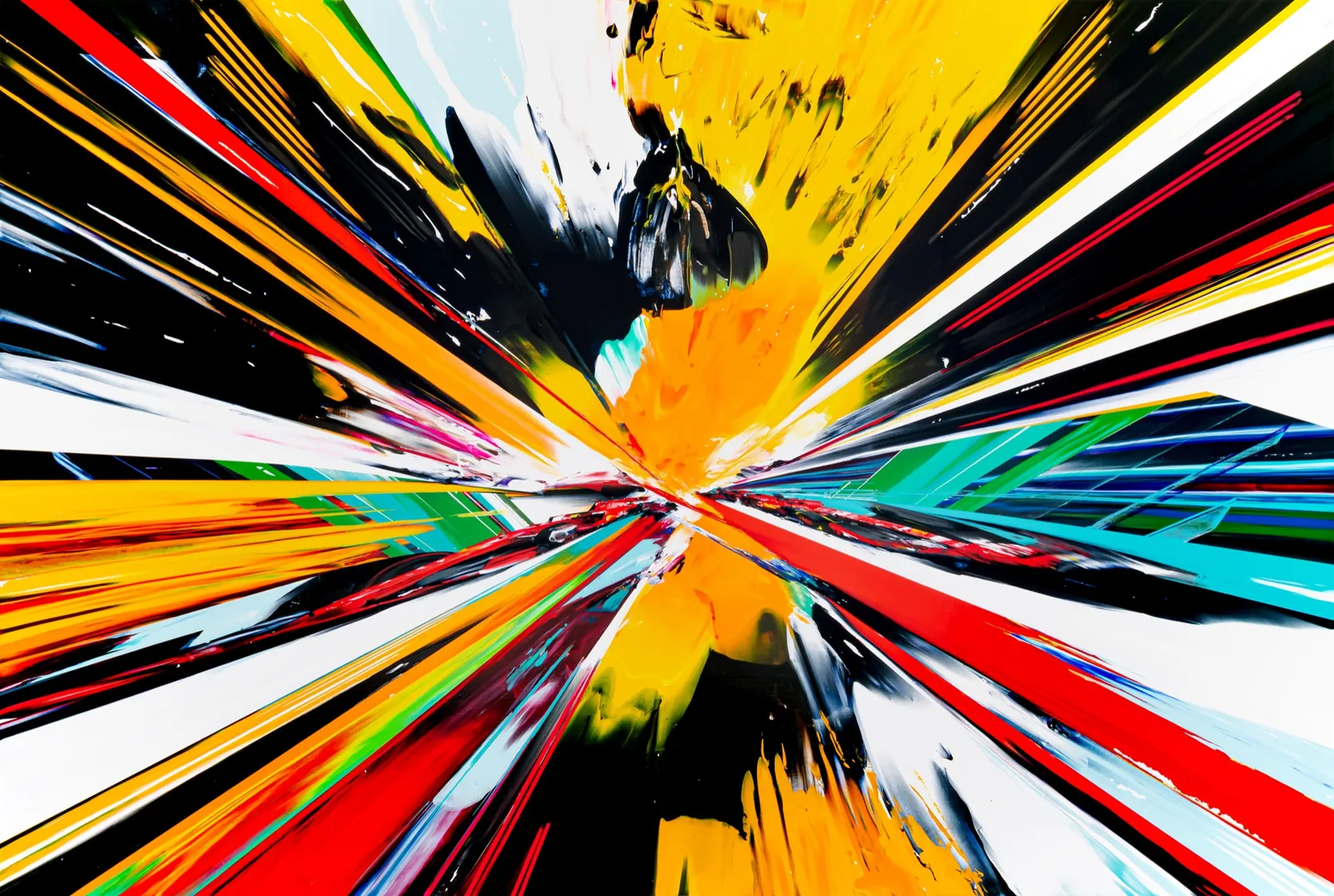
A cloth has a front and a back.
A painting looks like a single smooth surface, but a canvas is, in fact, a thin sheet of cloth. Painters coat one side of it with gesso — the white ground laid down in advance so that paint will sit well — and paint upon that smooth, prepared face. The other side, the raw side left bare, always faces the wall and never reaches our eyes.
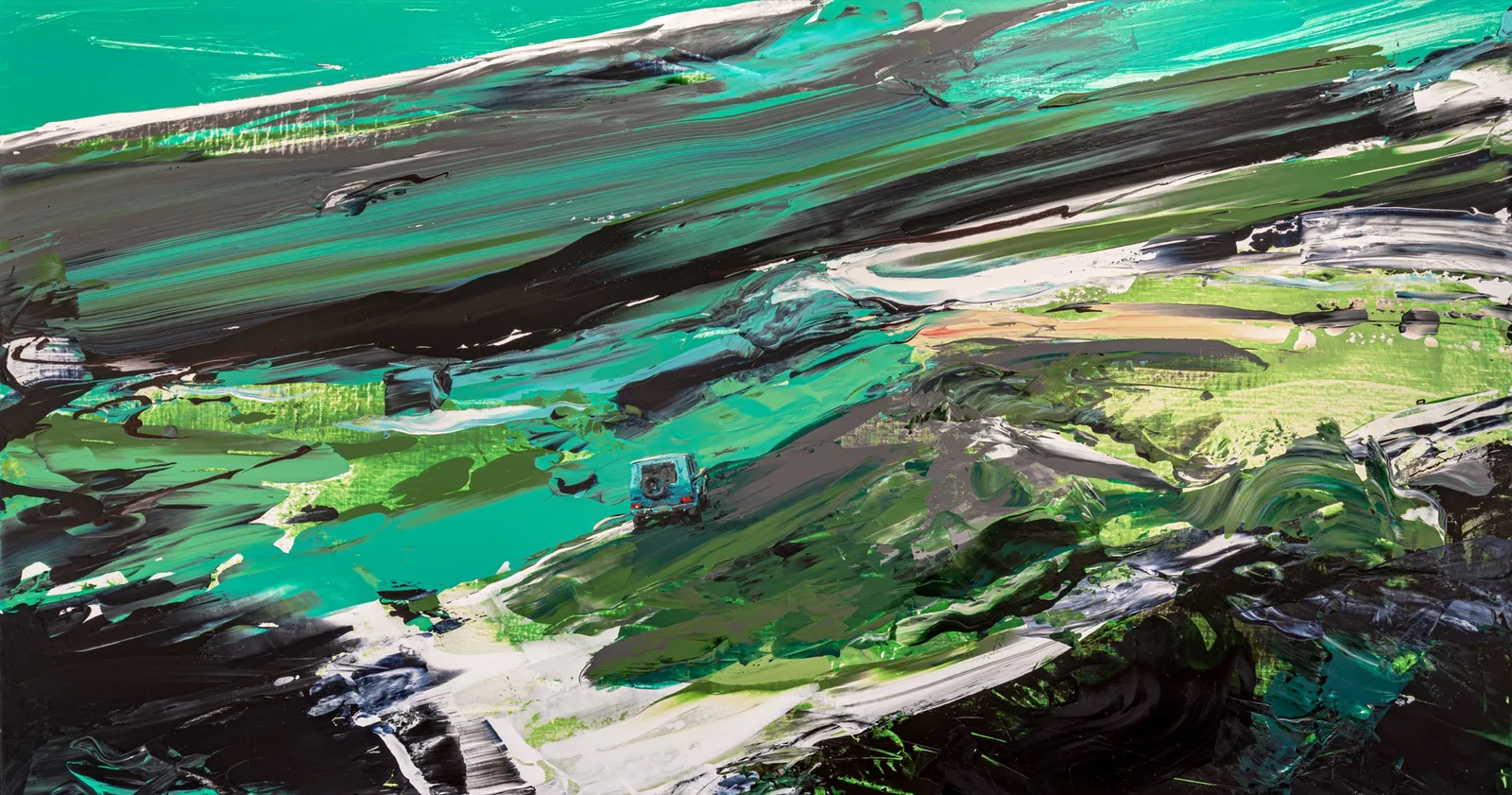
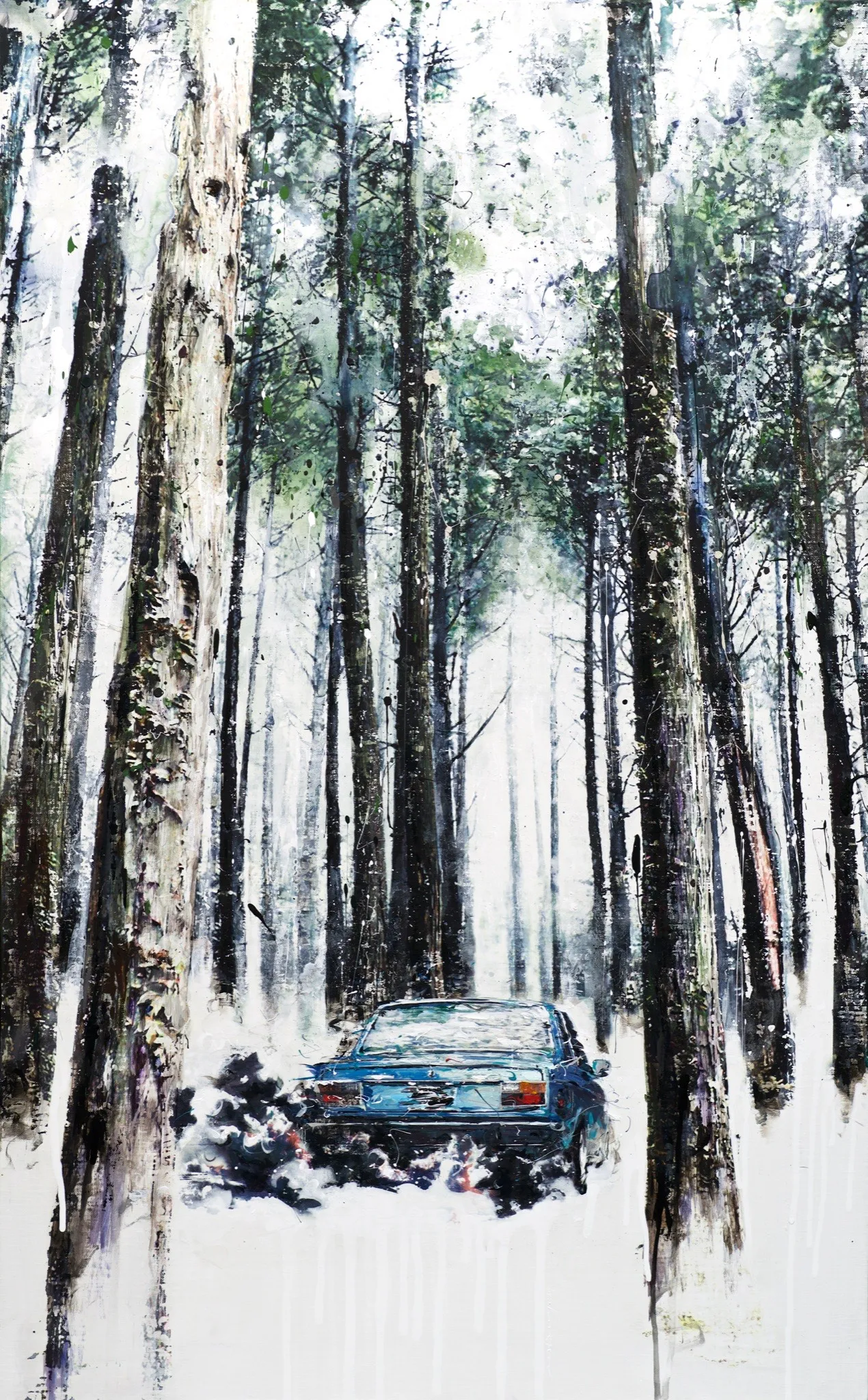
What Minseok Kang does goes unnoticed unless someone tells you. He does not turn a finished painting around. Leaving the stretcher exactly as it is, he flips the cloth itself and paints on that rough, ungessoed back — the raw face of the linen. ⟨Reversed Boundary⟩. This fifth note goes one layer deeper into what that turn — across a single layer of cloth barely a millimeter thick — is really turning over.
Two worlds, and the thin membrane between them
For Minseok Kang the two faces of this cloth are not merely front and back. The smooth front, coated with gesso, the side we ordinarily paint on — that is reality. The world we stand on, ordered and made even. And the raw back, left bare of everything — this he reads as his own inner world. An untouched, unpolished space inside the mind.
Then what is that single thin layer of cloth set between them? In the artist's own words, it is 'like the earth and the universe.' A membrane barely a millimeter thick that both divides and joins the small, solid reality we stand upon — the earth — and the dark, vast inner life that opens just behind it — the universe. One step forward is reality; cross that one layer of cloth and you are in the space of the mind.
The philosopher Gaston Bachelard, in 『The Poetics of Space』 (1957), called such an inner space 'intimate immensity.' Daydream, he wrote, 'transports the dreamer outside the immediate world, to a world that bears the mark of infinity.' Immensity is not only out there in the cosmos but also within us — the moment we close our eyes and imagine, the mind grows wider than any outer view. Only, where Bachelard summoned that inner immensity in reverie, Minseok Kang actually crosses the one thin layer of cloth and lays his hand upon that infinite face. The door that reverie opens, he opens with paint and cloth.
The language of the inner world
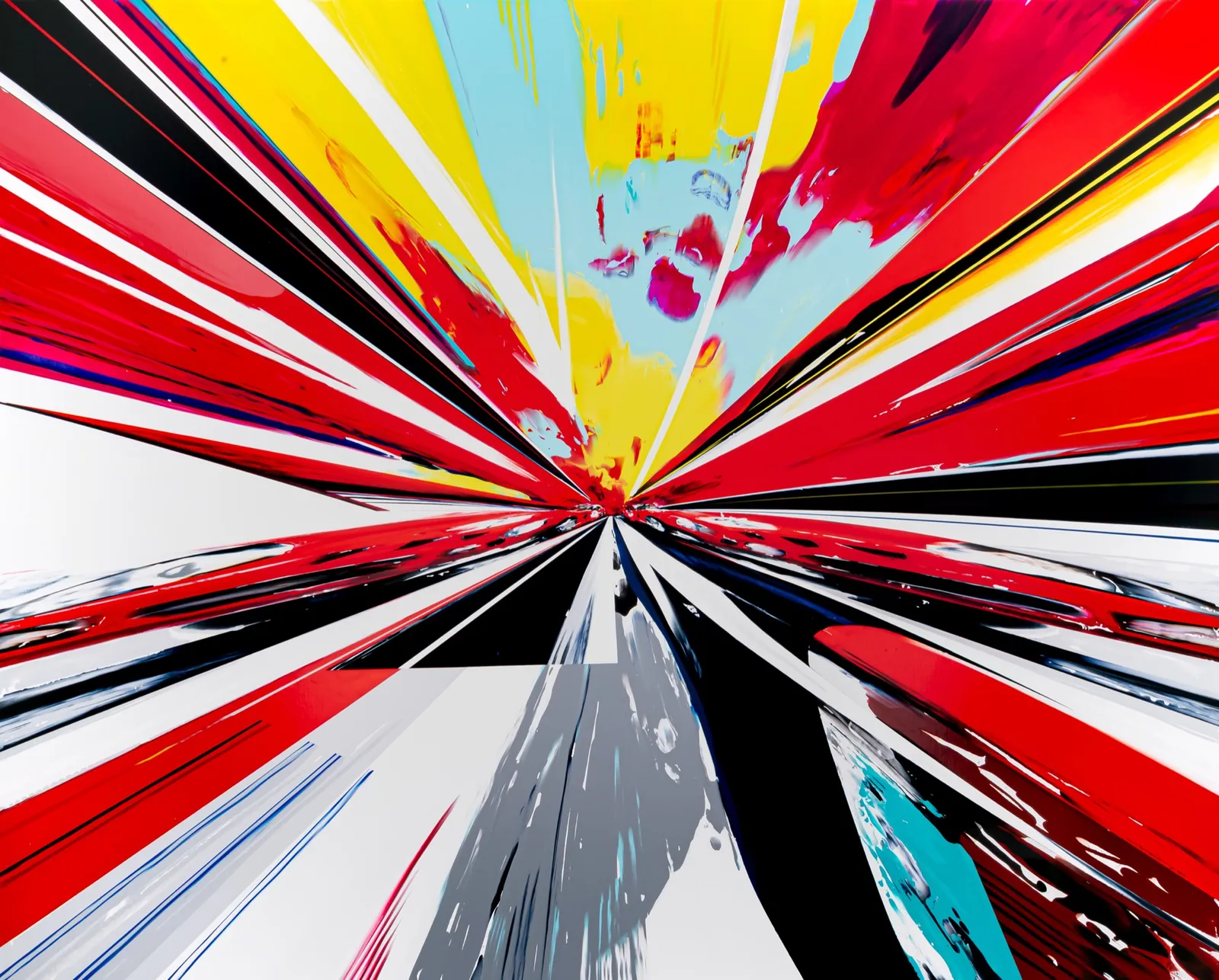
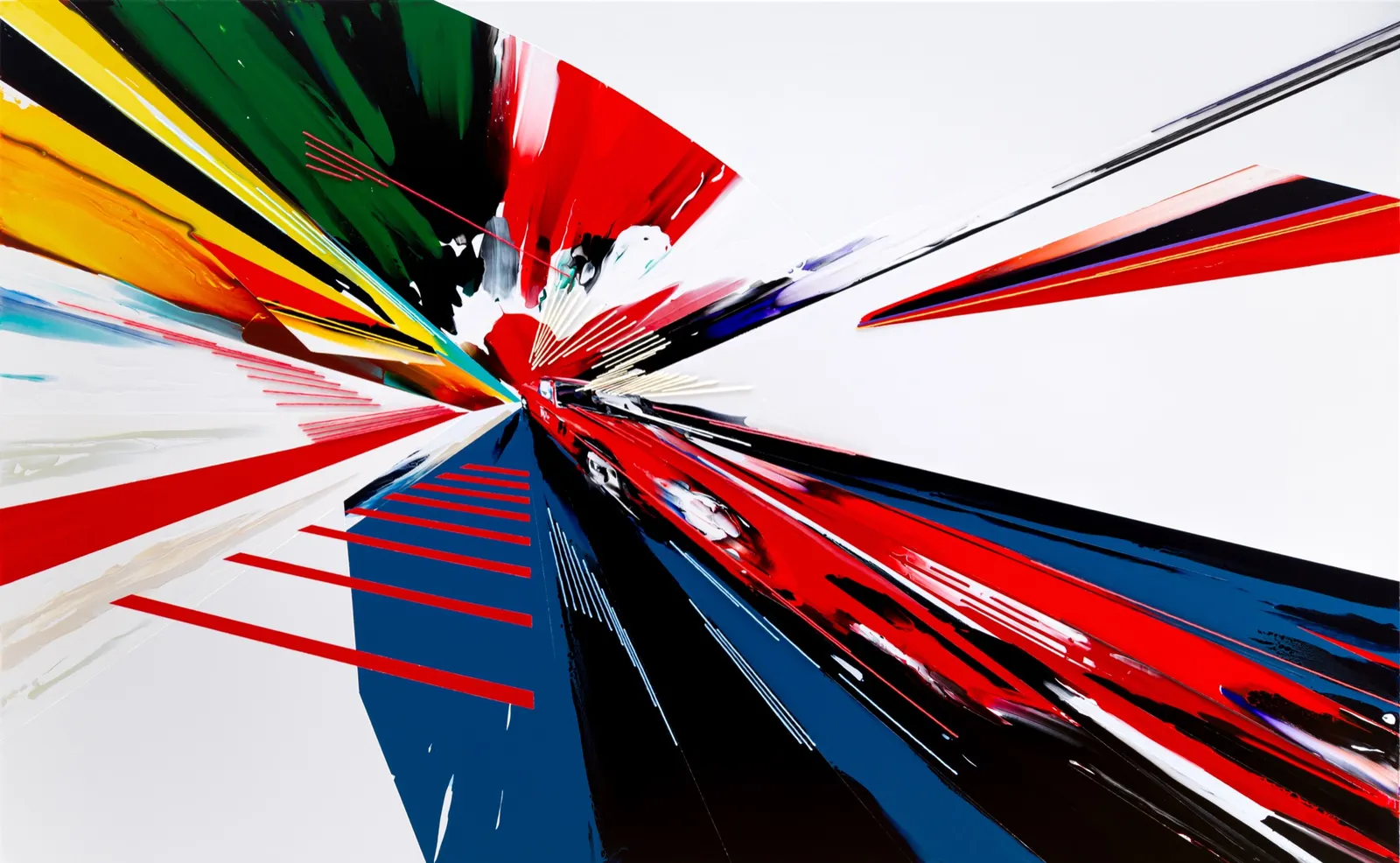
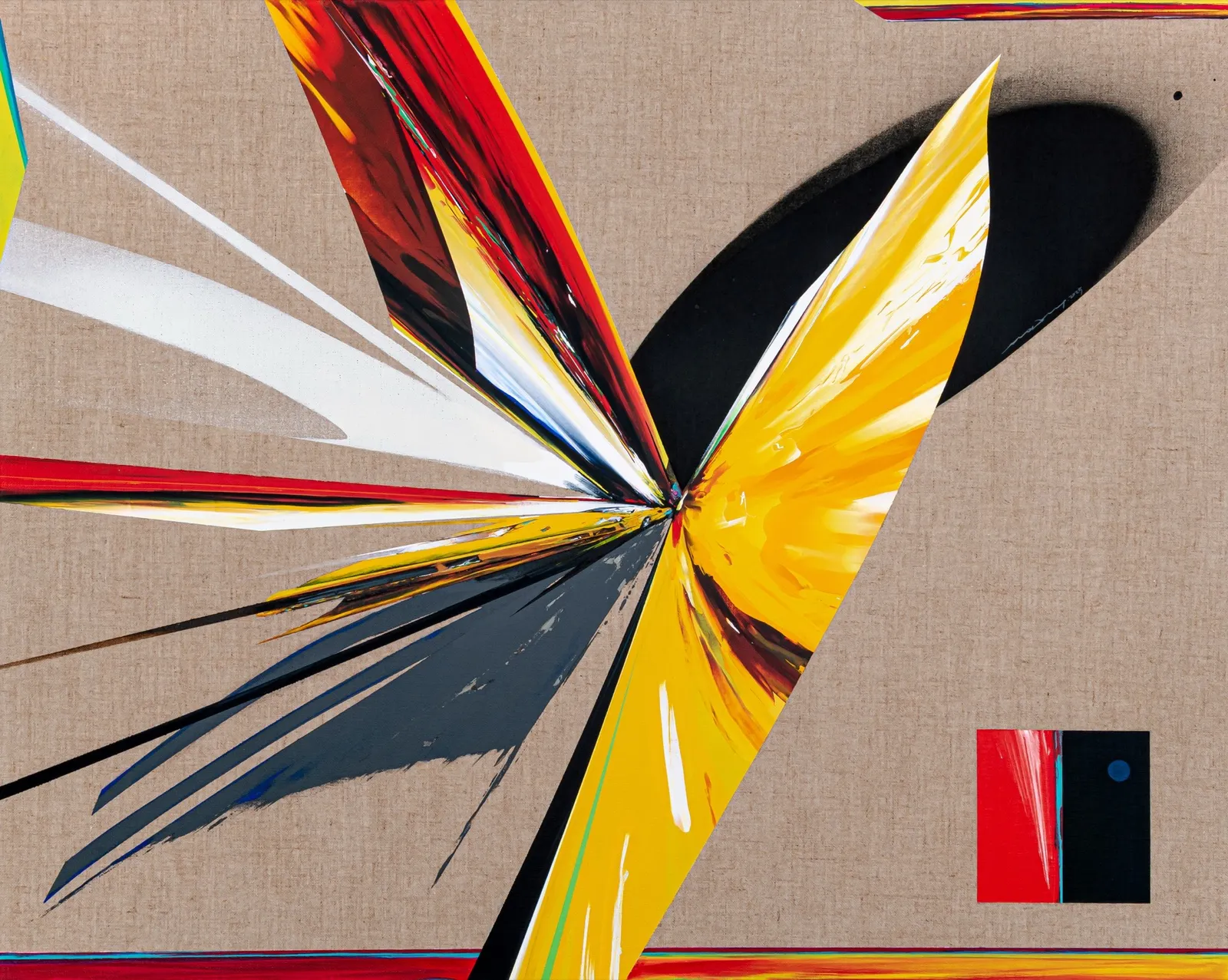
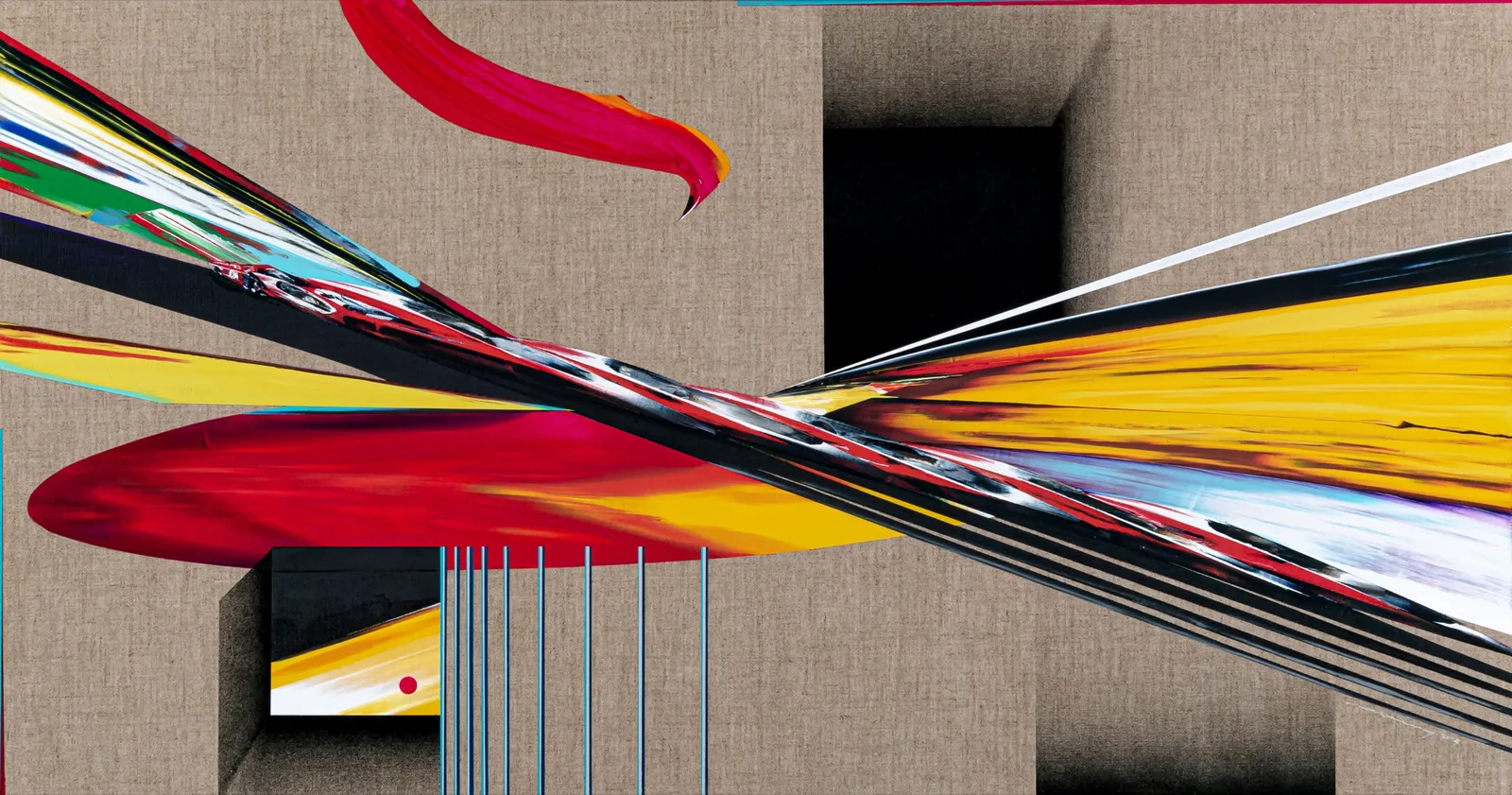
The world drawn on that back does not obey the grammar of the pictures we know. The automobile that long raced across Minseok Kang's canvases here all but loses its form. Distorted and distorted again, repeated until it is hard to tell what it once was. Between these forms, signs bearing their own rules recur, and on some surfaces a round black opening is bored through.
The artist describes the nature of this world this way: the inner world is unstable, floating in mid-air, a tangle of complex relations where nothing is quite clear. And yet, strangely, in the very middle of that instability, stable patterns settle in — figures that raise their own order out of what trembles. Neither total chaos nor total order: that, closer than anything, is what the mind actually looks like. The slippage and repetition the tidy front of reality cannot hold, Minseok Kang can speak only on the unpolished back.
Everything begins from a single point
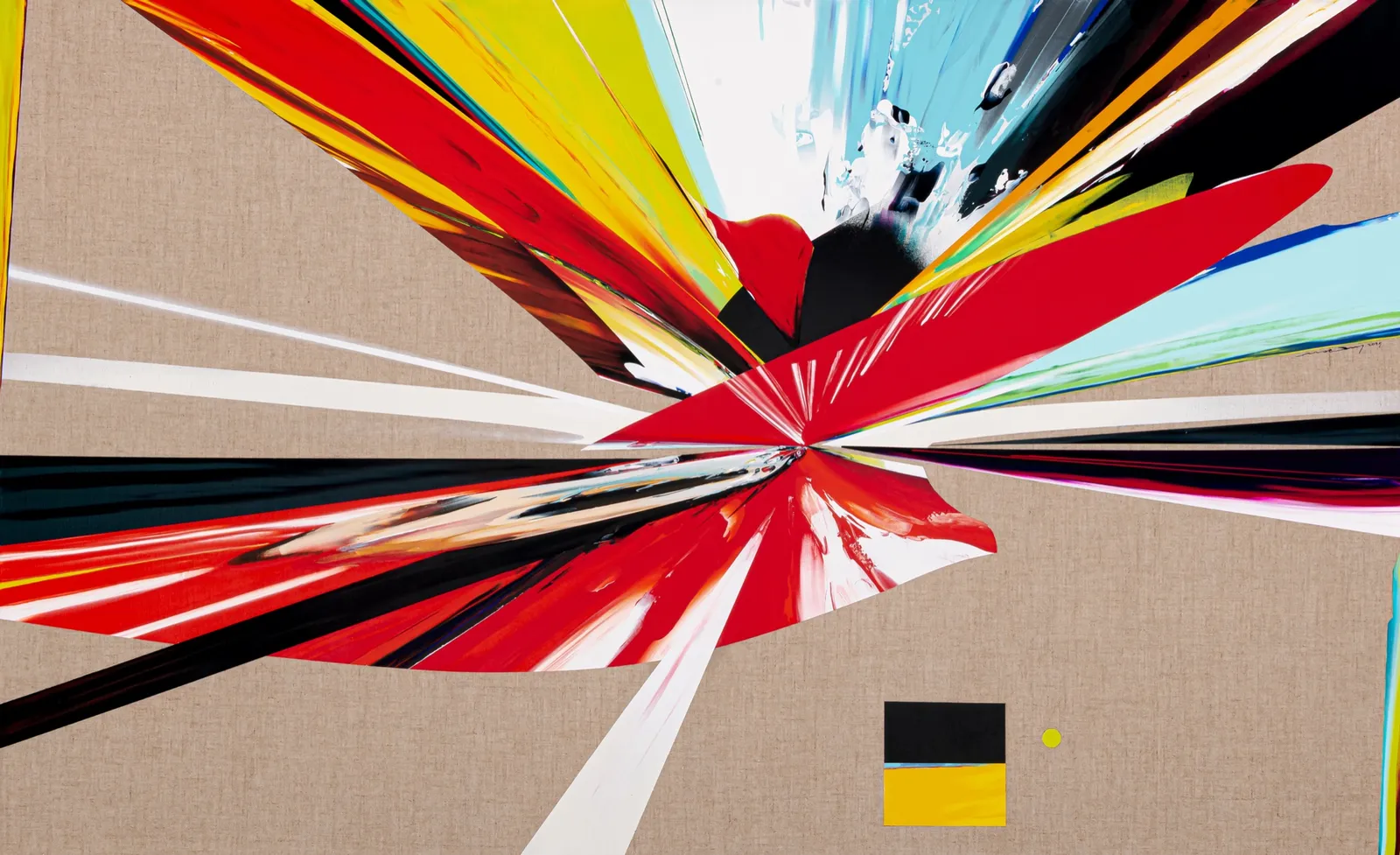
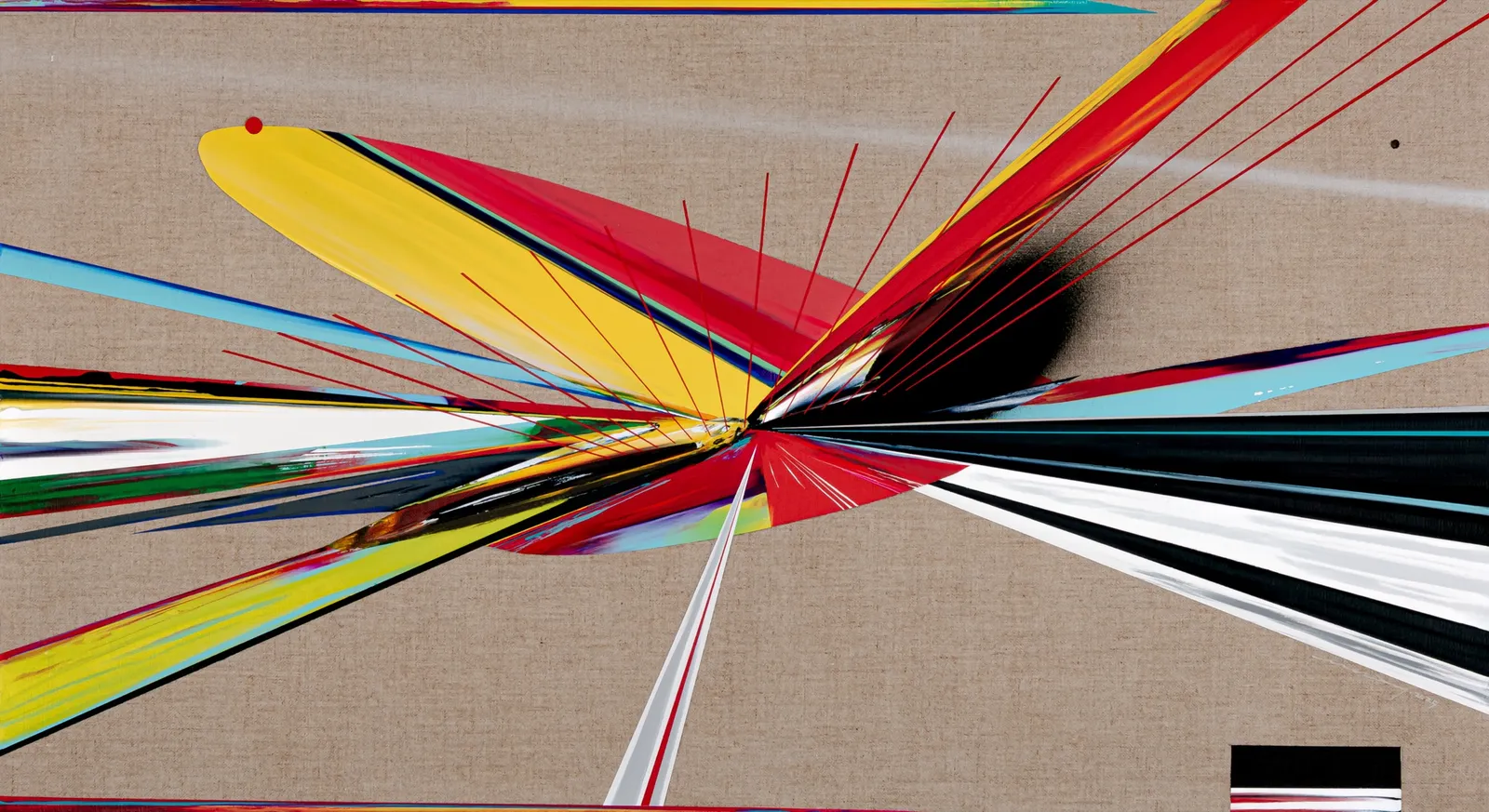
For all this distortion and repetition, there is a point of departure. Like the vanishing point — the first single dot one sets down when learning perspective — Minseok Kang's surface begins from one point and stretches outward. But who is that point? The artist says it plainly: the starting point is himself, the artist.
Reality and the inner world both arise, in the end, from one person. The world I see begins from me; the universe within me also begins from me. And so this series is less a painting of cars than a map of the 'I' that stretches from a single point into two worlds.
And the round black opening bored into the surface — the artist calls it a black hole. An entrance for coming into this world of the mind. To cross from the front of reality to the universe of the back, we must pass through that dark hole. To cross one layer of cloth is also to be pulled into that black hole and to fall inward, into oneself.
Looking at oneself in the third person
What is telling is that all of this is, in the end, Minseok Kang's own story. He crosses to the back of his own mind, and from there he looks at himself as if at another — in the third person. The gaze psychology calls 'metacognition,' the seeing of oneself from one step away. The back of the canvas is the place he crosses to in order to observe himself.
And so this series offers no clear answer. As the inner world has no single right answer, this painting never says 'this is the answer.' It only asks, quietly: besides the front you smooth and show to others, do you not also have a rough back you have never once turned over? And on that back, are there not distorted forms hard to make out, signs that keep returning, patterns you have raised yourself even amid unease?
That a painter who painted automobiles should cross the cloth to paint the back of his own mind — this is not an expansion of subject but a rotation of the gaze. The one who painted things that race now crosses into the inside of the racing self.
The next note, ⟨Reading MINSEOK No.6⟩, crosses over to the time of the 'thread' that once ran across the surface — ⟨Timeleap⟩, and a theory of time told one stitch at a time.
References
· Minseok Kang, ⟨Reversed Boundary⟩ series notes — minseok.gallery · Gaston Bachelard, 『The Poetics of Space (La Poétique de l'espace)』, 1957 — 'intimate immensity': the boundless space that opens within us
All plates in this note are works by Minseok Kang © MINSEOK Studio. Works by outside artists still under copyright carry no images; plates use only works by Minseok Kang and those in the public domain.