There was a year he could not paint.
When failures pile up, mistakes become unbearable. Minseok Kang reworked a surface dozens of times, looked at it every day, painted it in advance in his head. The mistakes did not decrease. What remained was the insistence that he alone would decide the answer, and a build-up of marks only he could see. Then came the point where he could not pick up a brush at all.
That is where he started running.
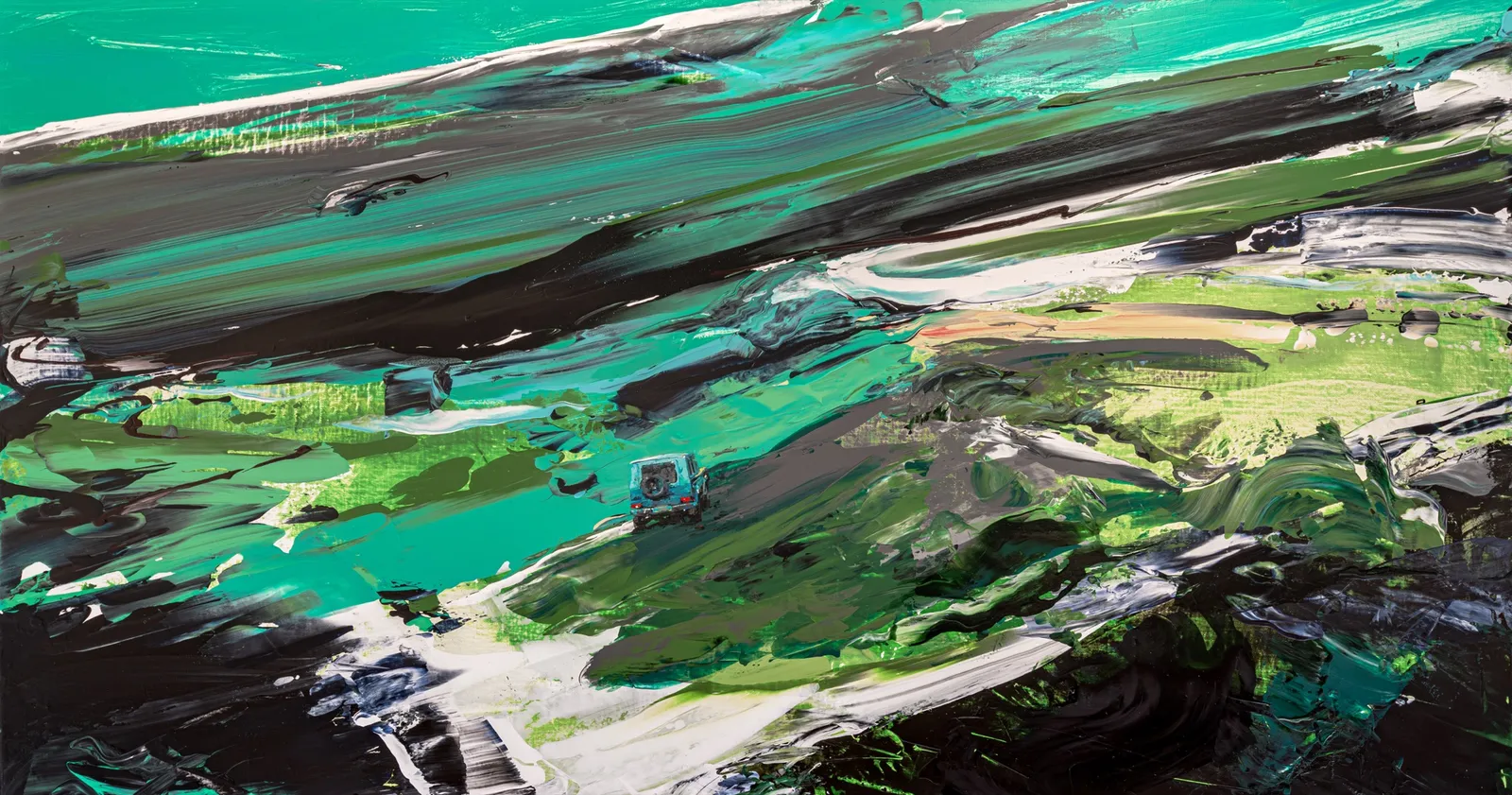
⟨Endless Force I⟩ is from 2017. One hundred centimetres by sixty-five. It is the only work from this series that year. In 2018 there is none at all.
Running was not spending force but storing it.
Most people assume the opposite: that running drains you. Kang does not see it that way. For two months after a race, he says, his body stays full. That is why the running continued.
It has been more than five years. Twice a year or more he has entered half marathons and always finished. On days without a race he runs five to ten kilometres. He still runs now.
And in 2019, fourteen works from this series arrive at once.
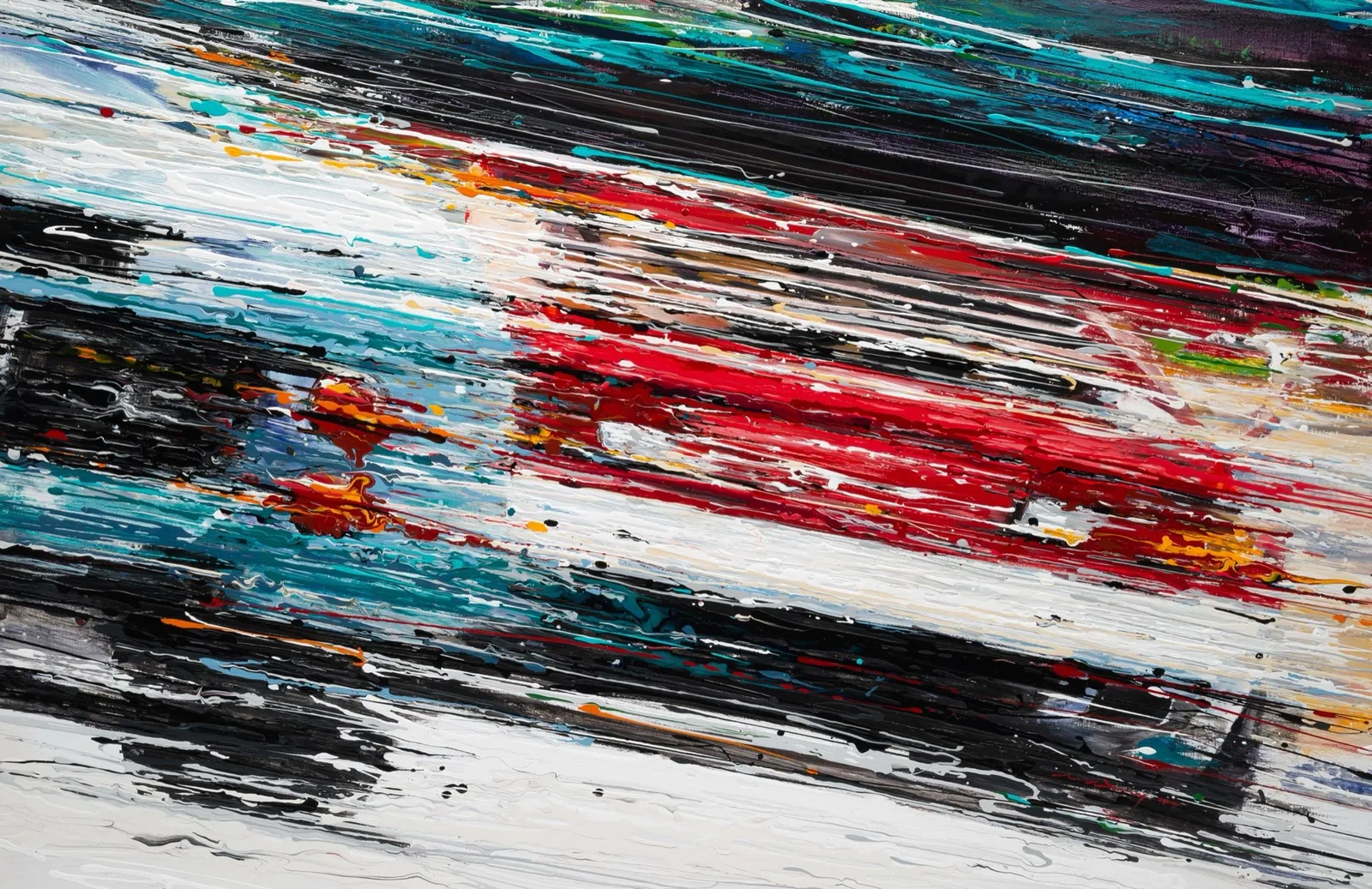
The engine sounded like a heartbeat.
While running he was becoming the thing he had been painting. Tyres on asphalt were his own footfalls. The wind against his face was what a body meets when it moves through air. And past a certain point every outside sound drops away and only his breathing is left.
A man who had painted cars for fifteen years went through it in his own body.
There is something to know first. For Kang the car was always a stand-in for himself — a mask through which a reserved man could speak without stepping forward. Running moved that mask into his body. Before painting it, he became it.
The two cars are not him and himself.
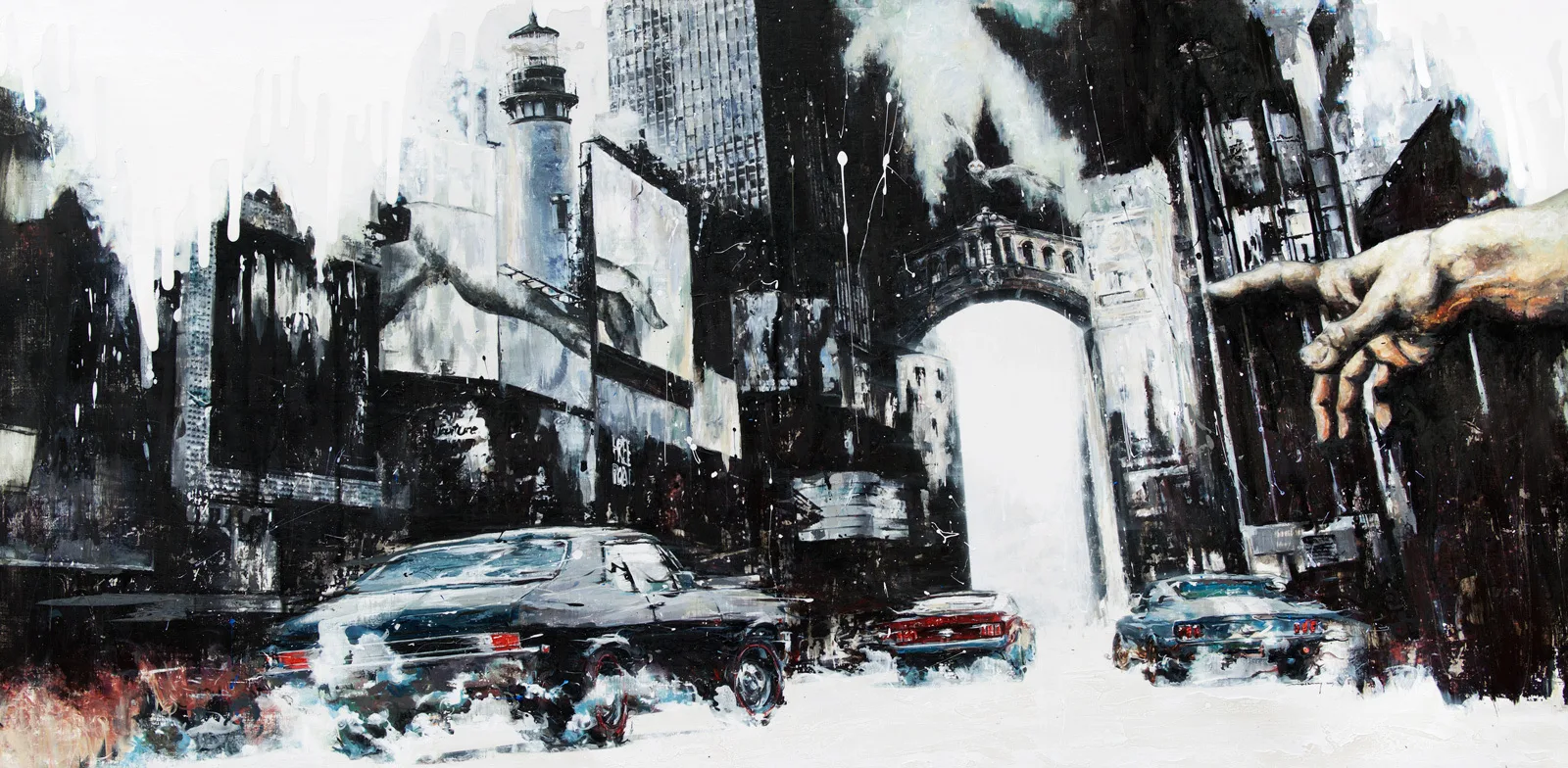
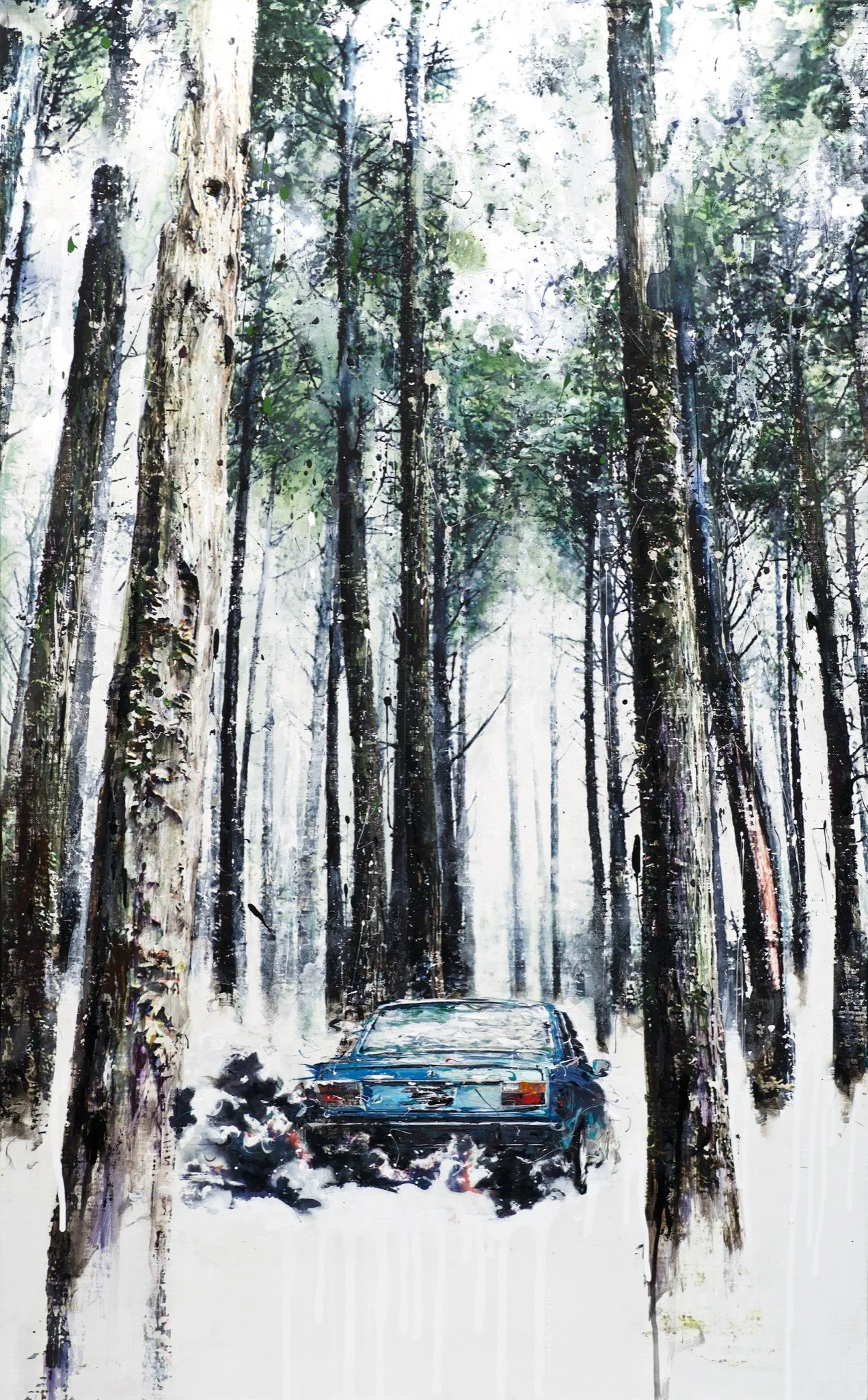
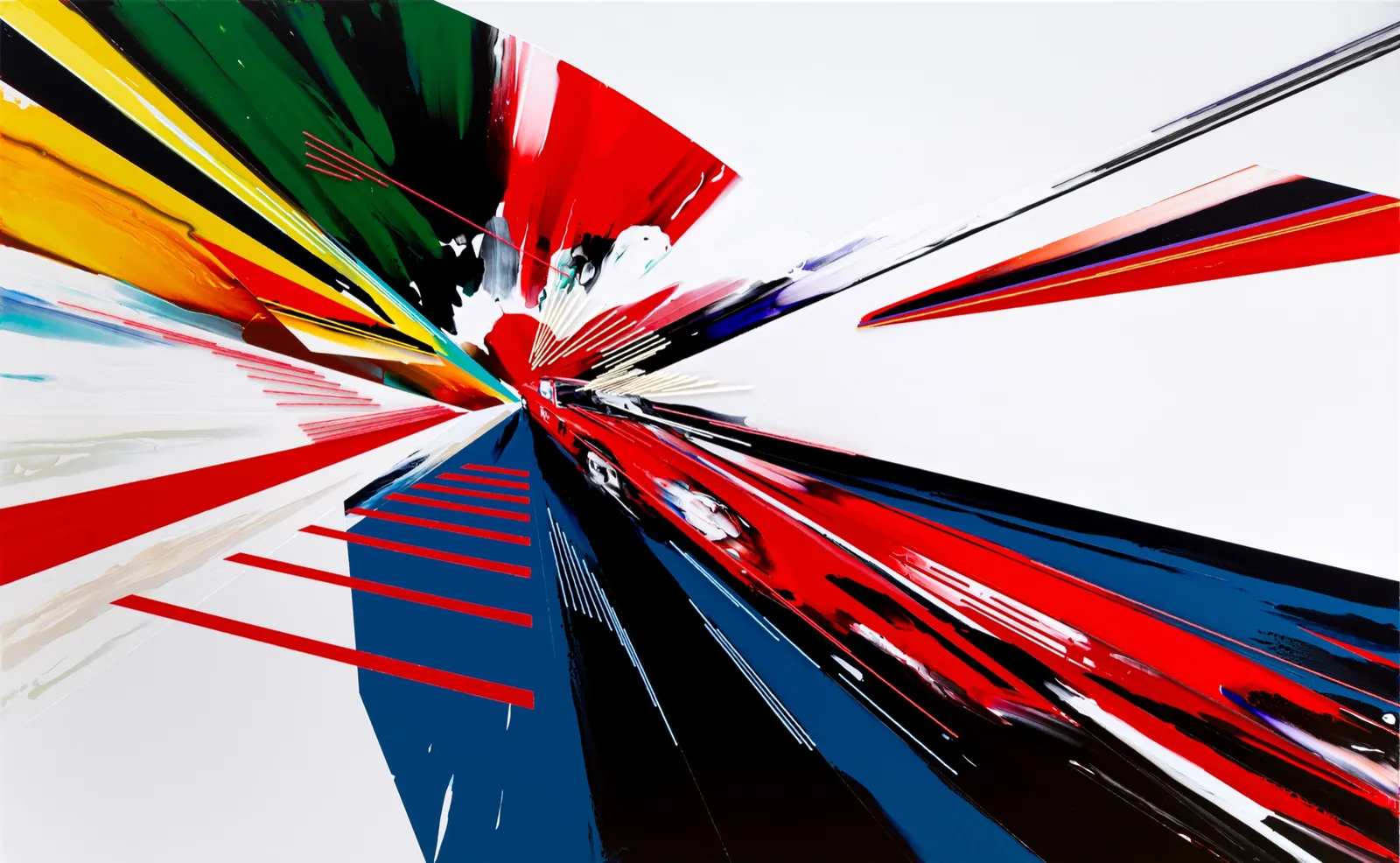
In this period there are usually two cars on the surface. Both are seen from behind, which means both are running forward.
Here is what to notice. These two are not the artist and his inner self. The one in front is someone whose name and face he does not know. And behind him, someone else is coming.
That is what Kang wanted to say in these years. The position of chasing what is ahead while being chased from behind. He calls it the condition of modern life.
This is also where he finds people and cars alike. They race, they compete, they run forward. What they are running toward, they do not know.
He has spoken about why the chase begins, too. He does not shrug it off as something everyone goes through. Among people with strong personalities there are moments when your own presence blurs. Then you need something to pursue. It does not matter much whether the thing pursued means anything. Being in pursuit is itself the way out for a while.
So the two cars are not opponents. They are closer to being each other's reason.
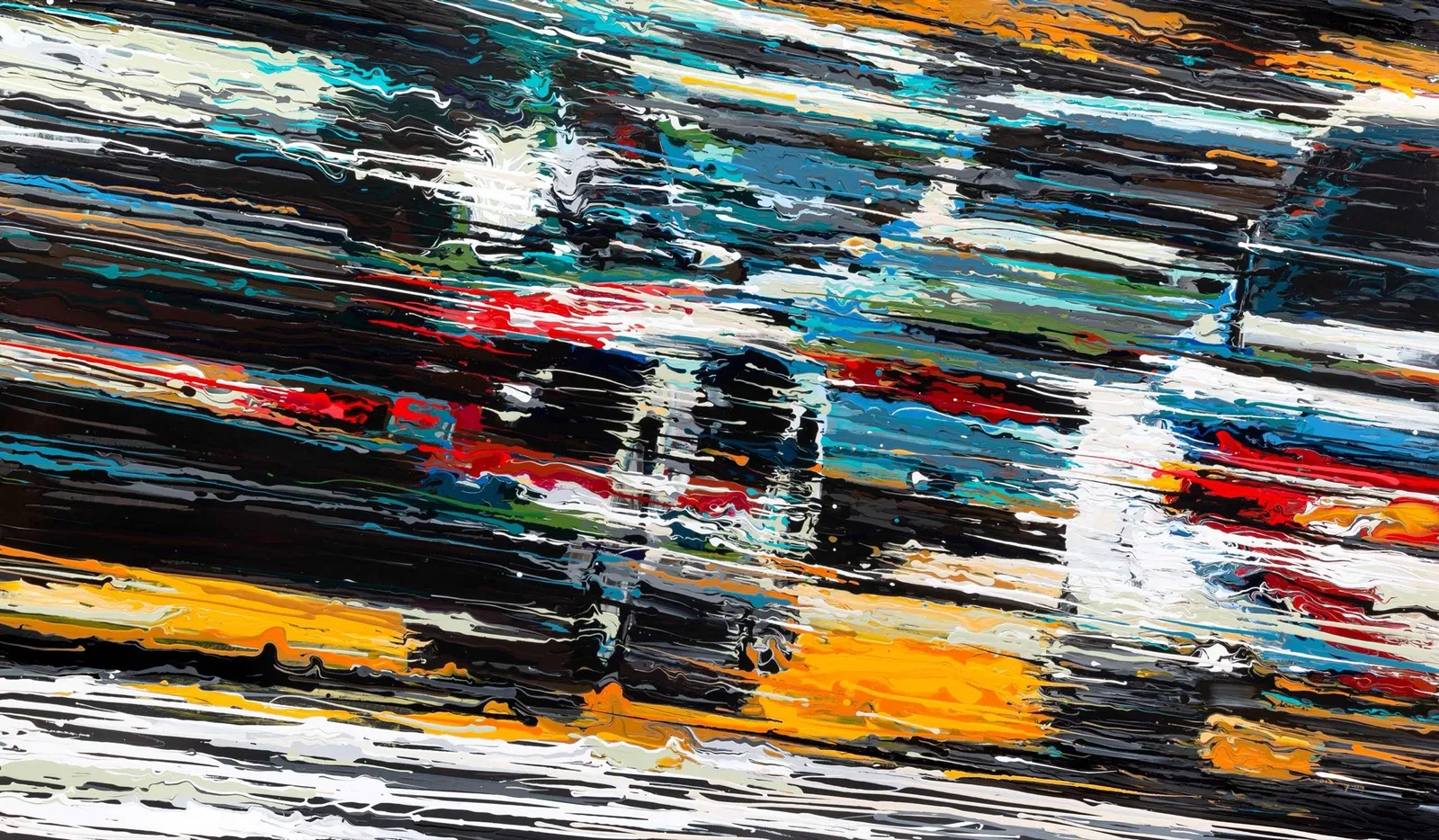
A marathon has no winner at the halfway mark.
I was going to say that anyone who has run a long way knows this. Better to put it plainly. Over nearly two hours the person ahead of you keeps changing. You pass someone who was ahead a moment ago, and a while later they pass you back.
Who led at which stretch means nothing.
What is left is one finish line. Time does not matter much either, Kang says. Everyone runs with a different strength and a different pace, toward the same place.
In his own writing about this series there are the words compromise and coexistence. Painting fierce competition while speaking of compromise and coexistence looks like a contradiction at first. Put it beside a marathon and it holds. You do not reach the finish by beating the person next to you. You are simply on the same road, each running your own share.
Go back to the surface. The two cars look as if they are racing each other. They are not. Each is going toward its own finish with its own strength. It is only that at this moment they happen to be ahead of and behind one another.
Someone else made running part of his work. Haruki Murakami ran almost daily while writing novels and put that into a book. But his reason differs from Kang's. He wrote that he thinks of nothing while running — more precisely, that he runs in order to acquire a void. Emptying his head was the point.
Kang is on the other side. He runs to fill. When he says his body stays full for two months after a race, it is not a figure of speech.
The same act, opposite directions. One man runs to empty, the other to fill. And that difference shows up on the surface.
He squeezed paint out thickly, let it run, then let it run again.
This is why these surfaces look unlike his others.
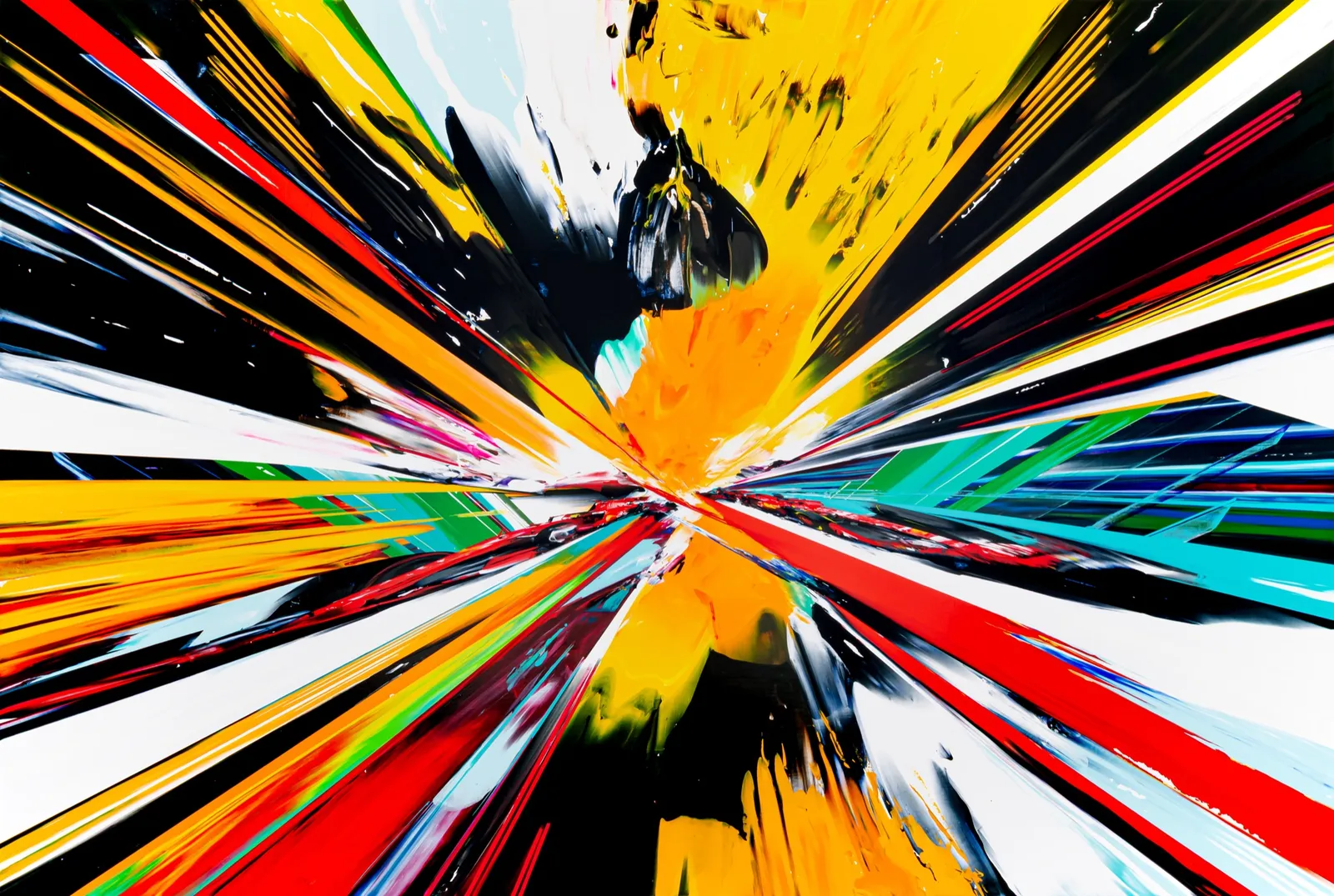
First the paint is squeezed out very thick and allowed to run. The car is made from that. Then more paint is poured down over it.
So the colour stays strong. Unmixed primaries remain as they are, and where the running paint meets and blends the texture rises rough.
But the pouring is not left to the hand. Kang wrote of it as chance and necessity together. What will appear as the paint runs cannot be known; where it will run is decided. Stand the surface upright and paint goes one way only, from top to bottom.
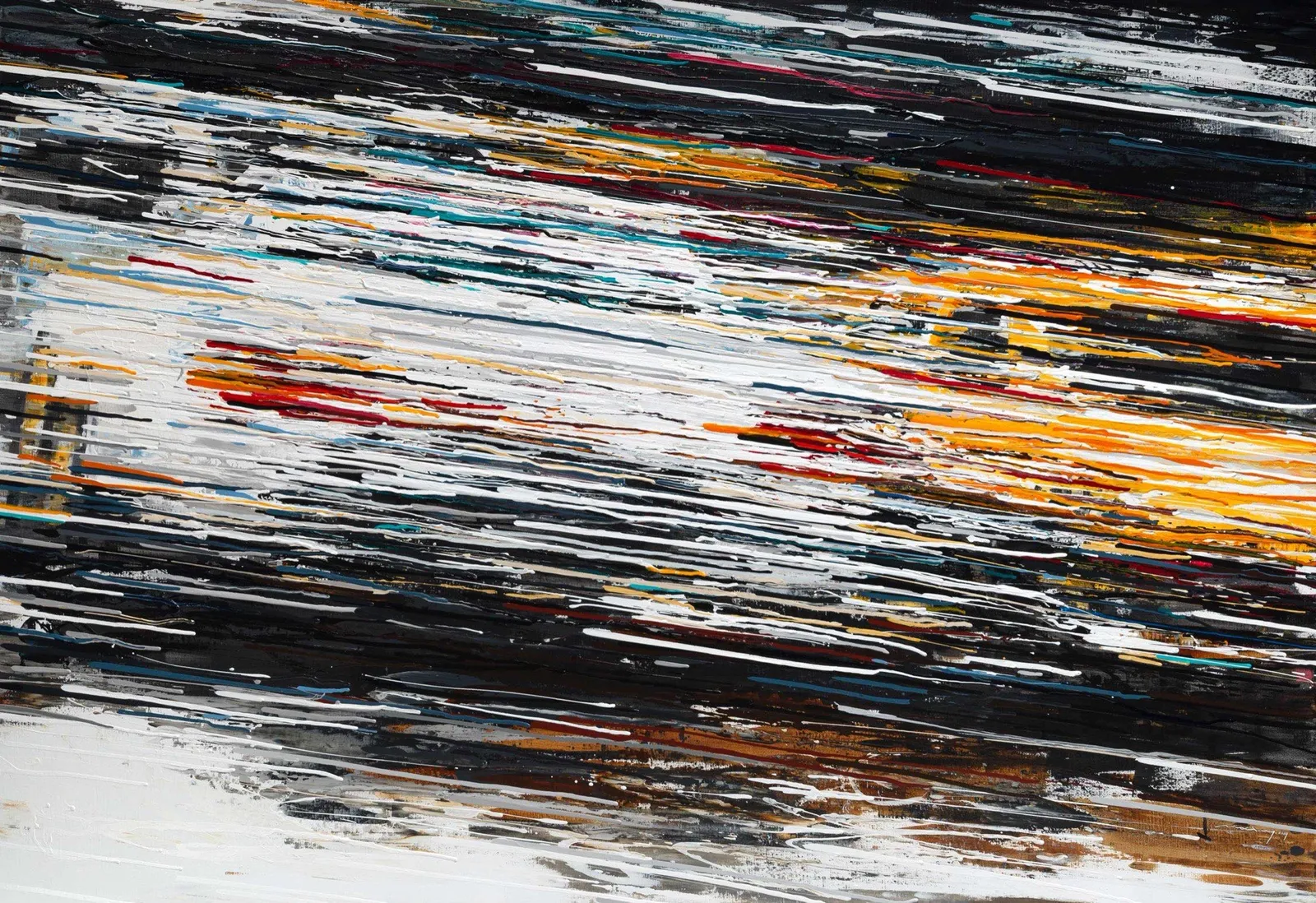
When you run you are inside force.
There is wind against the face. There is the air you draw in and the oxygen in it. There is sound entering the ears, and the asphalt coming up through the soles of the feet.
The whole body feels it. And not one of those things can be seen.
That is what this series sets out to do.
A single run of paint is a line. Another line is laid beside it, then another. Once enough have gathered, at some point they stop reading as separate lines and begin to read as one plane. What could not be seen takes shape that way.
Kang calls this dismantling. In 2022 he wrote that he pours acrylic vertically and dismantles the form of the car.
Here is what to notice. Dismantling is not disappearing.
The shape comes undone; it does not leave. Between the falling lines the car is still there. The longer you stand with the surface, the clearer it gets.
It is the same position as a runner. In the middle of wind and air and sound, and not gone. Still running inside it.
Jackson Pollock also poured paint. His surfaces have no figure from the start. In 1947 he wrote that he was in his painting — that he moved inside it rather than standing outside and transferring what he saw.
There is a likeness, and a decisive difference. Pollock's surface has no one to be inside that force. Kang's does, because the car was painted first.
The posture differs too. Pollock laid the canvas on the floor and walked around it, paint falling from every side, so the surface has no up or down. Kang pours with the surface standing. Gravity decides the direction. The lines go one way only, as a runner goes forward.
In the second half of 2019, thread arrives.
⟨Endless Force XIII⟩ is a small square, forty-one centimetres a side. Embroidery thread runs across it.
It is small. Very small, when the other works from that year run past a metre and a half. A material being tried for the first time was not taken straight to a large surface.
Thread behaves opposite to paint. Paint runs, spreads, blends. Thread does none of that. It stays where it is put.
Kang calls this control. If the marathon was a conversation with himself through the body, thread was a way of holding force down on the surface. What he calls the beast — the shadow and anger that rise from inside — is something he began to understand and handle here. His own note from 2021 puts it directly: he tames the beast with countless condensed lines. By 2021 this way of working is at the centre of the series.
So the series is not one style. Kang says his work evolves and changes and grows. ⟨Endless Force⟩ is where that is easiest to see. It starts with a single work in 2017, pours out in 2019, turns when it meets thread, and in time crosses into another season called ⟨Endless Impact⟩.
But before that there was this stretch. Running after someone whose name nobody knew. And filling up the more he ran.
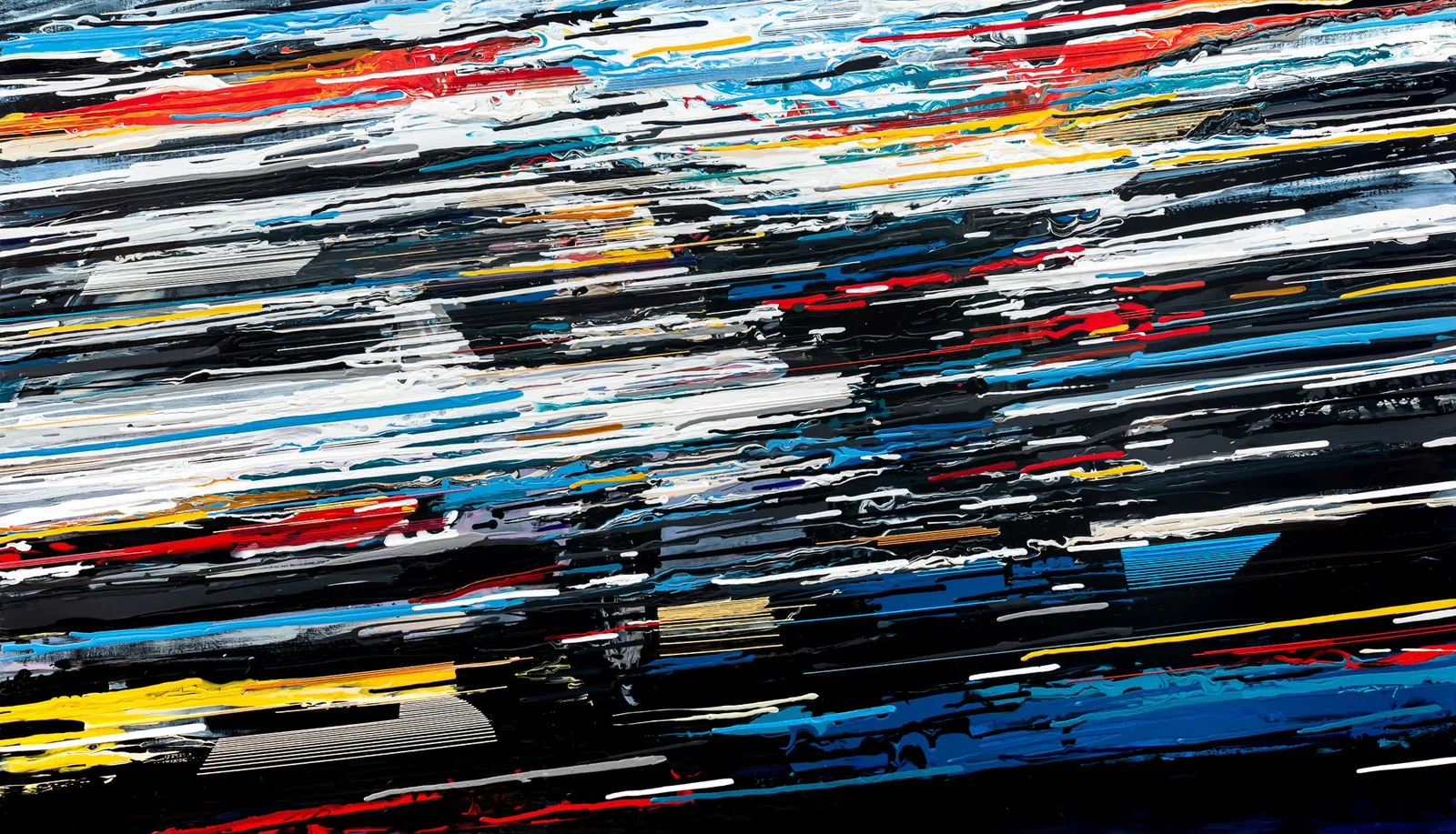
Notes
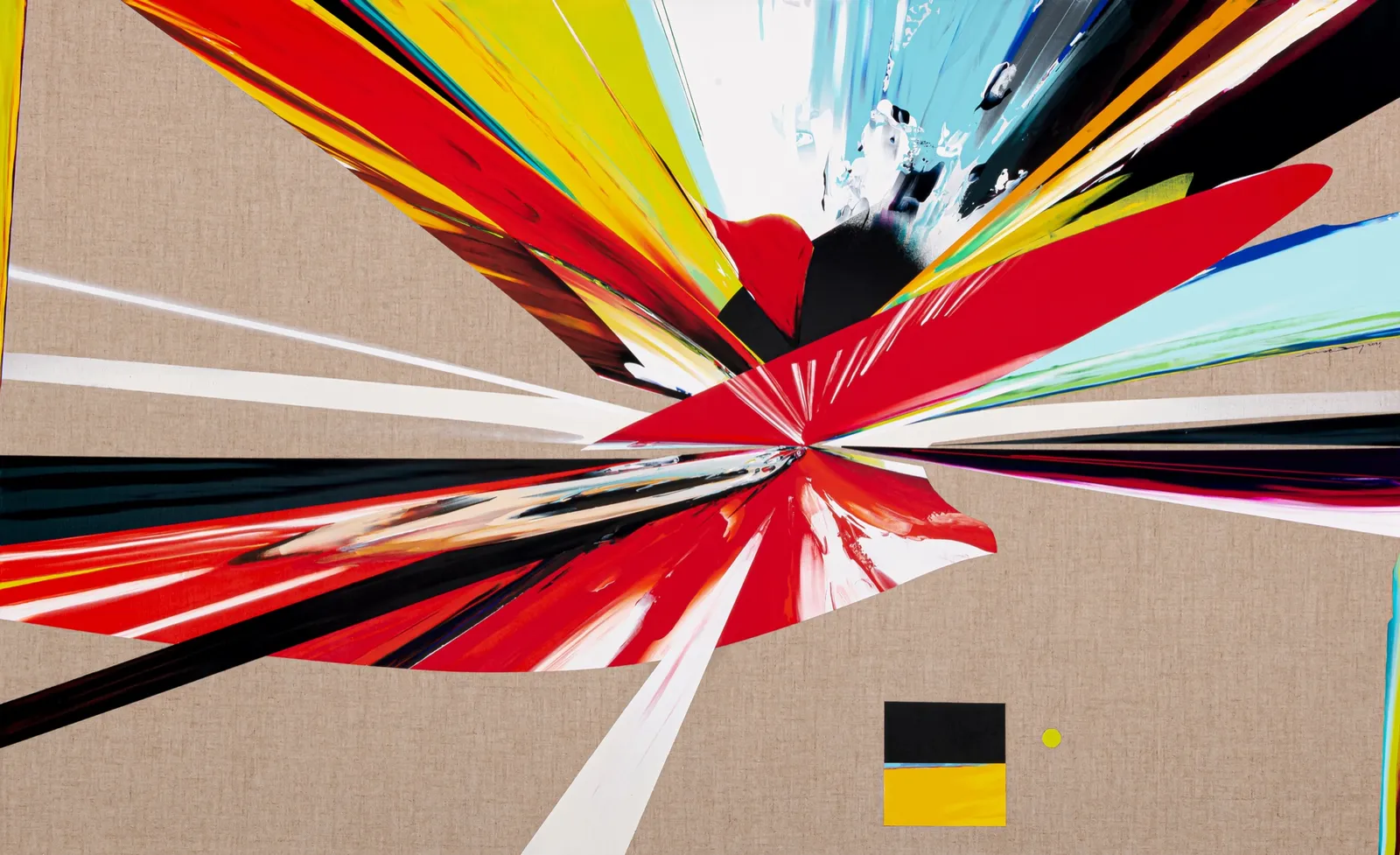
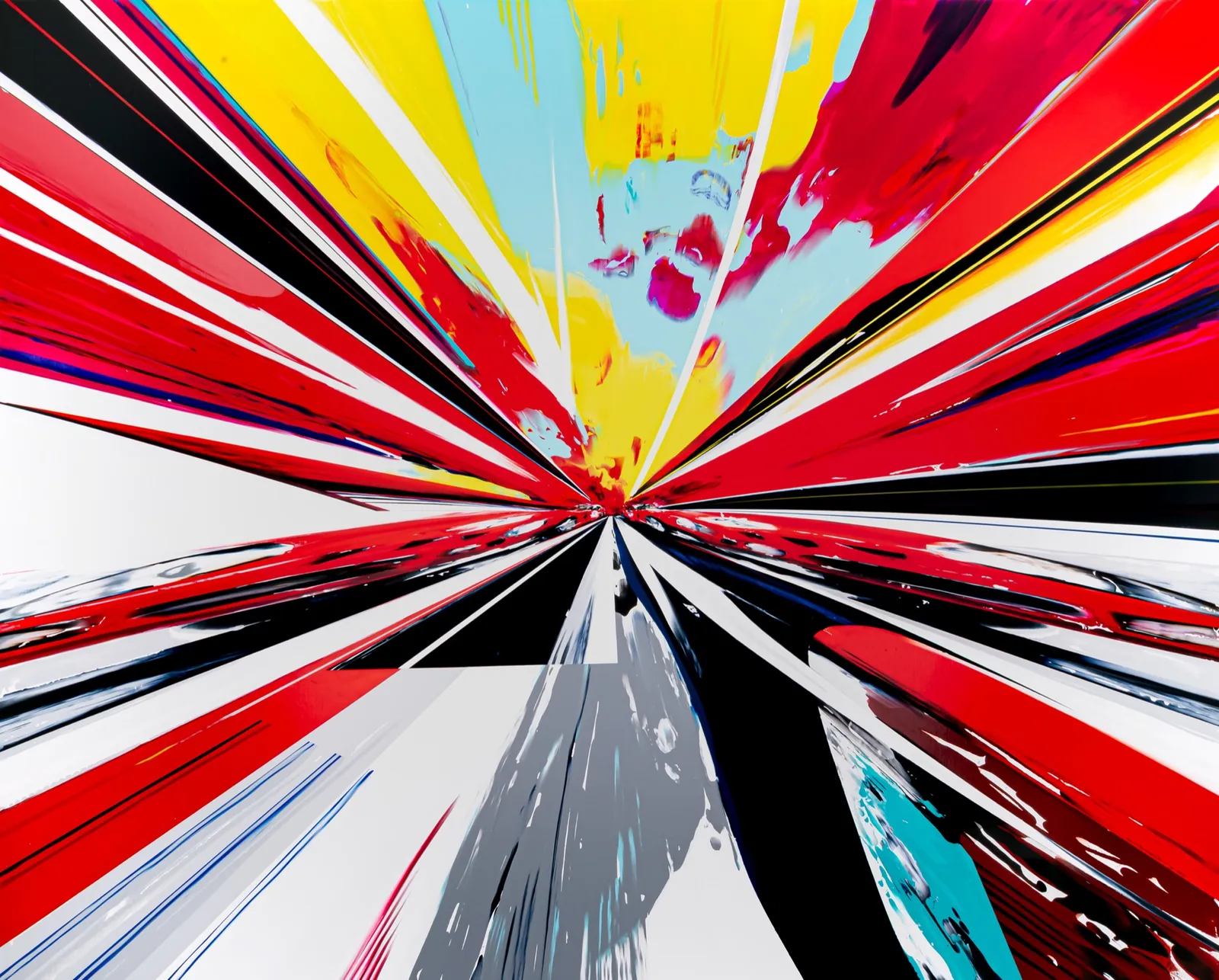
Works — The ⟨Endless Force⟩ series runs from 2017 to 2024, forty-two works. Plates here: ⟨Endless Force I⟩ (100×65cm, Acrylic on Canvas, 2017), ⟨Endless Force II⟩ (165×97cm, Acrylic on Canvas, 2019), ⟨Endless Force III⟩ (162×112cm, Acrylic on Canvas, 2019), ⟨Endless Force XVIII⟩ (155×89.6cm, Mixed Media Acrylic Thread, 2020).
Method — Paint squeezed out thickly and allowed to run to form the car, then poured over it in one planned direction. Embroidery thread joins from the second half of 2019.
Artist's notes — Minseok Kang, artist's notes 2012–2025, entries for 2017, 2021 and 2022. The 2017 entry describes the sound of the heart mixing with hard breathing until it becomes force; the 2021 entry speaks of taming the beast with countless condensed lines.
Reading — Haruki Murakami, What I Talk About When I Talk About Running (2007). / Jackson Pollock, "My Painting," Possibilities no. 1 (1947). / Hans Namuth's 1950 photographs of Pollock at work.
Within the series — Thread holding time is taken up in No.6.