Upon a White Floor, Leaving Only Dust, Toward the Woods.
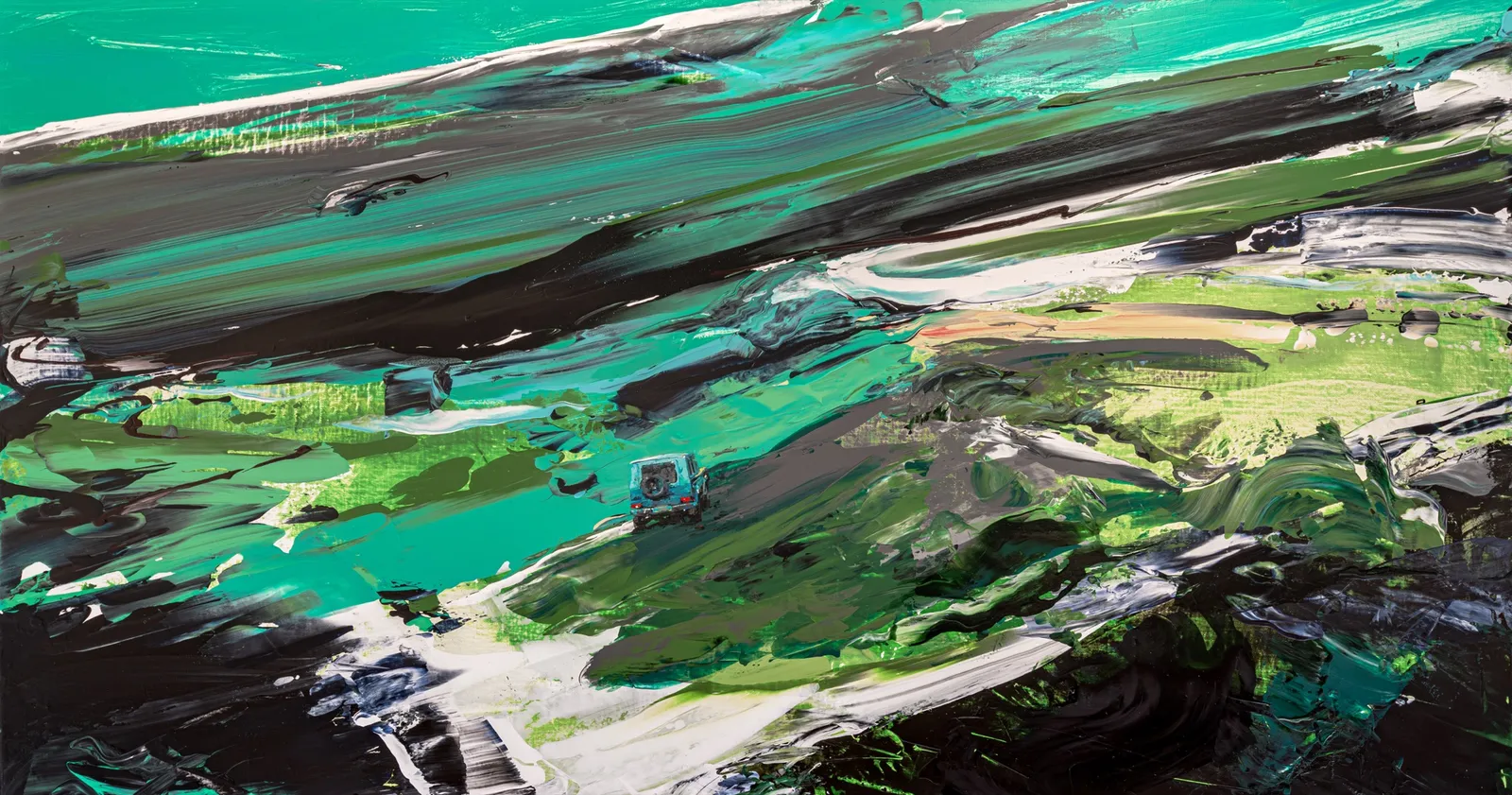
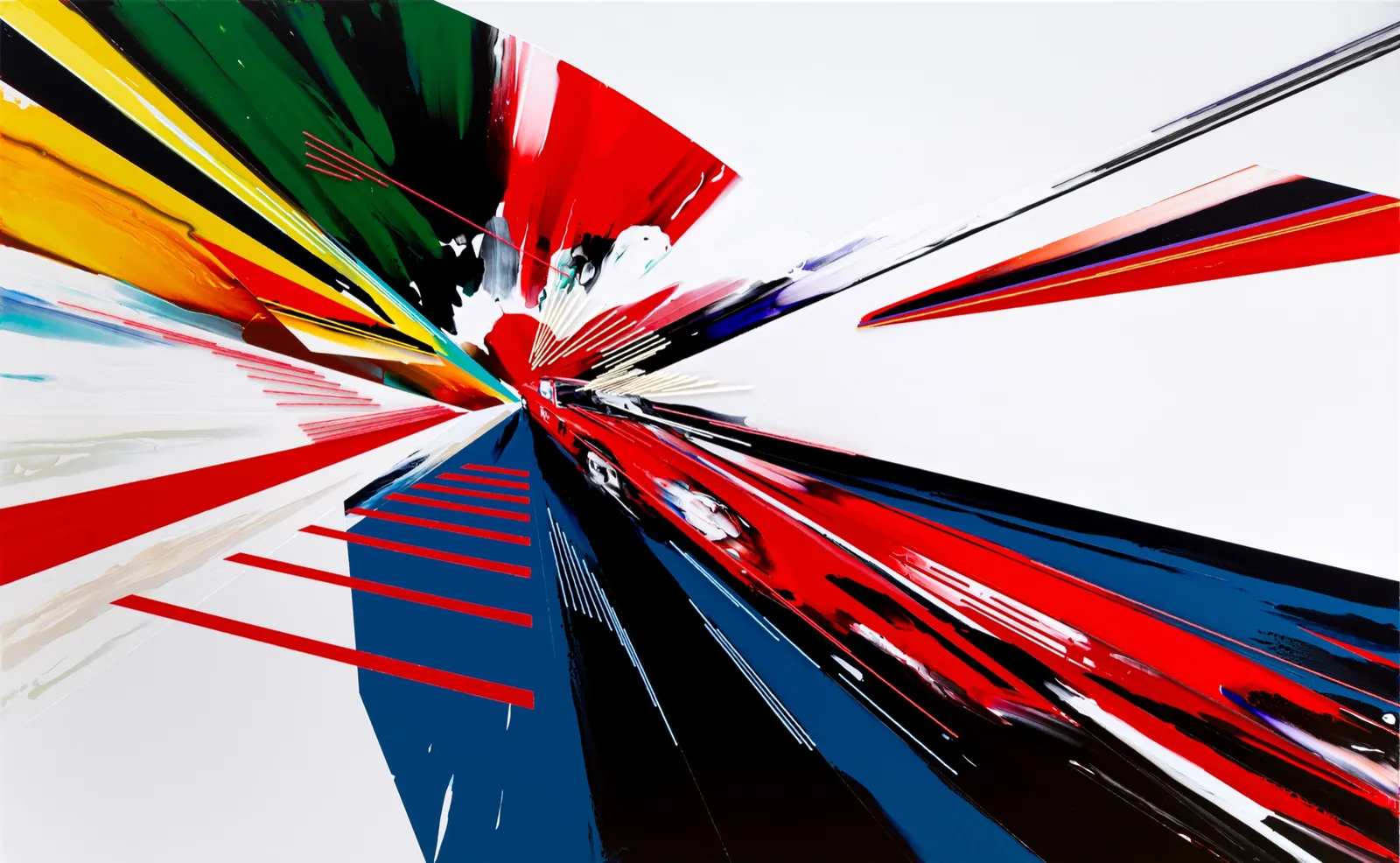
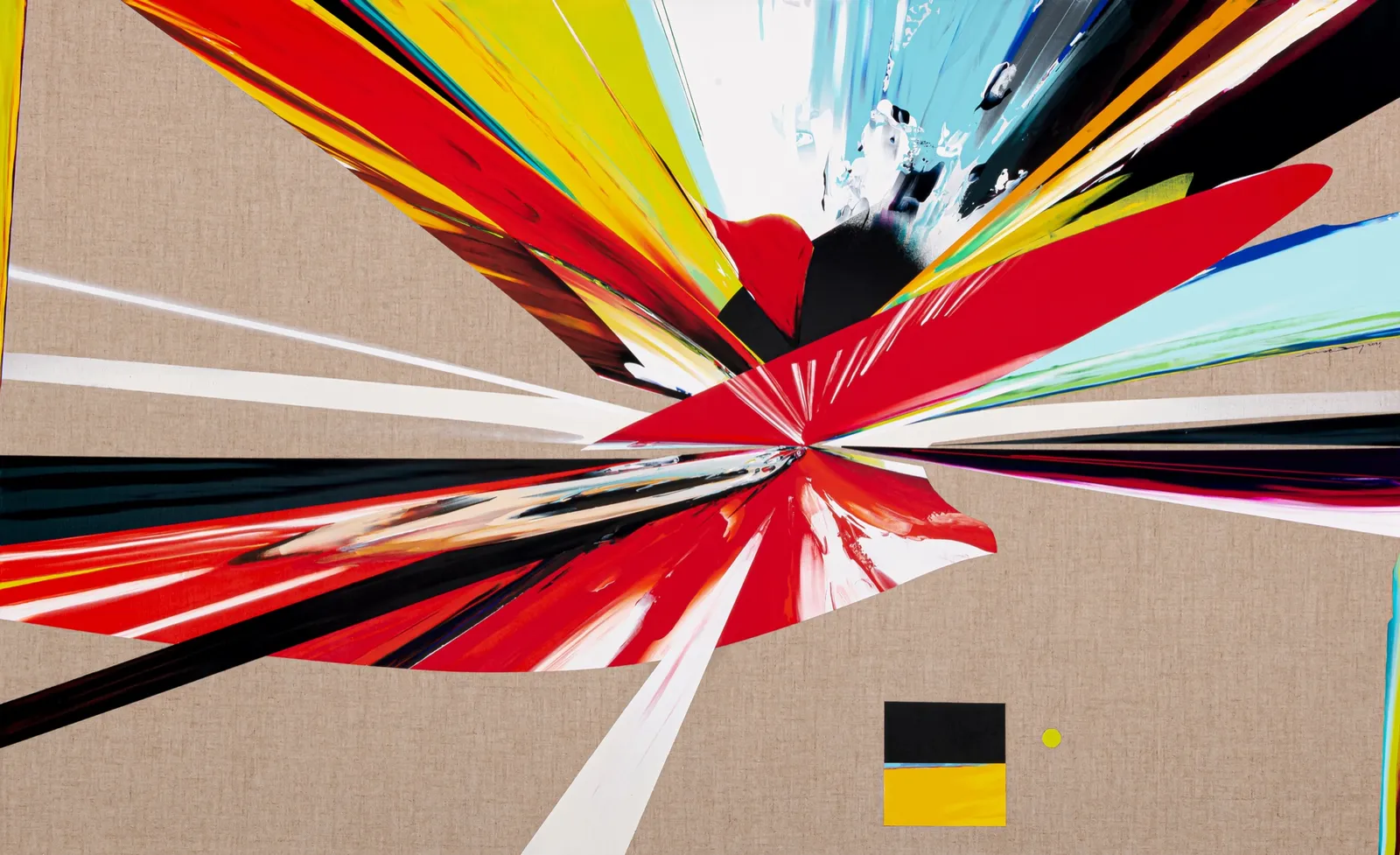
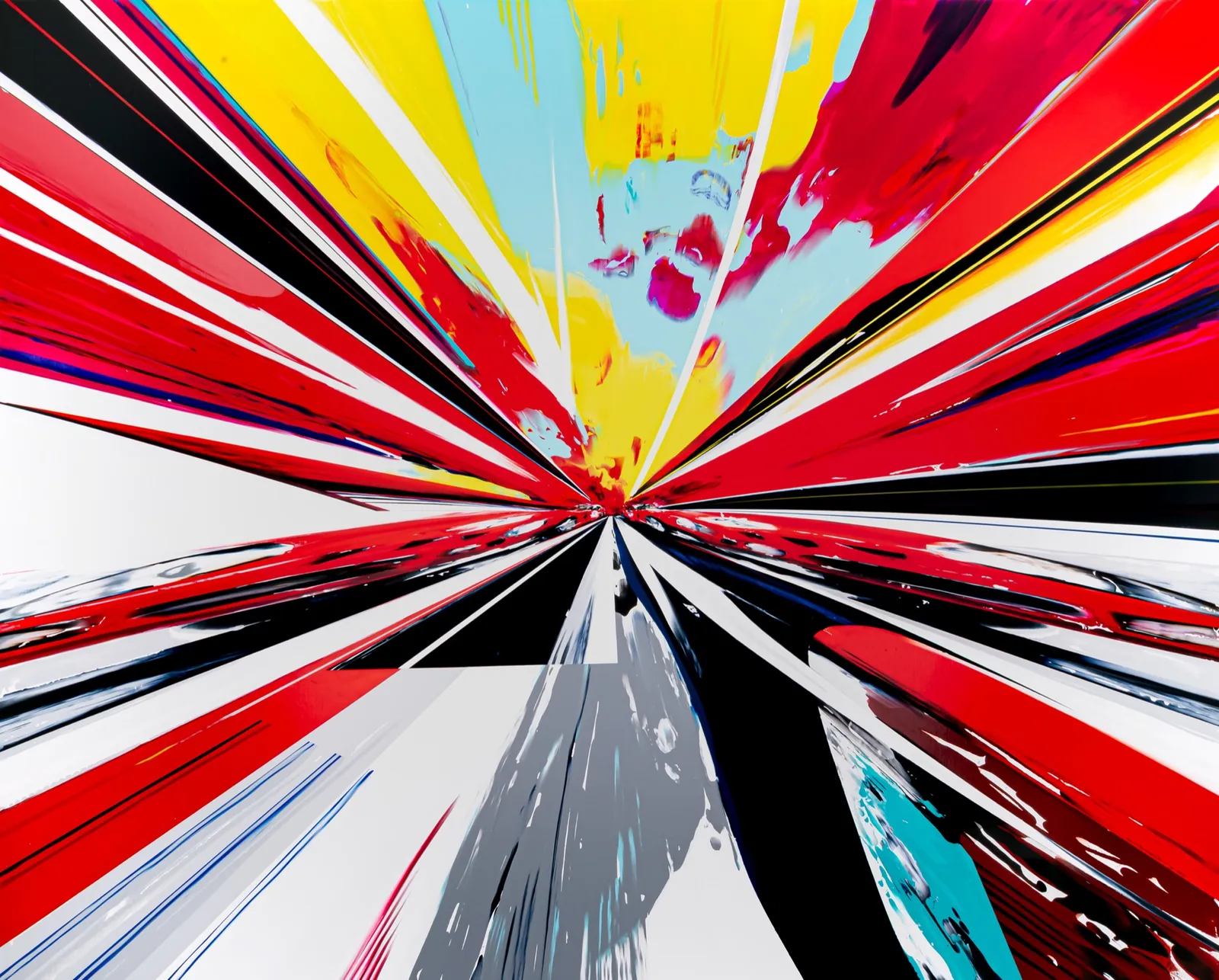
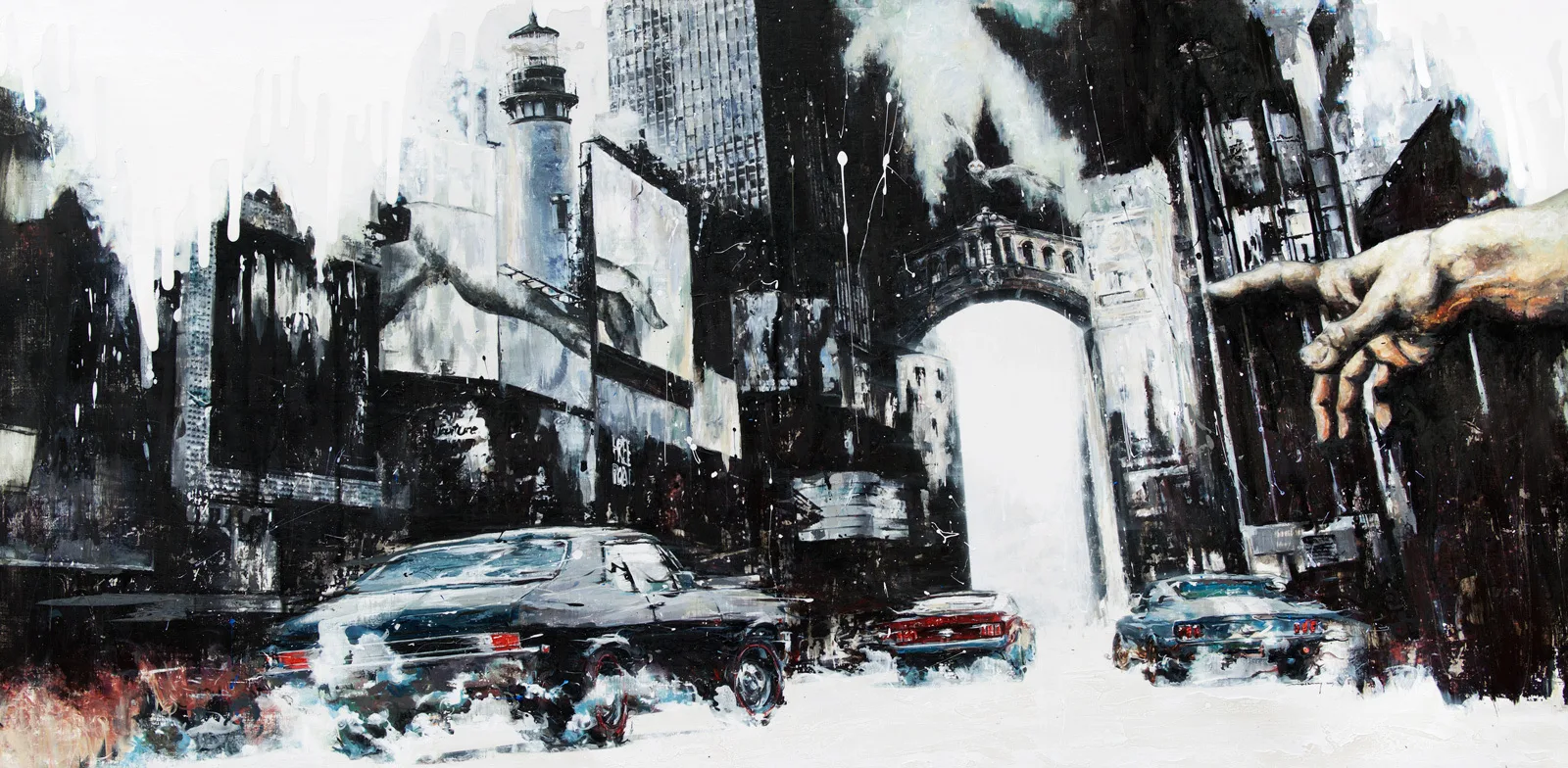
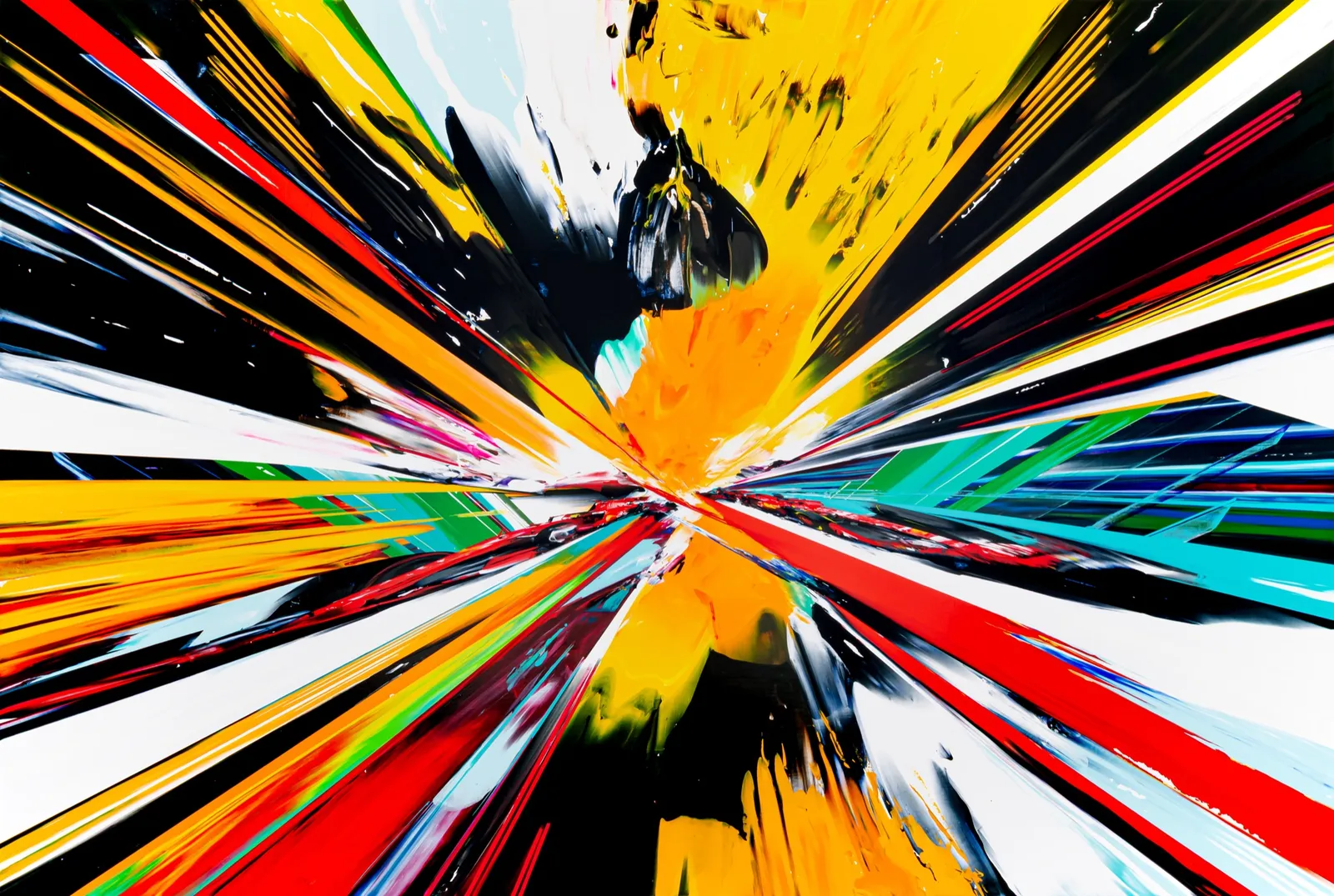
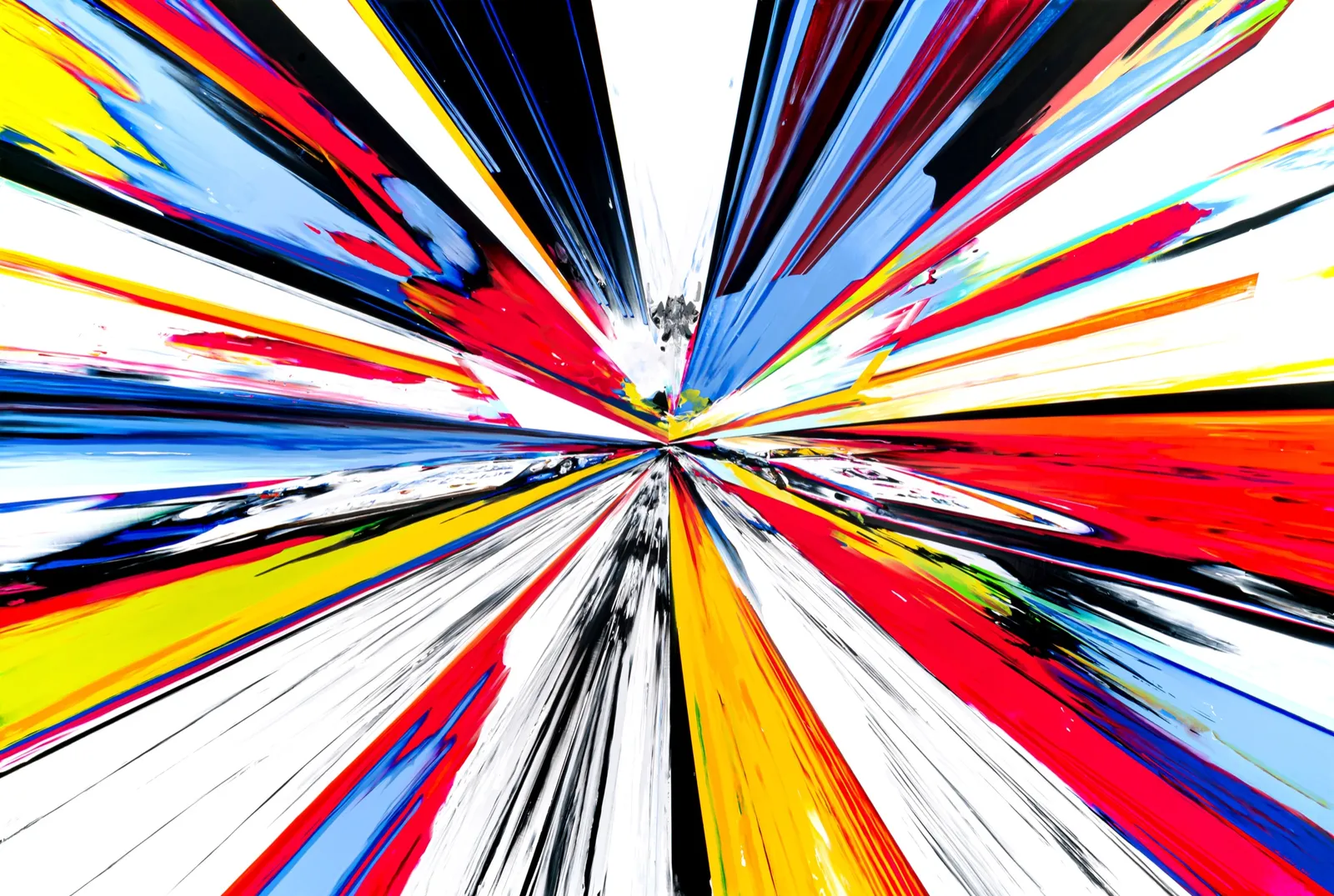
Standing before Stray Racer, one notices first that something is wrong underfoot. A car is running, and yet there is no road. No asphalt, no dirt track — not even a line of ground has been drawn. The floor beneath the car is the very same white as the surface, so the car seems less to rest upon anything than to hover in midair. In the place where the road has vanished, the car is nevertheless plainly in motion. What tells us so? A single fistful of dust scattering in a long trail behind it. Instead of erasing the road, MINSEOK leaves only the trace of the place just passed. Though where it is bound cannot be seen, the fact that it has just come through something is all that remains.
That car always faces one direction. The woods. Toward a side where trees stand dense and packed, a small car noses its way in. The woods are no restful destination. They are dark, deep, their interior unseen. For MINSEOK, to head toward those woods is at once a dread and a challenge. He did not choose the straight, well-paved road others had already cleared. Lives and thoughts differ from one to the next, he held, and so there is no reason the road one wishes to travel should be the same. He cannot know what kind of woods lie within, but to him that is one more adventure.
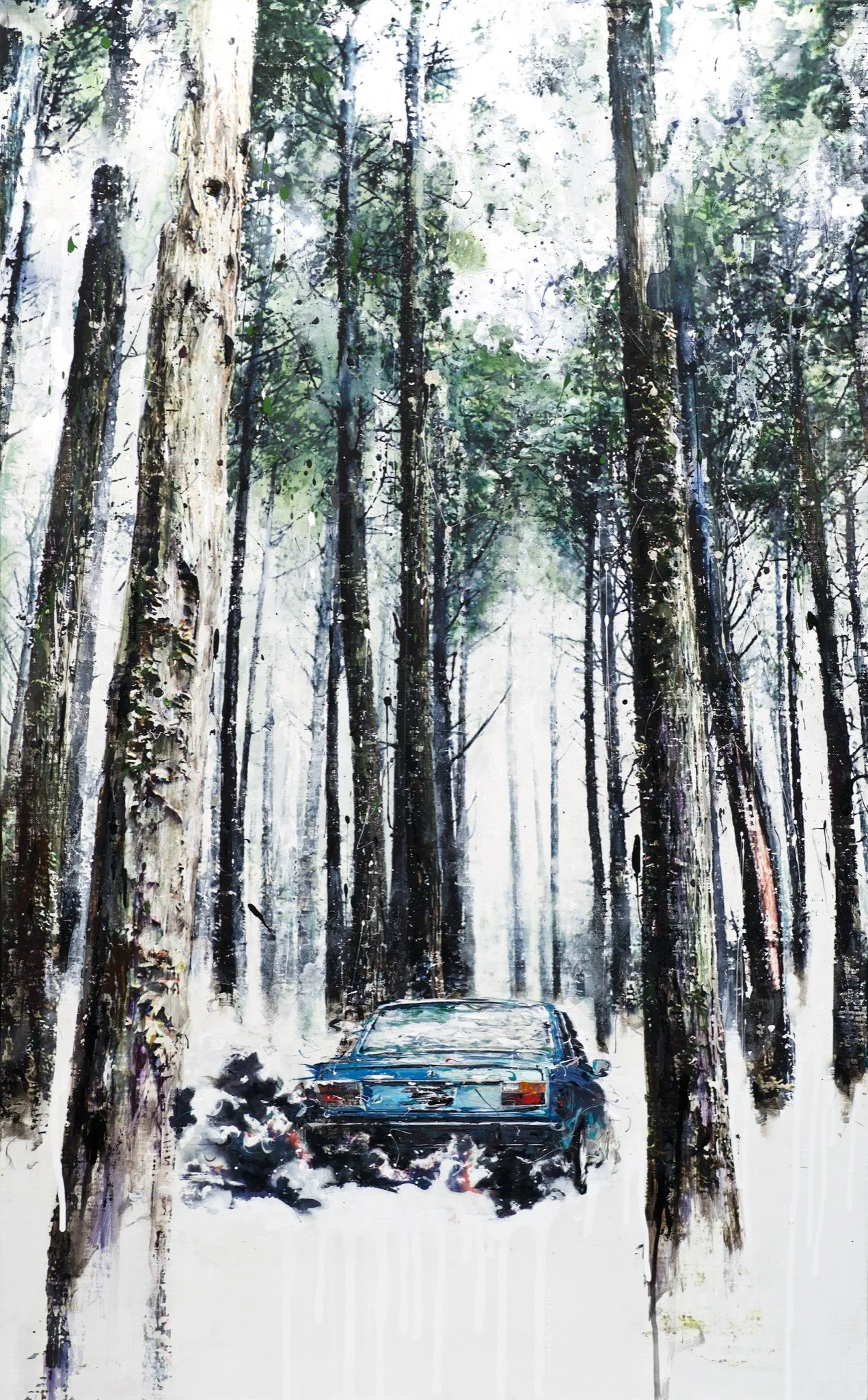
This Is a Dream — a Forest With No Way Out.
In the last note we watched a person walk out of an 'imagined desert' — out of that hell — by laying down paint with his own hand. Having walked out, he now stands upon a road. And yet even that road has been erased.
MINSEOK says these pictures came from a dream. Not any forest the eye can see, but an imagined forest that returns again and again in sleep. His dream is a maze-like place that repeats the same location over and over. In waking life he wished to find some 'answer,' and that wandering toward the answer was endlessly repeated inside the dream as well. The question left unsolved through the day returns at night in the shape of a forest, setting him down once more in the same spot.
And yet the forest is not always the same. As one wanders, new forests keep appearing. Just as one thinks one has broken free, other trees block the way, and a place entered as if it were the road becomes the beginning again. In truth this story has no exit. MINSEOK does not hide that fact. It is not a story of reaching an answer, but a story of circling endlessly in search of one. The small car running through the heart of that green maze is, true to the pact that runs through this series, MINSEOK himself — and the viewer standing before him as well. At the center of every story stand the artist, and we who look upon him.
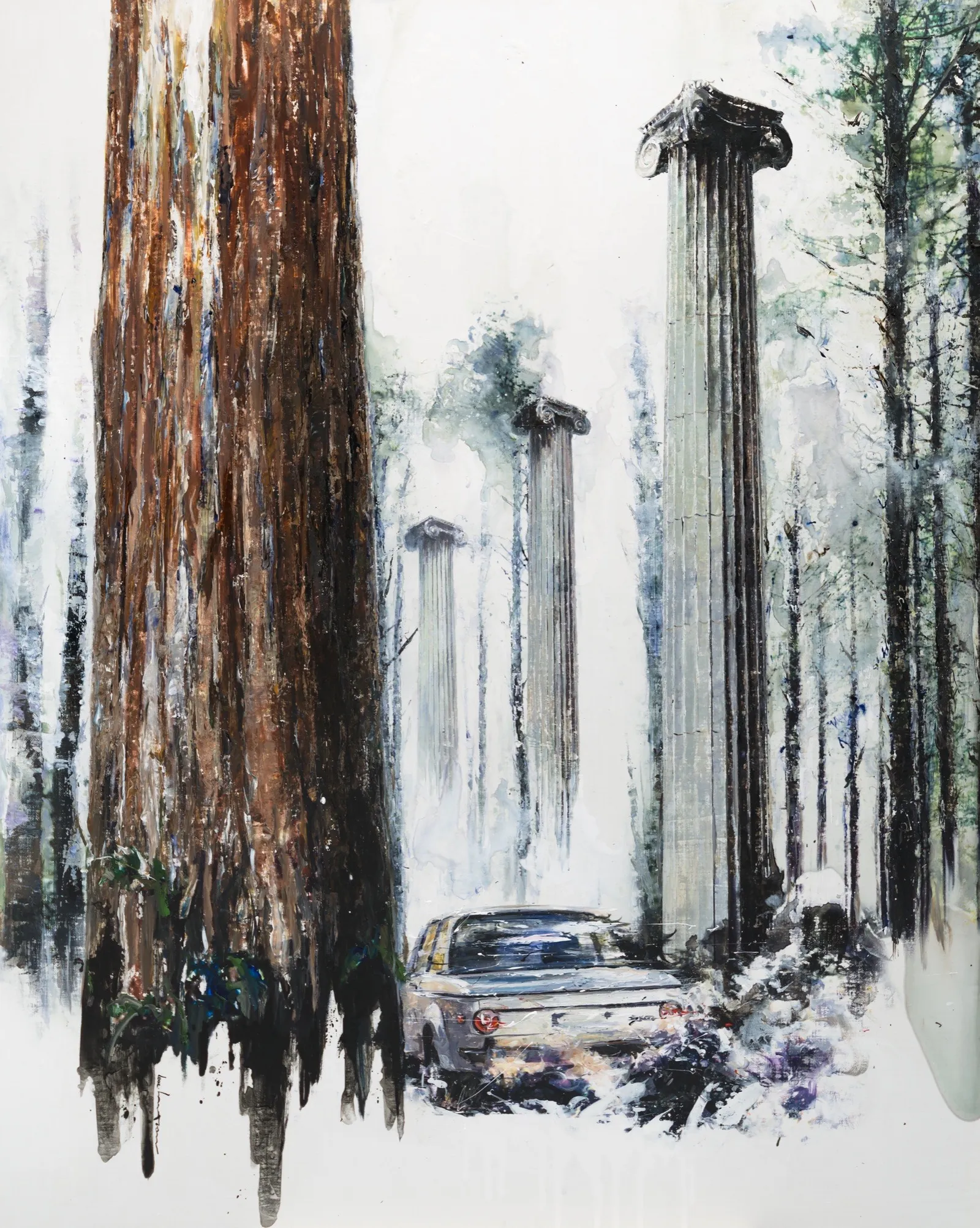
One Point of Departure — the Place Passed Through Magritte's Woods.
This series has one clear point of departure: René Magritte's Carte Blanche (Le Blanc-seing). A figure on horseback passes among trees against a wooded backdrop, but the logic of that space is warped into something impossible. Some parts of horse and rider stand in front of the trees, some parts behind them. Regions of the woods that ought properly to be hidden instead jut forward. The hierarchy of front and back, inside and outside collapses, and the viewer's eye slides back and forth, never able in the end to settle whether the figure is near or far. MINSEOK says this picture stayed long in his memory. And so he unravelled it again as his own story.
He did not, however, transplant Magritte's paradox unchanged. If Magritte's surface is a stilled riddle that leaves the motionless viewer's eye forever unsure, then MINSEOK turns that paradox into the problem of one who moves. Magritte's rider advances quietly upon his horse, but MINSEOK's racer circles the same woods endlessly in a car that has speed and direction. Magritte's space, where one cannot know whether a road the eye can see is truly a road one can pass through — a single car actually tries running across it. A riddle that had stood still is resettled as a story of time, repetition, and choice.
Losing the Straight Road — the Time of Depression.
MINSEOK states plainly that this period was a time of depression. The vocation of the artist cannot but carry worry over one's own thought and survival, and that worry speaks at once of anxiety. And so these pictures are, in the end, pictures about 'direction,' he says. In a time when he could not know where to go, that loss of direction appeared in the shape of a forest with no way out.
Seven hundred years earlier, Dante stood in exactly this place. The Inferno of the Divine Comedy opens like this — 'Midway upon the journey of our life / I found myself within a dark wood, / for the straight way (diritta via) had been lost.' These first three lines — of being caught, in the middle of life, in a dark wood, having lost the straight road — overlap exactly with MINSEOK's racer, wandering a maze-like forest with its direction lost. Only, the two forests end differently. Dante's dark wood is a threshold to be passed through. He meets a guide, passes through Hell and Purgatory, and at last a narrative of ascent toward the light begins from that wood. In MINSEOK's forest there is neither guide nor destination. Like a recurring dream that keeps returning to the same spot over a question left unanswered, his forest is closer to a place of pause, circling with the answer still deferred.
And so the word 'Stray' does not read in a single sense. To some it is losing the way; to others it is the name of the one who has broken from the pack, the outcast. Holding both meanings at once, MINSEOK deliberately declines the straight road others have taken. It is less that he cannot find the road than that he leans toward finding a road of his own.
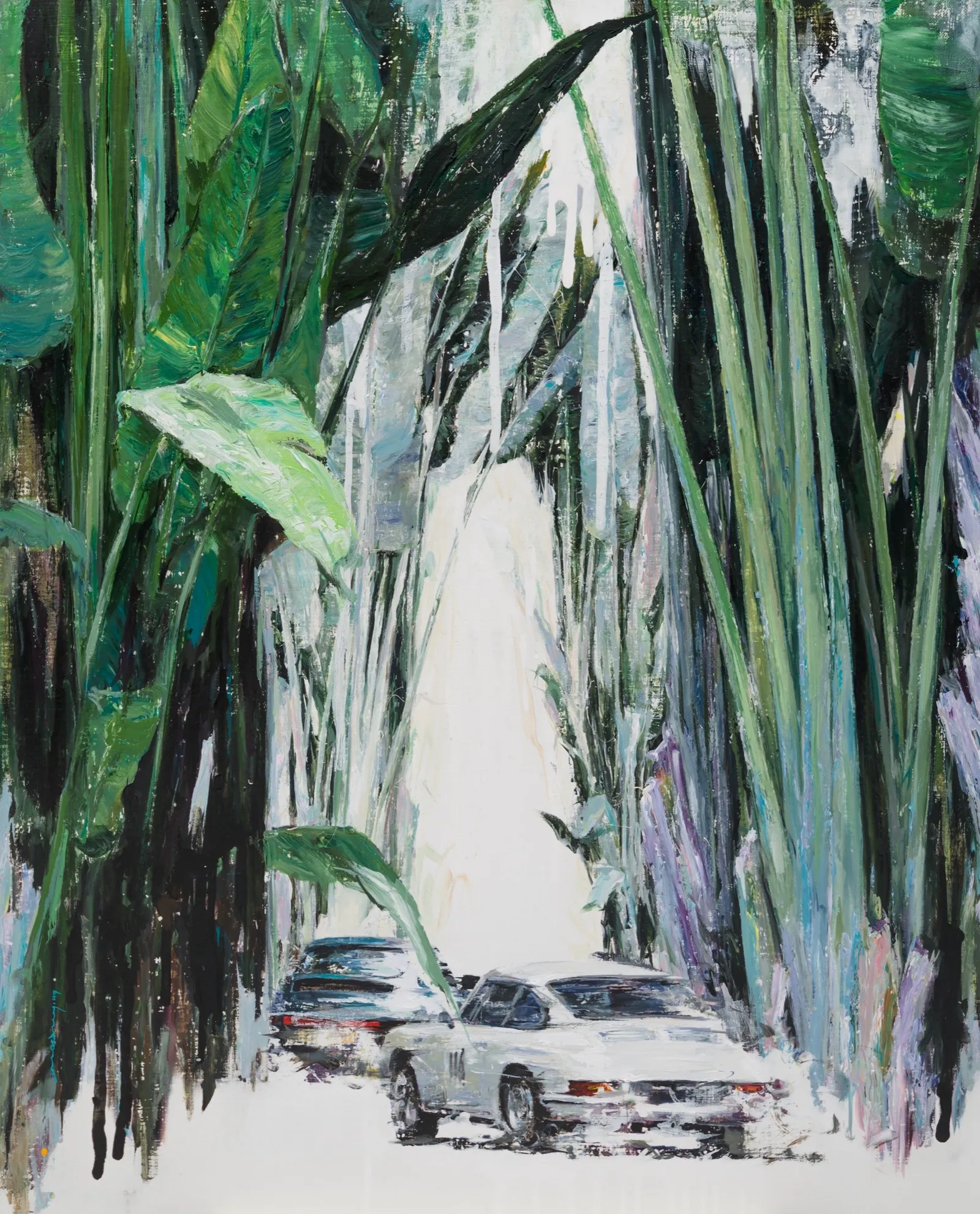
A Column Like a Tree, and a Dream That Does Not End.
At some point in the forest of wandering, an unexpected form appears. A column that stands for a tree. A smooth cylinder, the kind that might belong in a temple or a Renaissance painting, stands suddenly in the middle of the rough woods. It is not the answer. MINSEOK calls it a suggestion — not an answer, but something like a new change and the hope for it. Not a sign that reveals the exit, but a small signal that 'here, something can become different.' However skilled the racer, whatever the expert, one can lose the way. And that losing of the way is not failure but the same thing as the will to find a road of one's own, he believes.
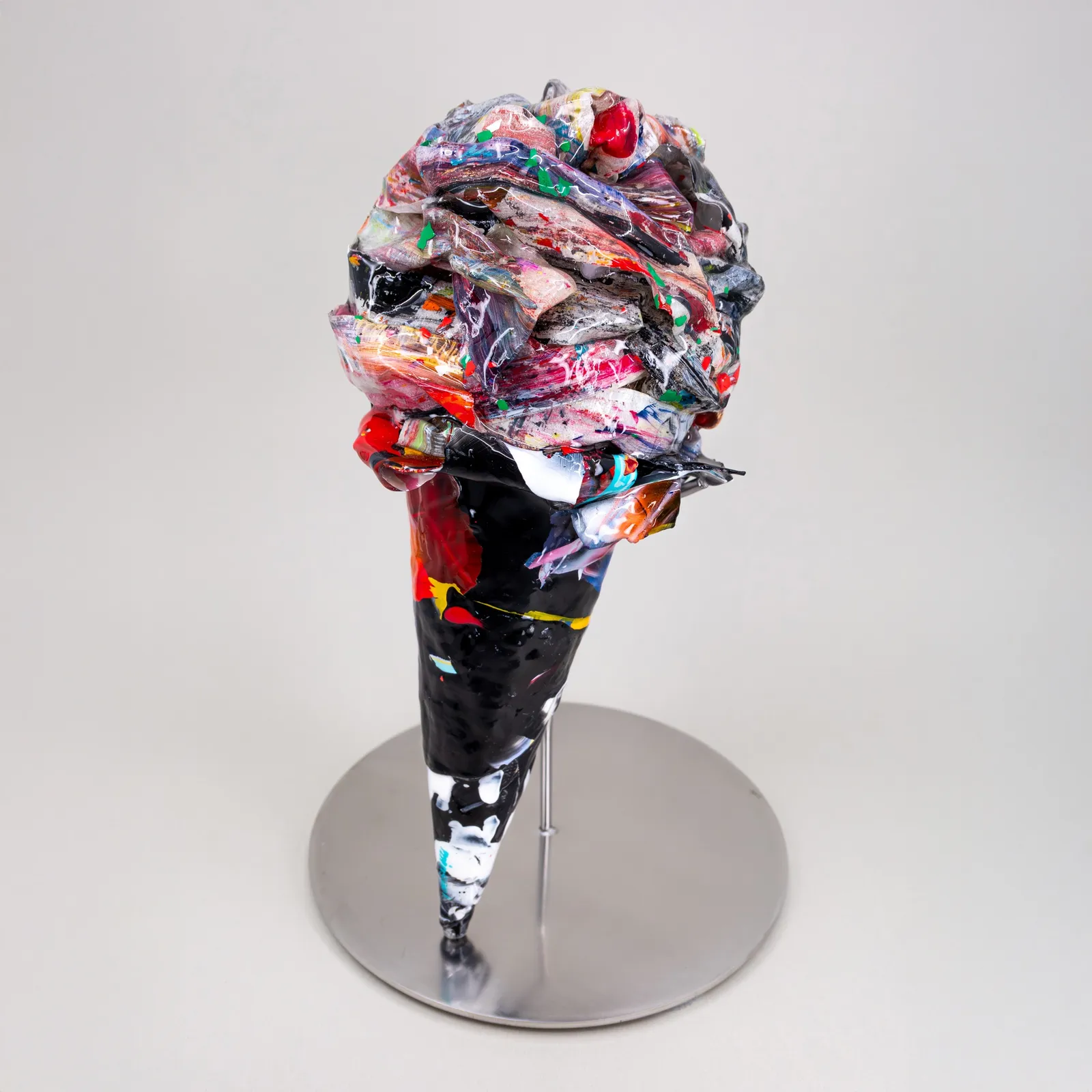
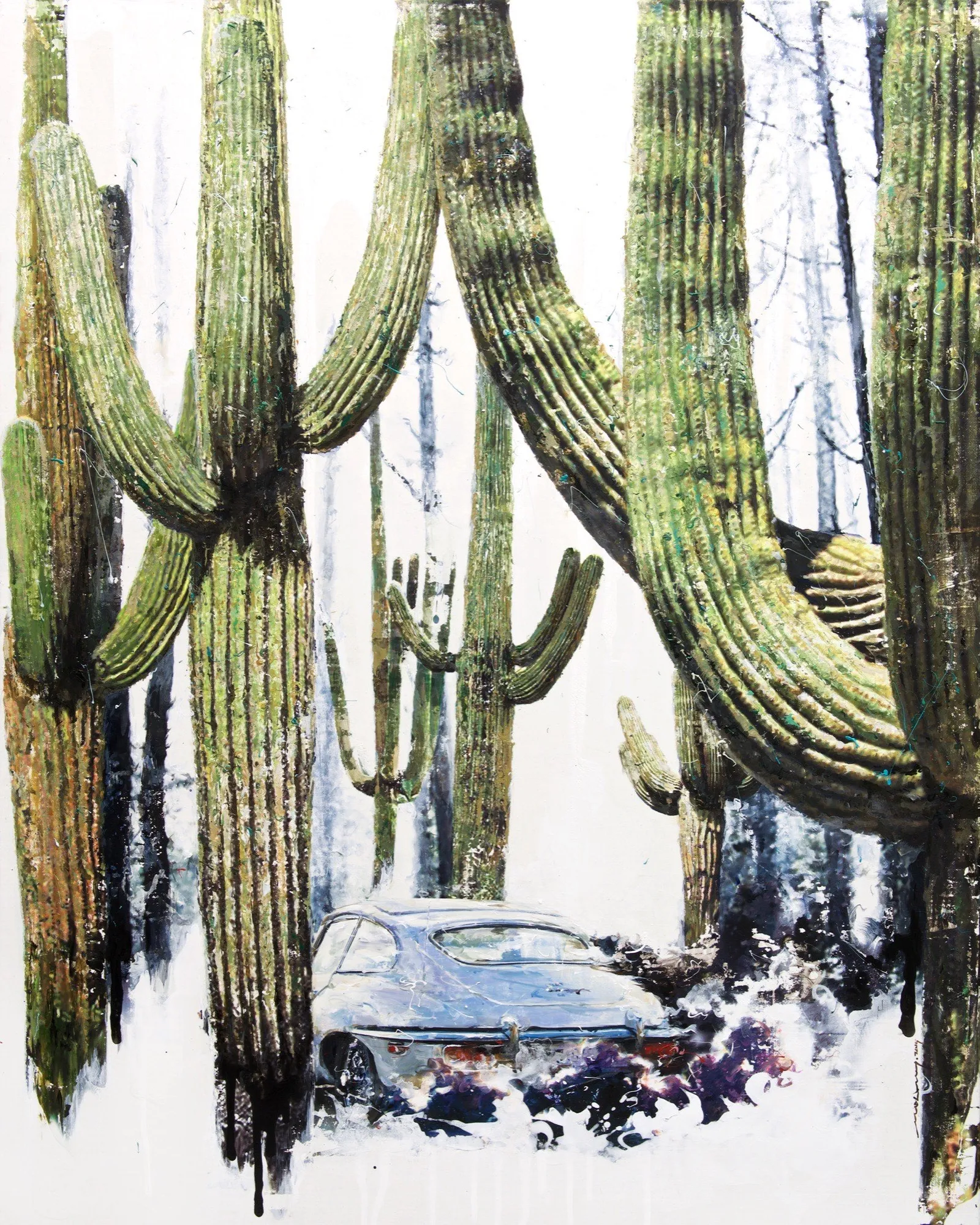
The grain of this psychology is steeped into the very materials of the surface. Many works from the Stray Racer period were made by heat-transferring laser-printed paper onto the canvas, then tearing that paper away. Between the places torn off and the places left clinging, acrylic paint is bled in like watercolor and left to dry slowly, naturally, for a long time. Torn traces and spreading paint mingle into a singular landscape found nowhere else. Where the paper did not adhere, thick paint rebuilds the form or stages an imagined space. And what appears especially often is the cactus. A forest, yet a forest bristling with thorns — looking back now, MINSEOK says it was the great wound and dread of that time. Before the most beloved of the cactus works, the viewer meets at once the beauty of the green and the thorns hidden within it.
The story does not end. Because it is a dream. The car, today again, leaves dust upon the white floor and heads toward the woods, and a new forest will appear once more. The next Reading MINSEOK No.9, Sway in the Wind, is the story of a strong wind now blowing upon that racer running through the woods. To the one who has lost his direction, a force that pushes is now added as well. Where the car — swaying yet never stopping — is bound within that wind, we read in the next note.
References
· MINSEOK, artist's notes — the Stray Racer series, 2015–2017 · minseok.gallery · René Magritte, Carte Blanche (Le Blanc-seing / The Blank Signature), 1965 — the point of departure named by the artist. Against a wooded backdrop, the front and back of horse and rider tangle into an impossible spatial paradox. · Dante Alighieri, Divine Comedy, Inferno, Canto I, lines 1–3 (Inferno composed c. 1308–1314; the whole Comedy completed c. 1320) — the 'dark wood (selva oscura)' and the lost 'straight way (diritta via).' · A common reading of the recurring labyrinth dream — a state of circling the same spot over an unresolved task.
Copyright notice: works by outside artists such as Magritte and Dante are cited by text only, with no plates reproduced. All plates in this note are works by MINSEOK.