That Year, Everyone Was Shut In Somewhere.
This is a story about 2020.
There is probably no need to explain at length what happened in the spring of that year. COVID-19 began. Cities went quiet, people closed their doors, and stepping outside was no longer anyone's own choice.
That year MINSEOK painted a forest. More precisely, he painted the wind that came tearing into it.
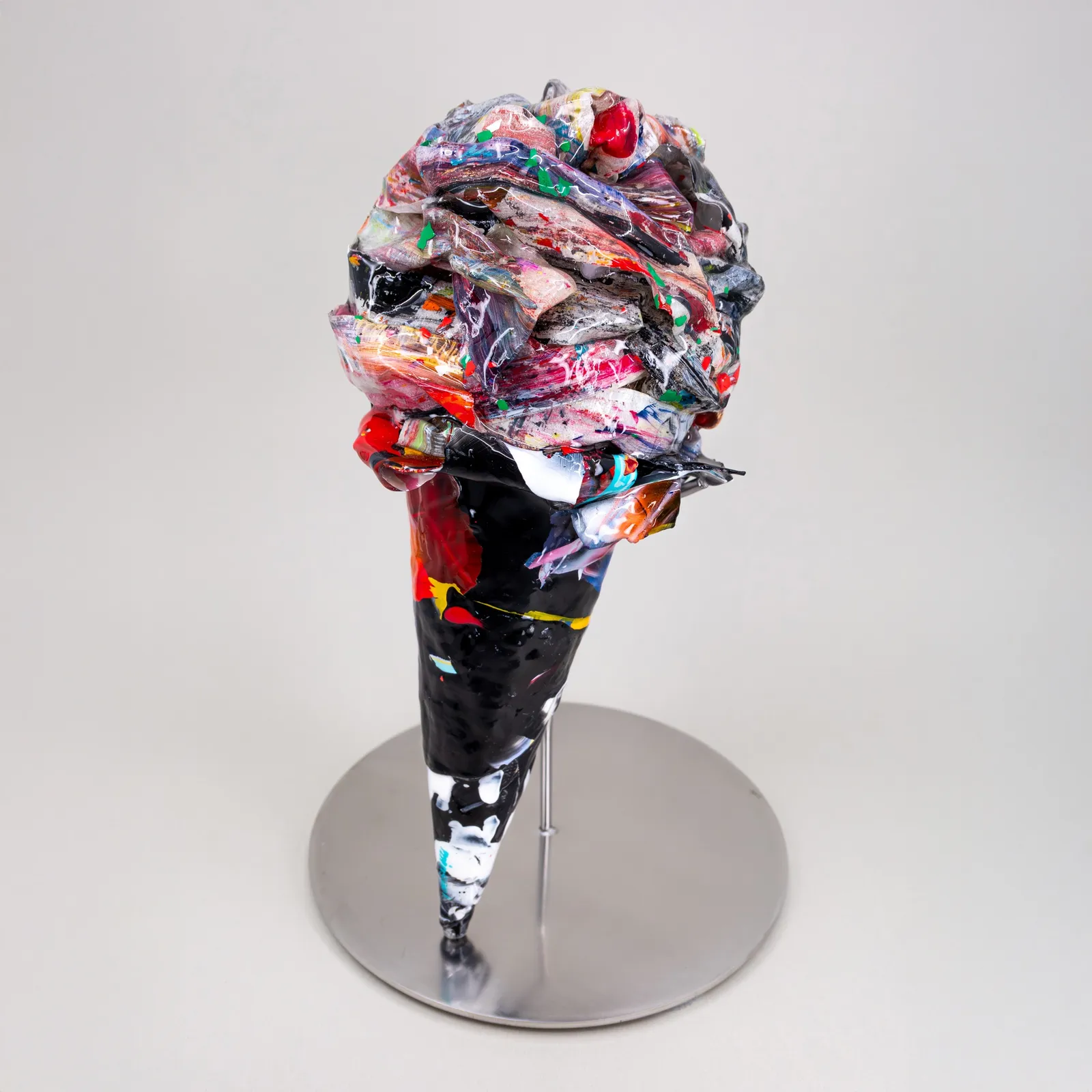
He is a painter who likes to bring his own time into the picture. It was so when he shaped ice cream, and when he stitched time with thread. So what he painted in the year the world closed its doors becomes a record in itself. What he painted was wind. Very strong wind.
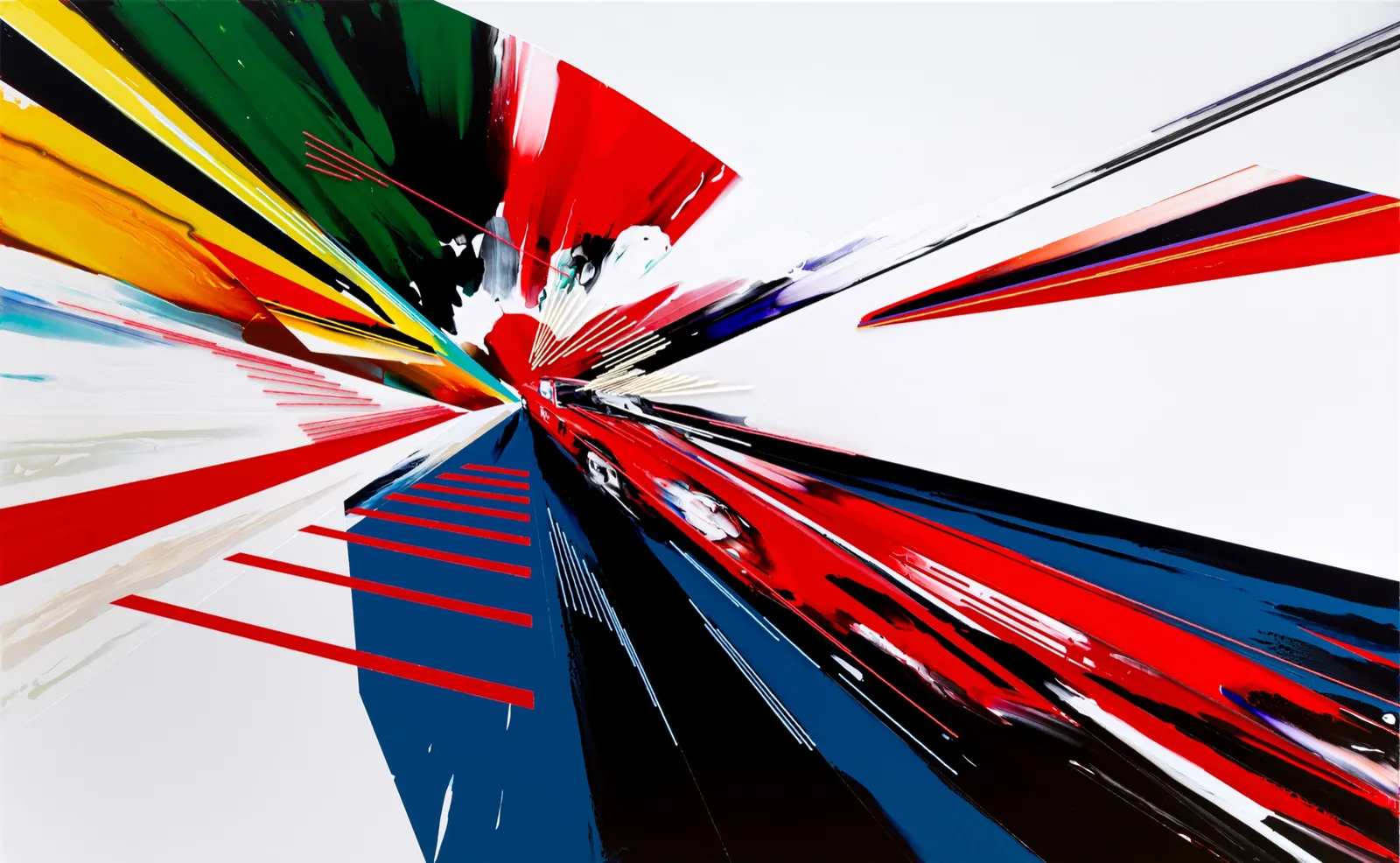
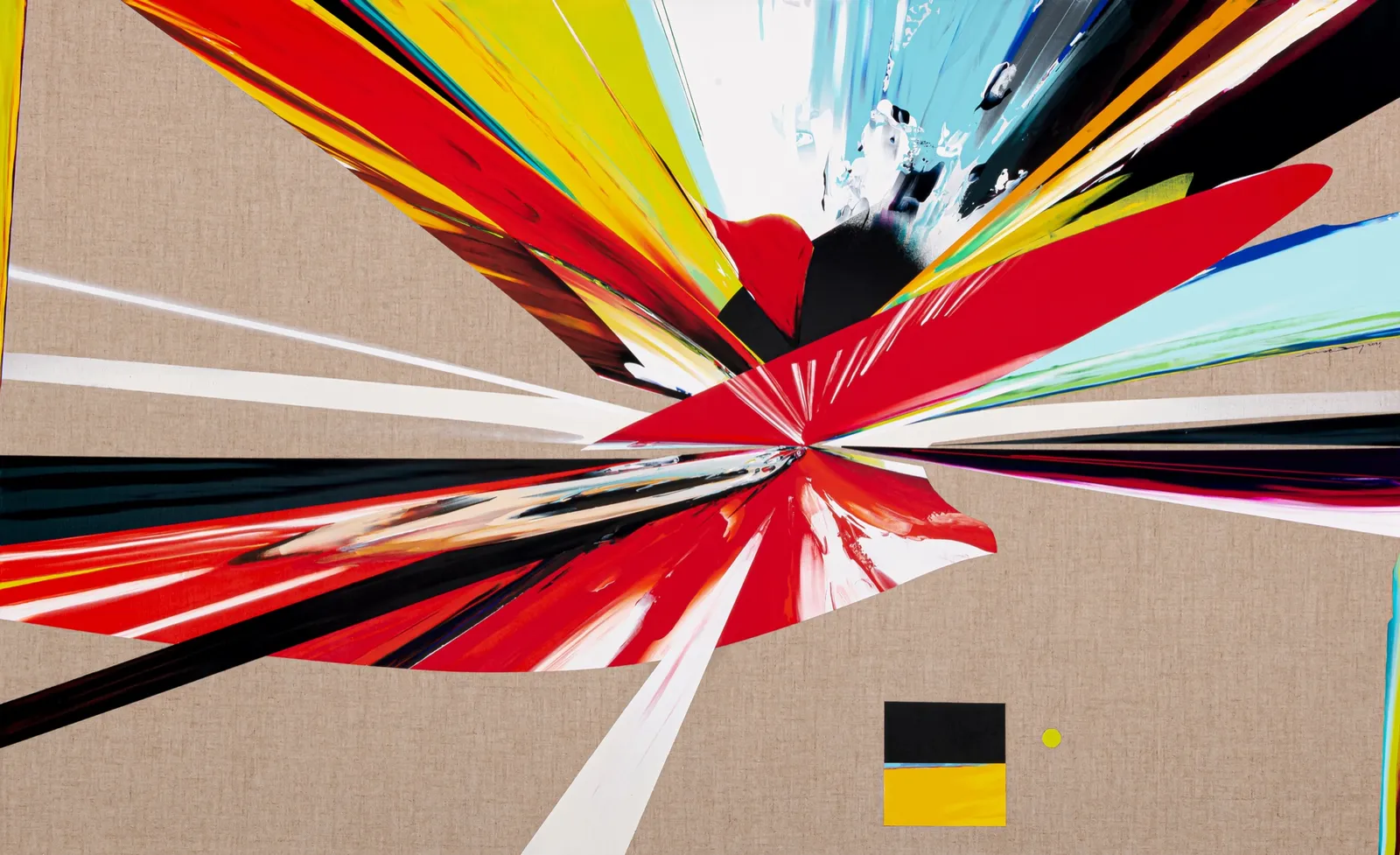
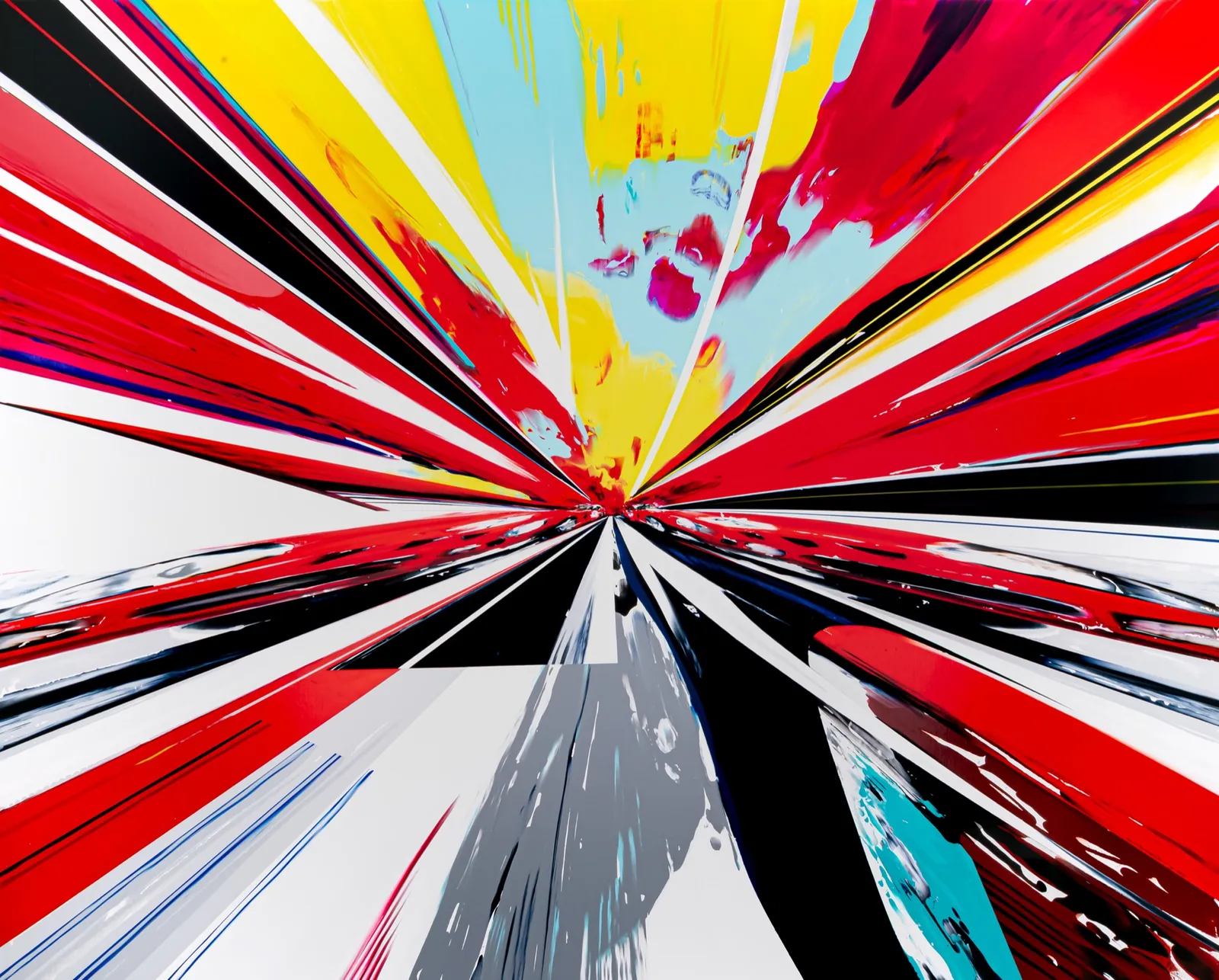
⟨Sway in the Wind⟩ is a series of eleven paintings. 2020, acrylic on canvas. And there is one thing that sets it apart from his earlier work: the car is not what rules the picture.
The Place He Is Always In.
There is something to know first. This forest is not one you could find on a map.
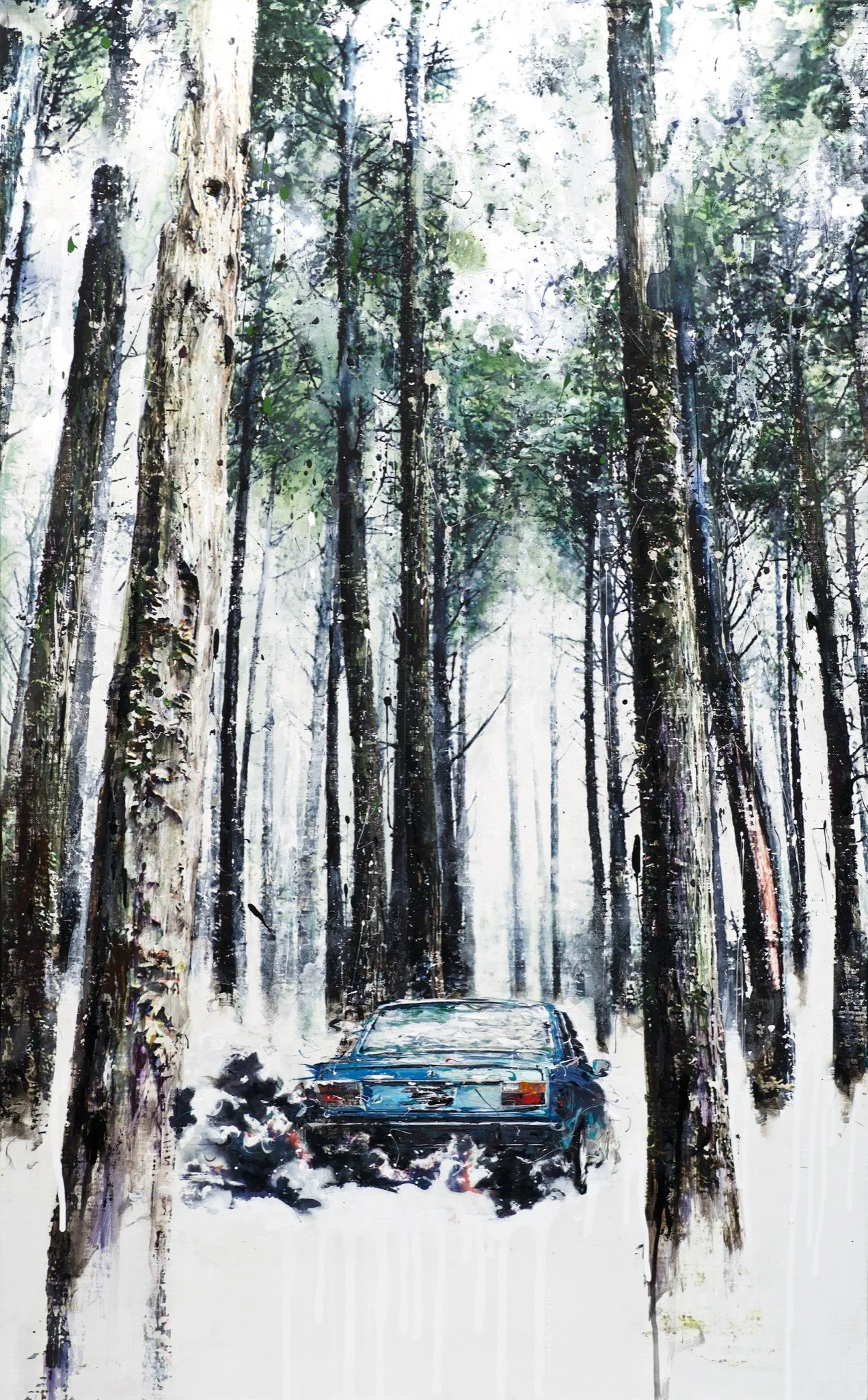
It is MINSEOK's forest — the same thick woods the racer wandered in the last note, and he is always there. He loves trees and forests. He likes quiet, and he is someone who thinks a great deal. The forest is his safest place, the place where his mind settles. His studio is such a place. So is his home.
So this series begins where he is most at ease. And into that place, a storm arrives.
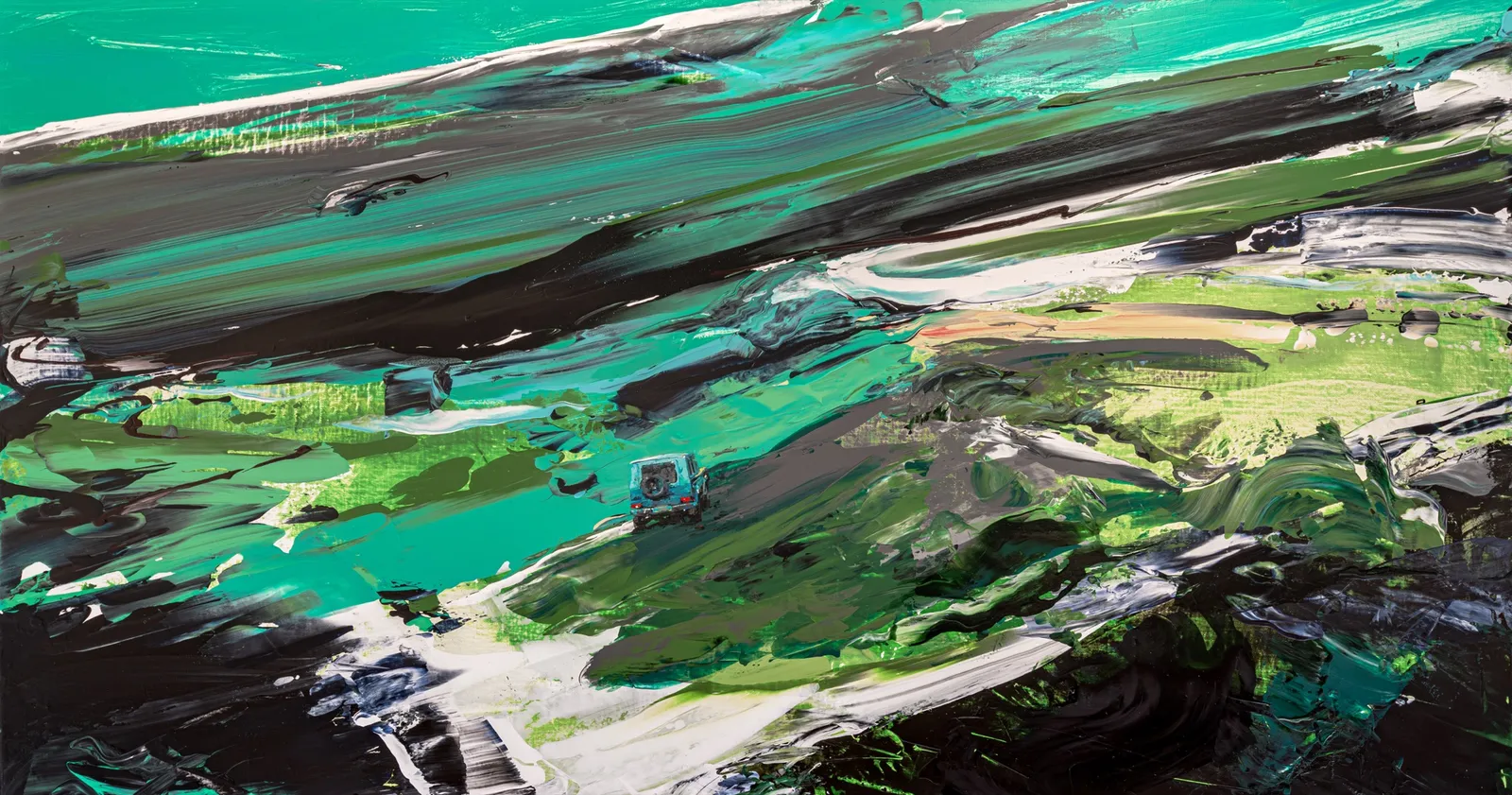
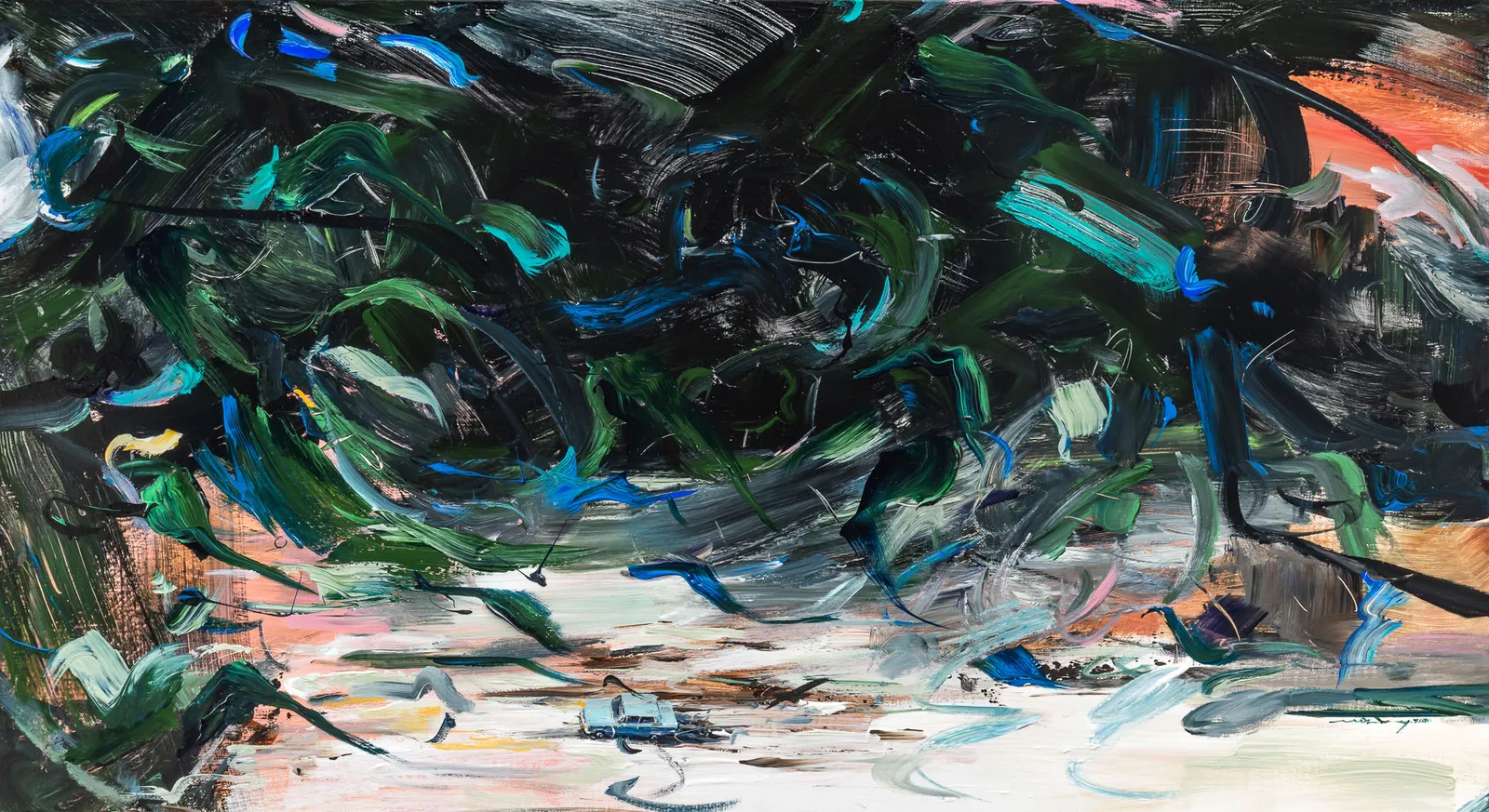
In ⟨Sway in the Wind V⟩, a dark blue-green forest takes up three quarters of the wide canvas and bends down to one side like a wave. In the white space below stands a single sky-blue car. It is small. Very small. The difference in size between what is bearing down and what is being borne down upon is the whole of this painting.
To meet a storm in the very place you believed to be safest. That is exactly what countless people went through in 2020 — the experience of home being at once the safest place and the place you could not leave. A season when shelter and prison shared the same address.
The forest was his place. But the wind was not something he called for.
It Only Looks Like It Stopped.
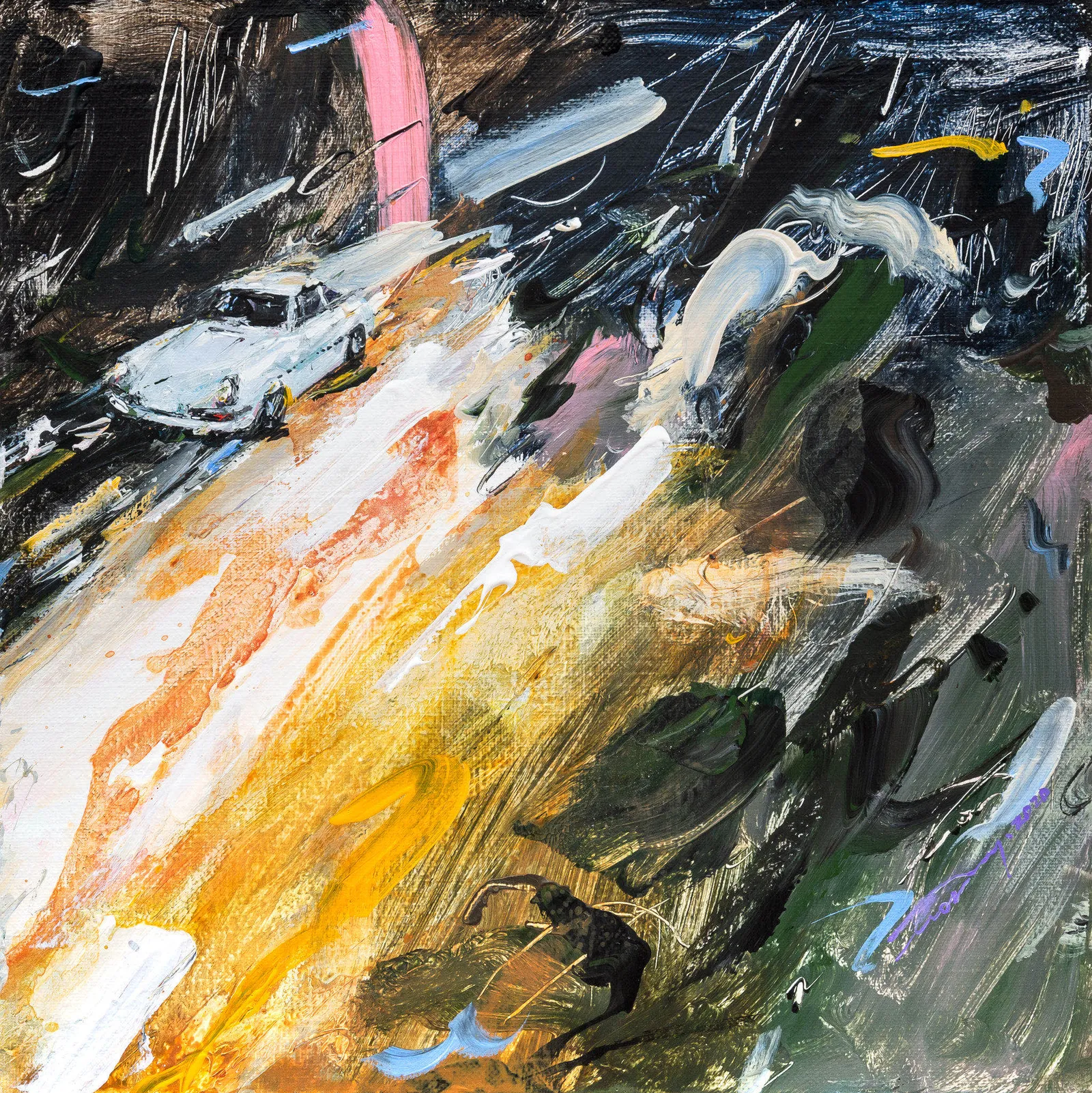
⟨Sway in the Wind VI⟩ is a small square, 33.5 centimetres to a side. What happens inside it is not small at all.
A white car sits at the upper left. Everything else is movement. A huge band of tangled cream, orange and yellow cuts diagonally across the picture, and dark blue-green masses close in around it. White lines are scored over all of it, in every direction. That is the wind.
At first glance the car seems to have stopped. As if it were caught before the storm, unable to do anything.
But MINSEOK says otherwise. That car is running. It keeps running with everything it has, trying to get out of that space. It is only that the force around it is so strong that it looks as though it has stopped.
Once you hear that, the painting looks different. This is not the picture of someone who gave up. It is a picture of a time when no amount of effort moved you an inch. Many people lived that year that way — doing something every single day, and feeling that nothing moved forward at all.
There is one more thing. This picture looks down from above. It sees the forest, the road and the car from the sky. As has always been true in his work, that car is MINSEOK himself. Which means he is watching himself run, from overhead. Helplessness often arrives with exactly that view — being in the middle of a situation and looking down on it from far away at the same time.
Standing before this picture, an old novel comes to mind: Albert Camus's The Plague. It is the story of a whole city sealed off because of an epidemic, and a book that sold all over the world again in 2020.
The figure who stays with you longest in that novel is not a hero. He is a doctor named Rieux. While the city closes and people fall apart, he does nothing extraordinary. He simply goes to see his patients, every day. Even when the disease shows no sign of retreating, even when what he does today leaves no mark tomorrow.
That is what MINSEOK's car does. It cannot move forward, and it keeps running. Not because running is all it can do, but because running is what he can do.
The Middle of the Storm.
The last line of the artist's note reads: "In the moment where fear and hope cross, I catch my breath for a while in the middle of the forest."
A typhoon has an eye. At the very centre of the fiercest whirl, a place appears where the wind dies down. For a moment the sky shows and everything is quiet. But that does not mean the storm is over. It only means you can breathe for a moment.
That is why this series is not a record of fear alone. Hope is always attached to fear, and where the two cross, a person catches their breath. And then runs again.
The Place Where It Turned Around.
Standing before ⟨Sway in the Wind X⟩, a painting from the last note settles over it.
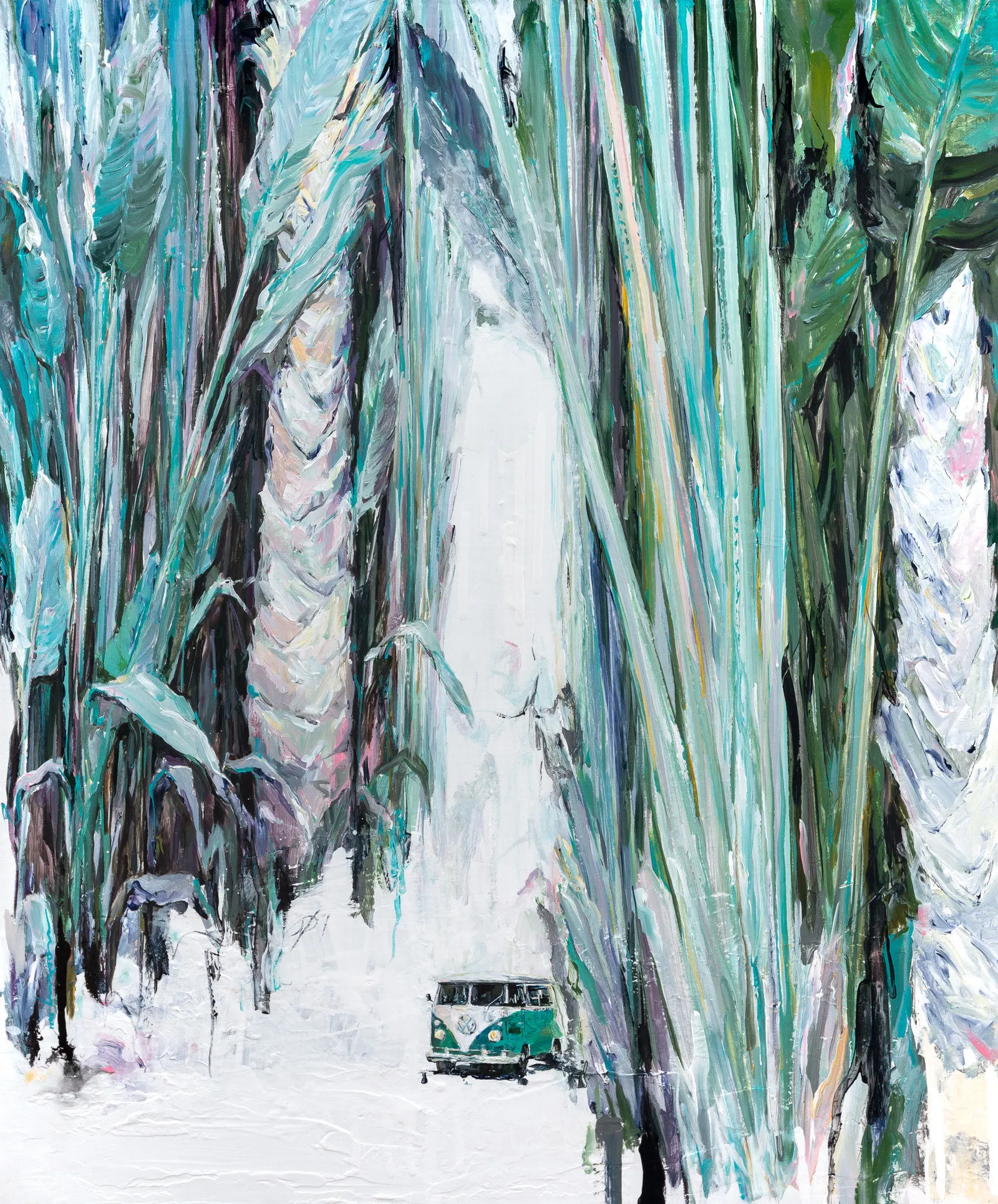
A white floor, columns standing in rows, a white passage opening between them, and a small blue-green van set down below. The composition and the mood are the same as the forest in the last story.
It is not a coincidence. MINSEOK says that because the two stories could run on from each other, he used the same form once more, meaning it as a crossing into a new season.
Only, two things are different.
One is direction. The car in the last story was seen from behind — moving away, into the distance. The van in this painting is seen from the front. It stands facing forward.
The other is colour. A layer of colour has been drawn out of the whole picture. The deep greens grow pale, and white light rises in their place.
MINSEOK calls this painting a turning point. The place where what was moving away turns around, and colour settles once. The points where a story changes direction usually look like that.
And what is happening inside is different too. In the last story, what held him was a question of his own — a maze built night after night inside the head of someone who could not find an answer. This time what holds him is a wind that came from outside. The same forest, a different reason.
Freedom on the Other Side of a Screen.
The last picture of the series is an entirely different world.
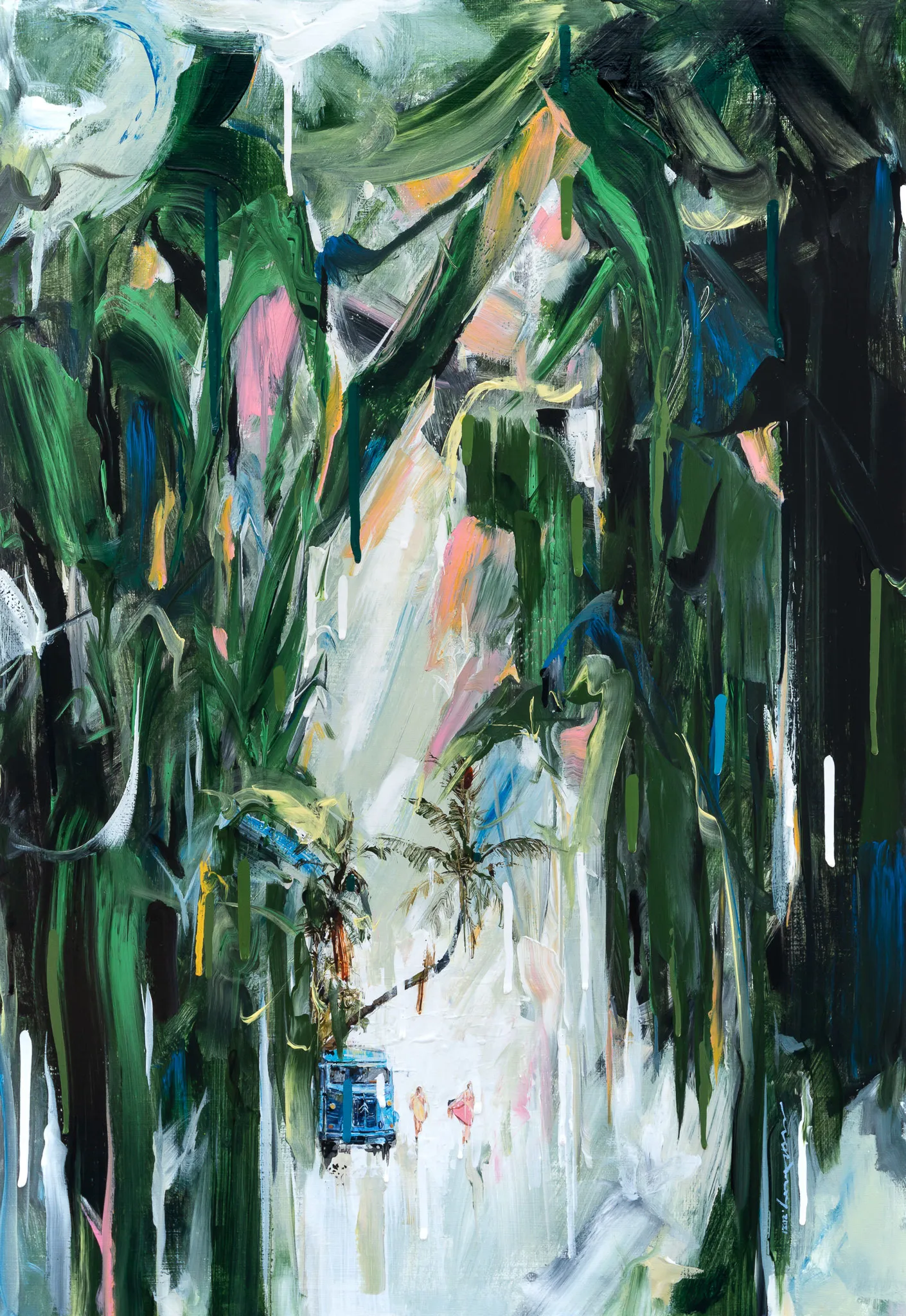
⟨Sway in the Wind XI⟩ is a tall canvas. Green runs down from the top — the marks of paint actually running are left as they are. The middle opens up white, and palm trees stand in that light. A blue van, and two people walking toward the light.
This painting has a source. In that year, as freedom was disappearing, MINSEOK came to watch videos of people surfing. The lift of setting out for the sea, the freedom of people walking toward the waves. It was freedom seen across a screen, from a place he could not step outside of.
Here something should be pointed out. MINSEOK is a painter who does not put people in his pictures. The car stands in for the person. That has long been his rule.
And yet in this series there are people. Once, and only inside the painting of a place he could not go. And even then, very faintly.
The faintness is not unfinished work. It is because that freedom was not within his own reach — on the far side of a screen, belonging to someone else, out of reach for now. MINSEOK put that distance into form. He painted people, but only as much as could not be made out.
A person who could no longer travel, painting paradise — art history has that too. Henri Matisse, past seventy, underwent major surgery and could no longer move as he wished. When holding a brush for long became difficult, he began cutting coloured paper in bed. Among the pictures he made that way is Polynesia, the Sea. A blue sea with fish and birds and seaweed drifting through it — the light and water of Tahiti, visited once in his younger years, brought back from memory alone.
A southern country made while the body was bound to a room. MINSEOK's last picture came from the same place. Only, where Matisse drew it out of memory, MINSEOK looked across a screen.
When there is no way out, the first thing a person does is imagine. And that imagining usually begins by looking across at the freedom someone else is living.
A Storm Cannot Be Drawn with a Ruler.
There is no squeegee in ⟨Sway in the Wind⟩. No thread either. A brush laid the paint on thickly, and in places thinned it and let it run.
MINSEOK says flatly that what matters in this series is not technique but story. Then why the brush? The answer is not difficult. A storm cannot be drawn with a ruler.
To be honest, this series does not occupy a large place in his work. He says so himself. Eleven paintings, one year. In a long list it is a short passage.
Only, something changed in that short passage. COVID-19 went on for several years, and it was a genuinely hard time, he says. Passing through it, a turning point came to ⟨Endless Force⟩, the series at the centre of his work. Like that painting where the van turned around and a layer of colour settled, the larger story changed direction around then too.
So these eleven paintings are not a great series, but the place the great series passed through just before it changed direction. The place where one catches breath, in the middle of the storm.
And that place did not belong to him alone. Everyone who looked out of a window that year was standing there. It looked as though they had stopped. In fact, each of them was running with everything they had.
References
⟨Sway in the Wind⟩, eleven paintings, 2020, acrylic on canvas. Artist's notes and the artist's own account, August 2026.
Albert Camus, The Plague (1947) — set in the sealed city of Oran during an epidemic, centred not on a hero but on Dr. Rieux, who quietly keeps doing his work.
Henri Matisse's cut-outs — the method he began after major surgery in 1941 left him unable to move freely. Polynesia, the Sea (1946) brings back, from memory alone, the light and water he had seen in Tahiti years earlier.
The eye of a typhoon — the place at the centre of a great storm where the wind weakens and the sky opens. Not a sign that the storm is over, but a sign that you are passing through its middle.